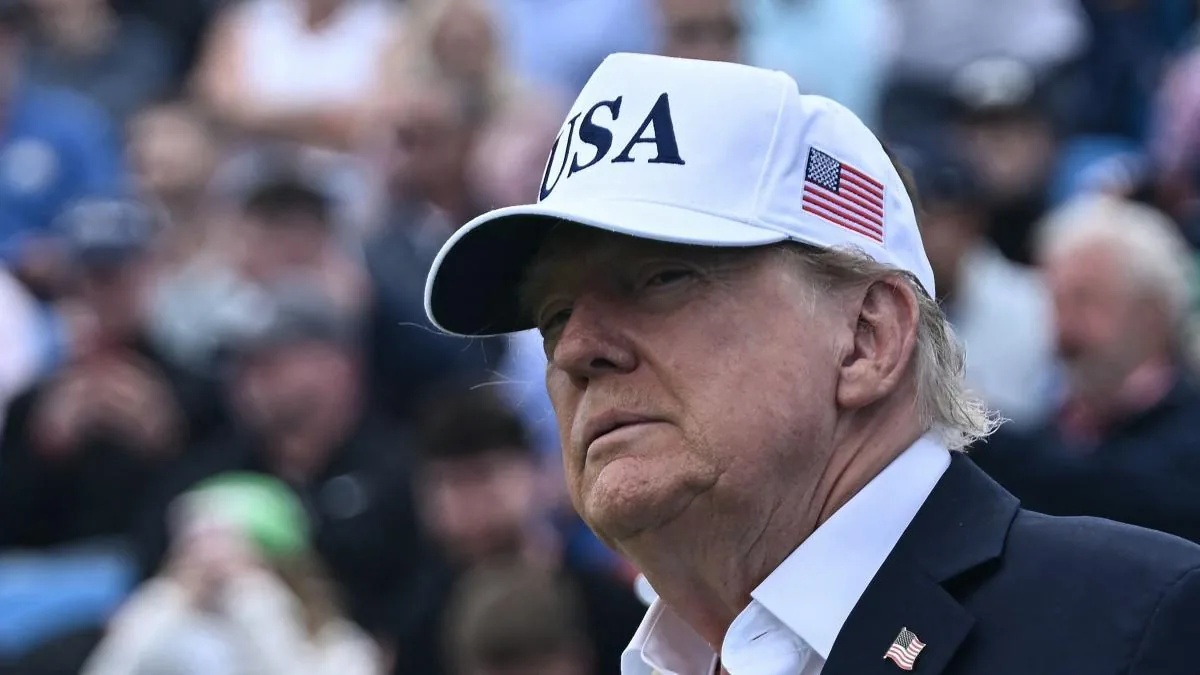








The Iran war, that “excursion” which, according to Donald Trump, was supposed to last a few weeks, is on track to reach 200 days. Throughout this time, the conflict has experienced ups and downs in intensity. But one thing has remained unchanged: the blockade of the Strait of Hormuz.
Read more Spanish student murdered in Mexico: Claudia Tacoronte’s death is being investigated as femicide
The disabling of this maritime route, through which 20% of the world’s crude oil flowed before the war, has become a headache for the Gulf countries. The U.S. shows signs of having disengaged from the matter – according to CNN, the White House’s current priority is negotiating the future of Iran’s nuclear program – so the petromonarchies have been left to their own devices. The reopening of the strait, then, will largely depend on their diplomatic skill.
This Monday was presented as a key day to address the issue: Iran and Oman had called a meeting with the Gulf countries to discuss the “establishment of safe routes” for commercial navigation in Hormuz. That is, the acceptance of a new legal framework that allows Tehran to continue exercising control over the strait – which includes charging a toll for the right of passage, something the ayatollah regime has been doing since the war began. But, late Sunday, the Omani foreign minister announced the postponement of the meeting “in the interest of consensus.”
According to today’s statement by Iranian Foreign Ministry spokesman Ismail Baghaei, the cancellation was requested by Saudi Arabia. The reason? The Houthi offensive in Yemen, an episode with which, according to Baghaei, Tehran has nothing to do. “Iran does not interfere in Yemeni affairs,” emphasized the official, who assured that the Houthis are “completely independent actors who make their decisions based on their own interests.”
The fact is that Iran’s support for the Houthis is well known and, while analysts debate to what extent Tehran is behind the current offensive by the Shiite insurgents, no one overlooks that the latest events in Yemen are favorable to the ayatollah regime.
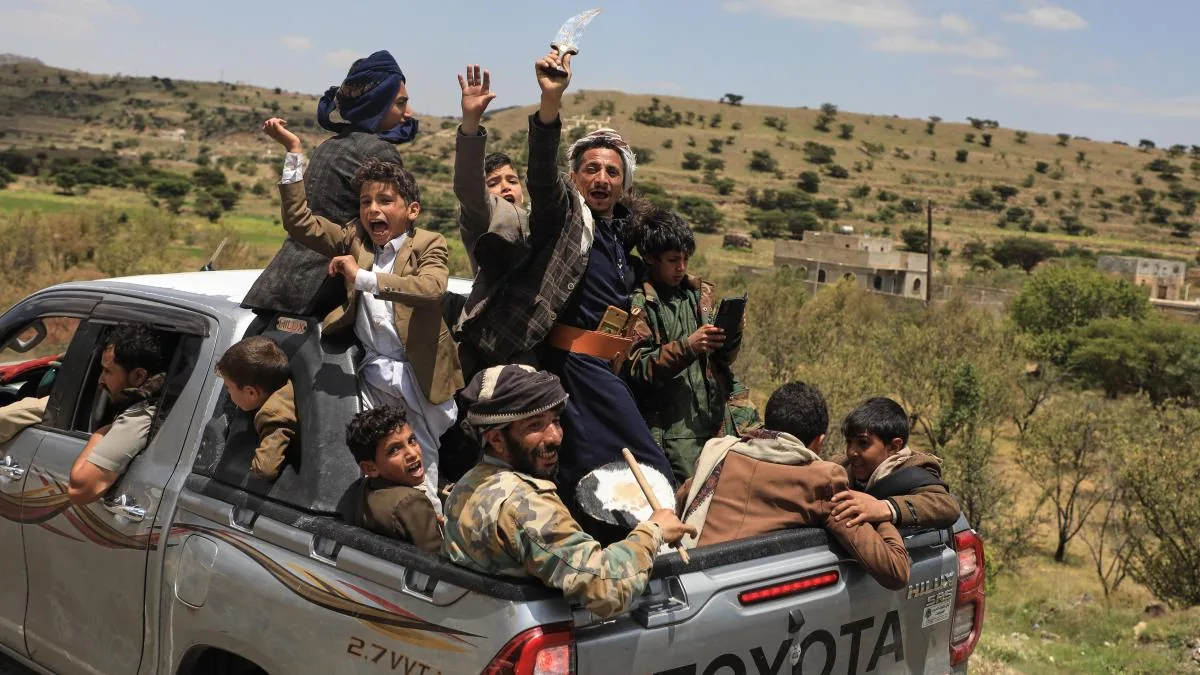
At the end of last week, the Houthis took control of the port city of Mocha and Perim Island, strategic enclaves to dominate the Bab el-Mandeb strait, the alternative route to Hormuz. These advances have increased pressure on global crude supply and prices, and may give Iran an advantage in its confrontation with the U.S.: it will be easier for Tehran to extract concessions from Washington if the global economy nears collapse.
Moreover, the Houthi offensive seems far from stopping. This morning, the rebels announced the capture of more strategic islands in the southern Red Sea, conquered while government forces, backed by Riyadh, tried to regroup after the rapid insurgent advance on Yemen’s western coast.
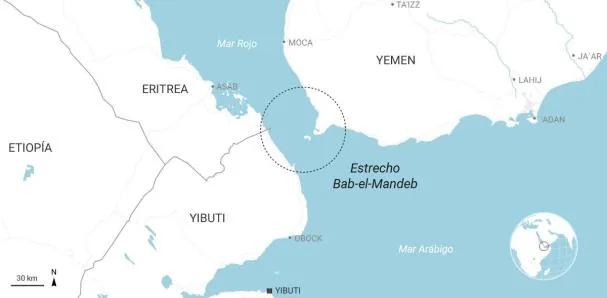
Also today, the Houthis claimed to have attacked “with dozens of missiles and drones” one of Saudi Arabia’s main air bases, King Khalid, with “precise and direct impact.” This latest strike adds to the one Riyadh suffered last Friday on its East-West pipeline, shut down after a drone attack, this time carried out by Iraqi militias. The pipeline, which at 1,200 kilometers long crosses all Saudi territory to connect the Persian Gulf with the Red Sea, allowed completely bypassing the Strait of Hormuz and had gained great importance since the war: through it, the Saudis were able to move up to seven million barrels of crude per day, thus minimizing the effects of the blockade imposed by Iran. For now, there is no date for its reopening.
The situation is critical for Riyadh. An example of this is that, this Monday, Saudi Crown Prince Mohammed Bin Salman held a meeting with the head of the U.S. Central Command, Brad Cooper. According to a sterile statement from the state agency SPA, during the meeting “the latest developments in the region” were reviewed.
But Washington is not inclined to come to the aid of its old ally.
Last week, amid the escalation in Yemen, it emerged that Bin Salman had called Trump twice to ask him to attack the Houthis, and that the U.S. president had turned a deaf ear to those pleas.
The Republican does not want to open a new front, and he made this explicit last Saturday: “The Houthis have called us and let us know they don’t want to fight us,” Trump said, leaving Saudi Arabia in the lurch.
Read more The Vatican claims the “prophetic” role of Leo XIV amid alarm over AI