





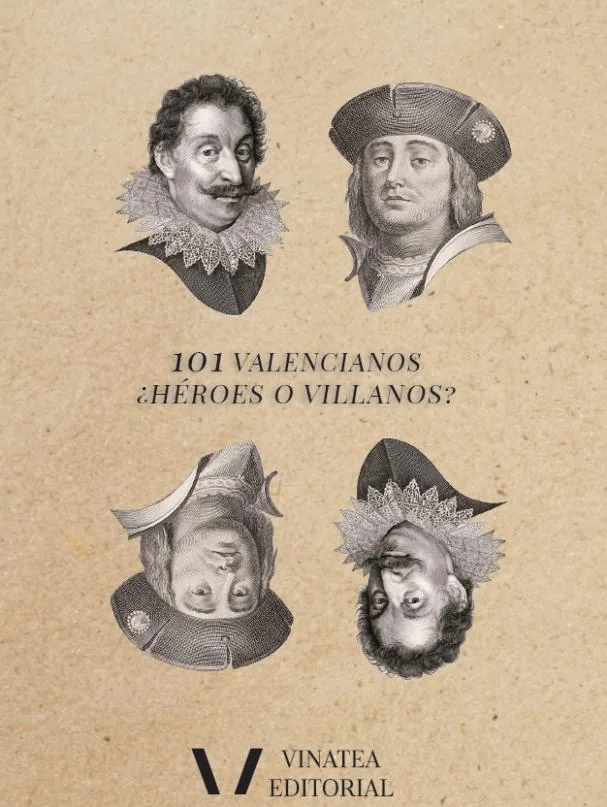
What would the first Valencian be like? Gustavo Zaragoza has imagined the reality of that Neanderthal whose remains were found in a cave and is considered the oldest documented human in our territory. This is one of the 101 short stories that as many Valencian authors – or related to the Comunitat – have contributed to Editorial Vinatea (a foundation that donates its profits to charitable causes), about 101 Valencian characters who, readers will judge, can be considered heroes, villains, or perhaps both depending on the perspective from which they are viewed.
Read more Valencian geography and politics
As Salvador Raga explains, the process of selecting the authors and characters, including the need to “match” some with others, has been arduous, but the result offered by the idea is very suggestive, due to the biographical variety of an index that spans from Prehistory to the Contemporary Age, and due to the diversity of literary styles logical among authors of very diverse backgrounds.
A “twin” work to the one reviewed here, dedicated to 101 Valencian women, is already in preparation
The reader will find episodes dedicated to very well-known people, such as Cardinal Tarancón, and of great impact in their time and profession, such as the architect Rafael Guastavino, who left such a deep mark on the vibrant New York of the late 19th and early 20th centuries. The editor Salvador Raga, besides confirming that the profits from sales will be destined to the populations affected by the dana, announces that a “twin” work to the one reviewed here, dedicated to 101 Valencian women, heroines or villains in their case, is already in preparation.
Meanwhile, Raga reviews some of the most surprising characters of this unique book, such as Artaleto de Jérica, about whom he tells us that “he was the guardian of the most famous medieval Valencian brothel,” a place “visited by courtiers, nobles, and merchants from all over Europe, the first place where – from the perspective of the time – prostitution activity was respected,” in a walled neighborhood, where an official watched over the health of the women and protected them, to the point that there was a gallows at the door intended for anyone who dared to assault them.
Read more The blow to employment in the interior of Castellón: from Marie Claire to Importaco or Frost-trol
Another episode revives the figure of Josep Rodríguez Tortajada, who was president of Valencia between August 1936 and March 1939, managing to keep the club alive during the harsh period of the Civil War, repressed by the Franco regime, which sentenced him to death, although the sentence was commuted, and whose work leading the Valencian club was silenced for decades.
Or Juan de Miralles, another fascinating character. From Petrer, Alicante (1713), he traveled to Cuba in 1740, settling in Havana. From there they traded with the North American colonies and, over time, he got along with the English settled in what is now the east coast of the United States, to the point that, during the War of Independence, he formed a secret service that worked for the independence of the new nation, and was a friend of George Washington himself.
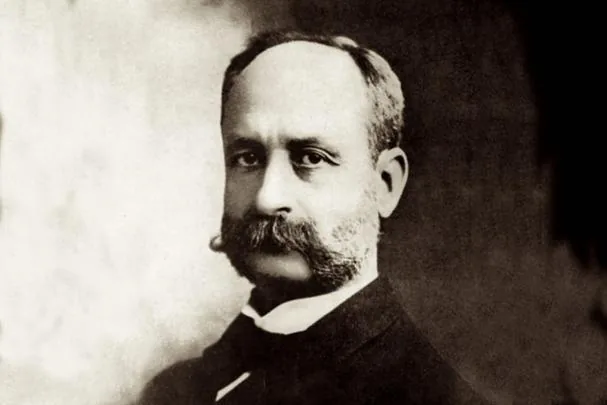
It is obviously not possible here to include the long list of characters nor, for the same reasons of space, the authors who have contributed to creating this interesting and enjoyable work. As one of them, Mateo Darrán, states, the editor “has done an incredible job,” contacting authors and selecting the characters with them. Darrán chose Federico García Sanchiz, Spanish writer, novelist, essayist, journalist, and traveler, member of the Royal Spanish Academy, a highly sought-after lecturer in his time, although he called himself a storyteller. The author highlights “the challenge” that it has meant for him, as for the rest, “to condense in barely a thousand words a small plot, in my case narrated by a fictional character,” a challenging literary task that becomes, once reflected in the book edited by Vinatea, a miscellany of characters and biographies that in many cases awaken in the reader the always stimulating desire to know more.
Read more Puyal, through his successors