







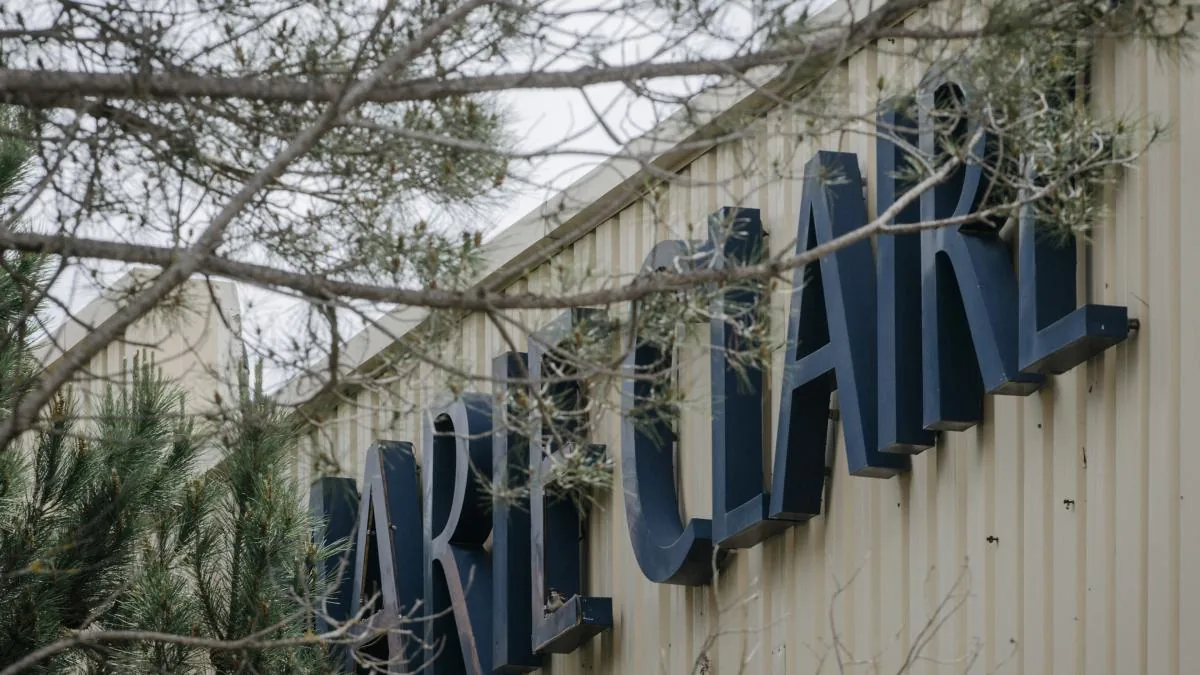
This is not a made-up story, although it catches your attention when you read it: one of the people affected by the closure of the century-old Marie Claire plant in Vilafranca del Cid, in Els Ports, ended up coming down every day from their village to work at the Importaco almond factory in La Vall d’Alba, in La Plana Alta, which is now also closing after the dramatic fire last May. “What happened with Importaco has been a disaster,” explains Javier Ferreres, general secretary of UGT-PV FICA in the Castellón regions. “Here we have felt abandoned. Meetings were held, yes, but nothing was achieved. Just like with Marie Claire, nothing was achieved but there were gestures; here, nothing,” he emphasizes, jumping from one closure to another, weaving the course of a labor market, that of Castellón, which is especially conditioned by geography, but also by communications and infrastructure.
Read more Puyal, through his successors
Importaco, a company from Beniparrell, Valencia, dedicated to the production and marketing of nuts, dried fruits, and natural mineral water, surpassed this year, for the first time, results exceeding 1 billion euros in turnover, but this year also experienced a fire at its La Vall d’Alba plant that left it particularly affected. The company confirms that it has been considering “all options,” but has finally decided to close.
Importaco confirms that it has been considering “all options,” but has finally decided to close
Currently, the company assures it is “in talks” with the unions to offer the hundred employees “the best possible conditions,” acknowledging that this is a “difficult decision” because this is a “special territory,” where workers feel abandoned. Importaco had been operating in La Vall d’Alba since 2009, when it began participating in this cooperative plant, which belonged to Intercoop. In 2010 it acquired more shares and by 2011 it practically controlled 100% of the plant.
The mobility of that employee who turned to Importaco after being laid off at Marie Claire highlights the characteristics of the Els Ports labor market, which is smaller in size. This is how the latest prospecting report prepared by Labora, in collaboration with the UJI, on the province of Castellón defines it. Its data, from 2023 though published in 2025, show that in all cases La Plana Alta is the region where workers residing in the regional capitals travel to when they do not work in their own region.
Also read
Interestingly, the exception is Vilafranca, where La Plana Alta appears as the third destination and, obviously, Castelló de la Plana itself has the highest percentage of workers in its own region. Why did Vilafranca stay in the region? Marie Claire was one of the most obvious draws, until it definitively closed its doors in February 2025. That was not easy for the area, far from it: “When the purchase of Marie Claire appeared, we were all deceived because a lot of effort was made to keep it going. Now there are many families in that area with children who cannot find a job opportunity there,” laments the UGT leader.
Juan José Picazo, general secretary of Industry of CCOO-PV, also explains that these closures are experienced with concern because “the data hide the reality; if we look at the data for the province of Castellón we can say employment has improved, but if we look at the inland regions, the closure of Marie Claire or Importaco has terrible repercussions for the region.”
Frost-trol, Azteca, Codicer 95… other closures
In December 2025 Codicer 95, a tile manufacturer in Castellón, closed, laying off 75 employees. Another was Azteca, in L’Alcora, which laid off almost 120 employees. The third that UGT-PV cites as worrying for the Castellón population is Frost-trol, in Cabanes, which even auctioned off its factory. The first two, in the area closest to the Castellón capital, allowed more future opportunities; the one in Cabanes created another gap difficult to fill in local employment. According to Juan José Picazo, from CCOO-PV, “the Valencian Country is losing potential and strength in industry, and this is a mistake we will pay for dearly. It cannot be that in the Valencian Community its economic engine is just sunny days.”
When the purchase of Marie Claire appeared, we were all deceived. Now many families have children who cannot find a job opportunity in that area”
Javier Ferreres, general secretary UGT-PV FICA in the Castellón regions
This newspaper has tried to contact the mayor of Vilafranca, Sílvia Colom, without success. It was her party in the municipality, the PSPV, that presented a motion approved unanimously for the Diputación de Castellón and the Generalitat Valenciana to join in creating a working commission for the reconstruction of the area after the textile closure.
Read more Works uncover a section of the Canal de la Infanta in Barcelona
The latter states that it already applies a territorial perspective to its employment policies and, through the Valencian Employment Service, assures that the Marie Claire case in Vilafranca constitutes “a concrete example” of how employment response can be adapted when a small municipality faces a “situation of special impact.” There, after the closure, in March 2025, seven counselors were sent to assist the affected people.
After the closure, in March 2025, seven Labora counselors were sent to Vilafranca to assist the affected people
This response model is an example of the different programs that allow Labora to meet the specific needs of small municipalities and areas at risk of depopulation, like Vilafranca, on the list of Valencian Community municipalities presenting this risk. One tool of this line of action is the Emerge program, with “special importance” in the depopulated municipalities of Castellón, which allows local entities to hire unemployed people to carry out maintenance and improvement work in the environment, especially in forestry, agriculture, and conservation.
Another instrument, explained by the first vice presidency of the Consell, is the Bus Labora, which offers in-person attention, advice, and access to Punt Labora tools without having to travel to other municipalities; the third is the 1.2 million euro collaboration line with the Valencian Federation of Municipalities and Provinces (FVMP), which allows hiring qualified technical staff to support municipalities with fewer than 5,000 inhabitants.
The Valencian government is promoting a personalized analysis of each municipality at risk of depopulation
The most recent, announced this week, is that the Second Vice Presidency and the Ministry of Presidency, in coordination with the FVMP and Labora, is promoting a personalized analysis of each municipality at risk of depopulation to identify employment and economic activity opportunities. In this regard, “the analysis focuses on detecting insufficient or nonexistent basic services, as well as studying the main constraints that hinder business activity and proposing possible lines of action that contribute to strengthening the economic and social resilience of the affected municipalities,” argues the director general of Local Administration, José Antonio Redorat.
And it is that in Vilafranca Marie Claire closed, but with it also the 30-room hotel, whose sale is advertised online for 600,000 euros, still without a buyer. “The problem is not just the industries or the families, but all the accompanying services. The Vilafranca hotel was closed, the salespeople stopped coming…,” insists Javier Ferreres on the idea.
The Ministry of Innovation and Industry, together with Cámara Castellón and the Diputación de Castellón, is working to identify the activity of each region through the Comarcal Dynamization Plan: Els Ports and Alt Maestrat, for which there is not yet a report with results. Likewise, this Ministry points out that it is expanding policies affecting depopulated areas, the great effect when certain shutters go down. But the unions warn that more steps must be taken, reindustrializing the regions – “betting on an agri-food industry, or a technology center,” Picazo points out – so that it does not remain that each town “with the best of intentions tries to protect employment,” he clarifies.
Read more Citizen outcry for the very unlikely reopening of Collserola