




The victory of the AfD in Saxony-Anhalt has highlighted the weight of the legacy of the former GDR among the citizens of East Germany, their conversion into second-class Germans, and the strength of that nostalgia when it comes to capturing votes.
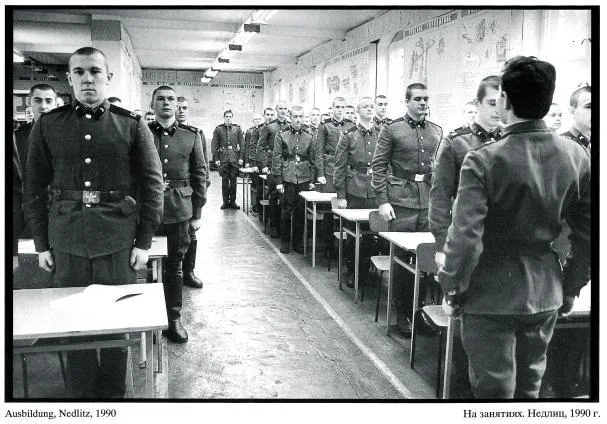
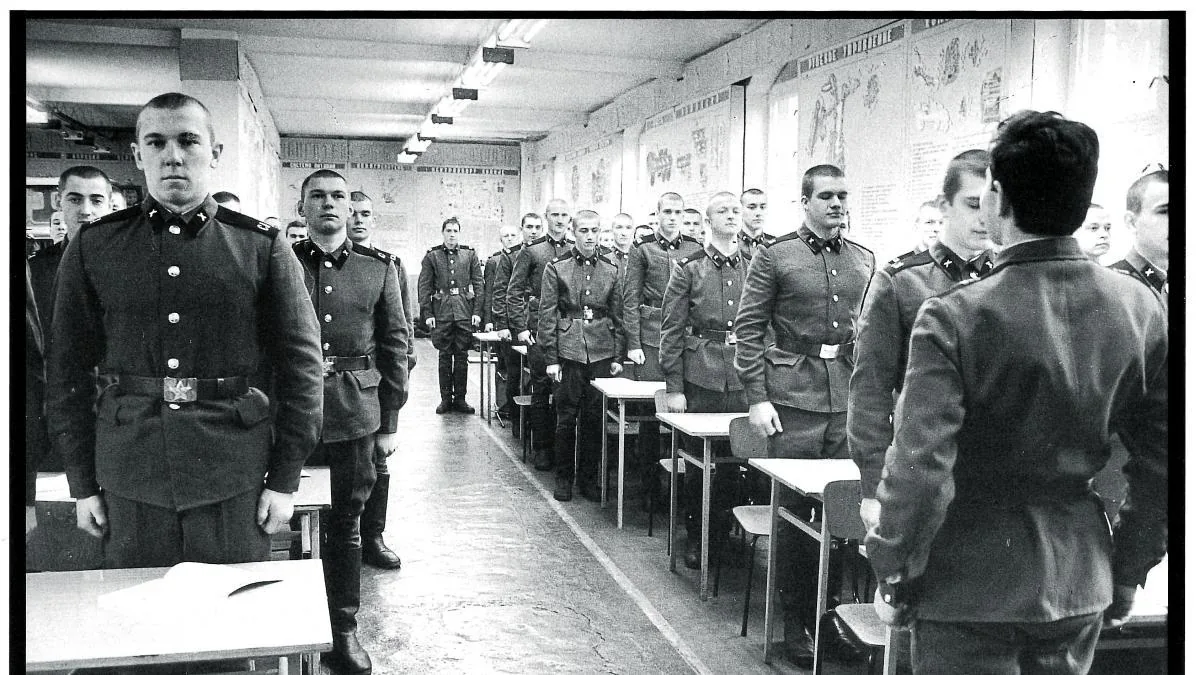
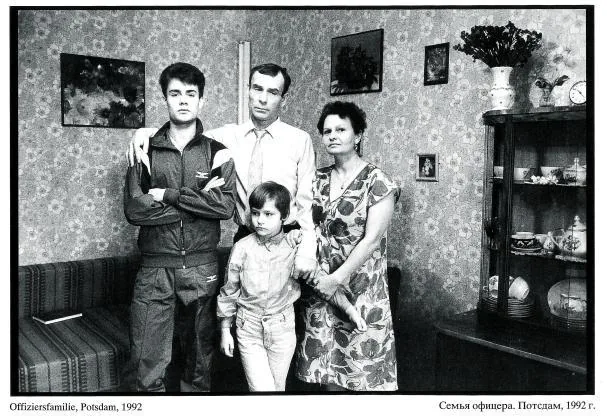
For more than forty years, over half a million Soviet soldiers, many accompanied by their families, lived in military bases of the German Democratic Republic (GDR), East Germany governed during that period (1949-1990) by a communist regime allied with Moscow. That occupying army, deployed on the front line between the Soviet Union and the Western world during the Cold War, was actually a society parallel to the German one.
The Soviet soldiers were spread across more than a thousand military facilities, some on the border with West Germany. There were Soviet bases in Dresden, Magdeburg, Wünsdorf, in the south of Berlin, or in Potsdam. The latter housed large command centers and KGB stations and were cities isolated from the outside, with housing, schools, hospitals, cinemas, shops, or sports facilities. Access was forbidden to Germans, who knew them as the forbidden city, Verbotene Stadt.
The overwhelming victory of the far-right Alternative for Germany (AfD) in the Saxony-Anhalt elections, one of the five Länder that made up the GDR, has revealed the differences in political sensitivity that separate East Germany from the western Länder.
Rejection of immigration is the main electoral hook of the AfD, as well as tax cuts or fear of inflation. And where that language resonates most is in East Germany, imbued with nostalgia for the GDR. The ossies, as East Germans are known, idealize that past of order and security after the promises of prosperity from reunification (agreed in October 1990) were unfulfilled and turned them into second-class citizens, victims of deindustrialization and the exodus of the younger generation.
That nostalgia politically translates into an open sympathy towards Russia. More than half of the population of East Germany is against rearmament, critical of NATO, and rejects helping Ukraine. Just as Chancellor Friedrich Merz is at a point of maximum confrontation with Russia, AfD voters believe sanctions against the Slavic country should cease, that gas should be bought again from it, and that trade relations between the two countries should be improved.
The AfD, with leaders who have ties to Russian intelligence and who attend Vladimir Putin’s anniversary parties at the embassy in Berlin, even calls for the Russian language — which was mandatory in the GDR — to return to schools, despite the fact that today only a tiny fraction of East Germans remember how to read Cyrillic.
The GDR was a repressive regime, but today there are Germans who long for its security and order
Many of those who long for the good old days were 20 or 30 years old when they saw the Soviet troops disappear. They barely had contact with them and did not know what their life was like. But they felt a great void when they left and left kilometers of deserted facilities.
Read more Three men who were spearfishing rescued from the sea in Cádiz
In the months following reunification, in the winter of 1990, German leaders negotiated with Moscow the price of the withdrawal. Helmut Kohl’s government paid 12 billion German marks and interest-free loans for the Soviets to leave.
Susanne Müller was then a photographer who captured the dizzying changes in Berlin during those years. The large demonstrations demanding democracy; the threats from Eric Honecker, last head of state of the GDR, to deploy tanks on the streets; the warnings from Mikhail Gorbachev during his visit to Berlin, advising the German to accept the death of the regime… And finally, with the system’s morale defeated, the “fall” of the Wall that separated the two cities, the capitalist and the socialist.
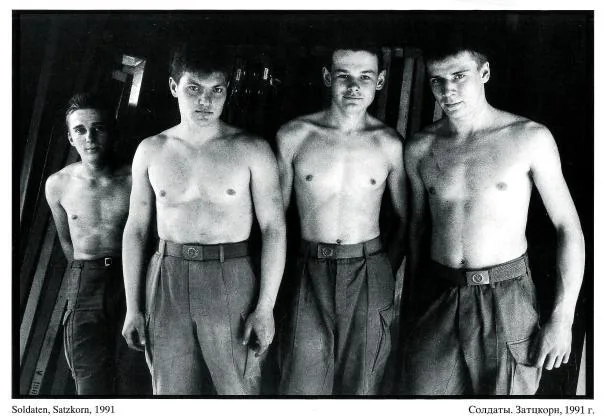
But Müller also lamented the speed of the wall’s disappearance, of which soon no traces would remain, due to the lack of interest from citizens in the world they were leaving behind. In 1990 she was commissioned by the Potsdam Museum to portray what life was like in the forbidden city before its disappearance. She worked on it between 1991 and 1994, the time the transfer lasted. “The withdrawal would have taken a few more years — she explains — if it hadn’t been because in the end Germany got tired of waiting and ended up building the housing directly to accommodate the Russians.”
Müller was the first German woman to cross the doors of that hermetic universe. What she found was a foreign country right next door, a defeated army. The access rules had also relaxed. “They treated me well because I was a woman and because they were very hierarchical. Once the officers accepted that I had to take the photos, everything went smoothly,” she says.
Müller’s work was collected in a publication, Goodbye, Germany: photographic impressions of the life and withdrawal of the Russian army, written in German and Cyrillic. It features soldiers and families waiting for a change of destination. There are Russians, Kazakhs, Kyrgyz, children dressed with pistols on their belts for the Christmas party… They don’t know what awaits them. Soon they will go to a harder life in the turbulent Russian 90s, with an economy in shock therapy. “They took everything they could, left nothing. They gave each officer a container to fill — Müller recounts. “Then they came back to fill more containers. They took cars dismantled into pieces to resell them. Everything.”
Susanne Müller photographed Russian soldiers and their families before their withdrawal in the 90s
In 1997, at a meeting organized by the European Academy of Berlin, Müller had a conversation with La Vanguardia in a tavern with walls full of communist propaganda from the 30s. The photographer was already then uneasy about what she saw around her and the difficulties faced by the people she knew. “The market economy has turned out to be much worse than the evil capitalists they told us about in GDR classrooms. Today the question people ask themselves is how should I sell myself?”
The GDR was a repressive regime, with one of the most feared political police forces, the Stasi. There were agents in factories, schools, all buildings. They knew what you said, what you ate, who you slept with… And despite many Germans being victims of denunciation by neighbors and friends, what is most remembered today from those years is the feeling of security and order. Nostalgia is a mysterious weapon capable of changing history.