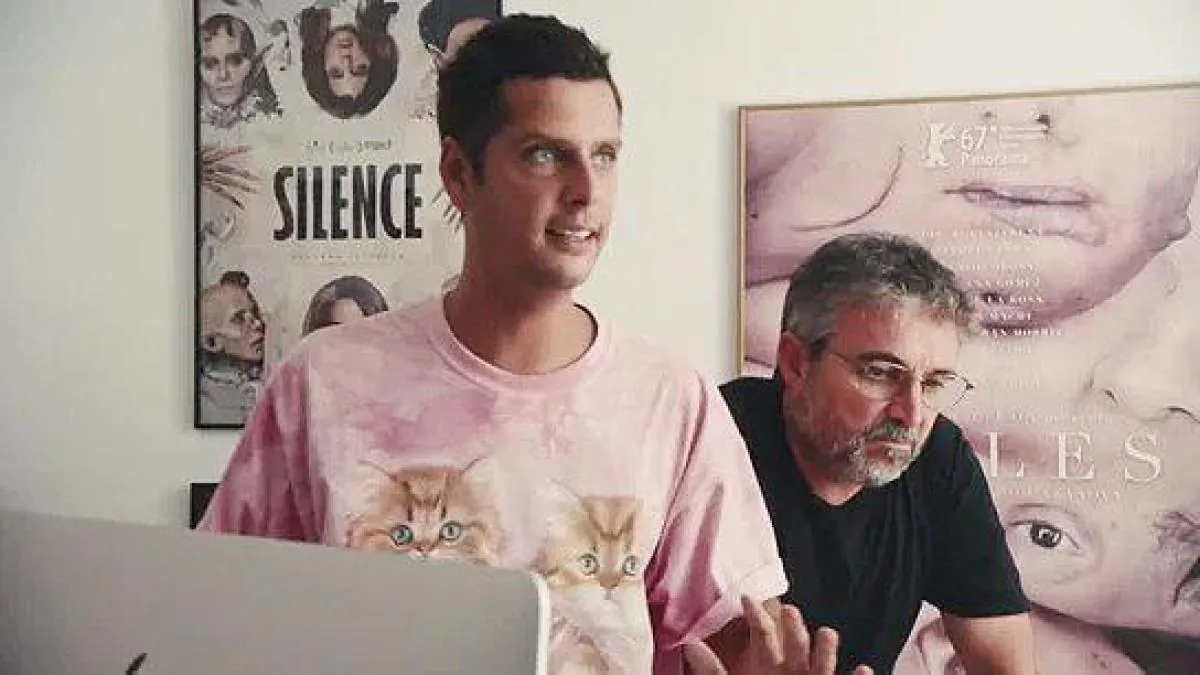
Eduardo Casanova wanted to tell the world that it is perfectly possible to live with HIV and nothing happens, that stigmas only feed hatred. This is what the Spanish actor and director explains in Sidosa , the documentary released last week in some cinemas with which he has decided to “break years of silence.” The film, produced and hosted by Jordi Évole and directed by Lluís Galter and Màrius Sánchez, is conceived as a cathartic journey seasoned with humor, emotion, memory, and cinema, which allows understanding the reality of people with HIV today.
Read more Biopic fever: all the celebrities who will have a movie
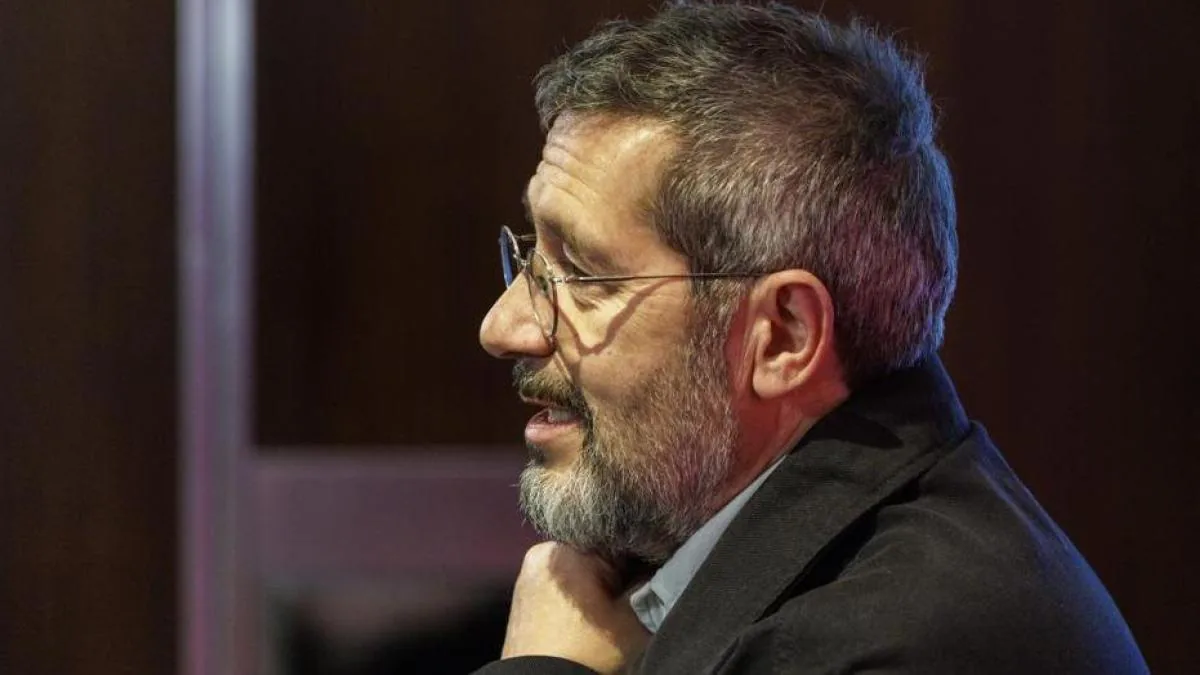
“In some way, socially people are still like in the 80s, they hear the word HIV or AIDS and suddenly it takes them to images where people were dying or there was rejection. People have missed the middle part, the fact that science has advanced, that there are treatments that allow you to live a completely normal life,” Galter explains to this newspaper, for whom “there is still an element of guilt, that it is a disease in which you are to blame for having been infected because it is linked to sex. It is not like cancer or another disease that comes to you and you are the victim. That makes the social stigma much greater and it is what we want to eliminate with the documentary,” argues the director.
There is still an element of guilt, that it is a disease in which you are to blame for having been infected”
Lluís Galter
Co-director
The project, filmed between September and December 2025, was born three years ago when Casanova and Évole planned to make a program for Lo de Évole , but Casanova was not ready to reveal that he had had HIV since he was 17. “I did half of Aída with AIDS,” he reveals in the documentary. A year and a half later, the journalist proposed making a film. “Évole accompanies him, he is the main character among the supporting ones,” says Galter. Sidosa was filmed with practically no script. “We wanted the experience to be more organic, that the relationship between the two was more spontaneous, like two people who meet and one accompanies the other in this gesture of making public something that has been hidden for almost two decades.”
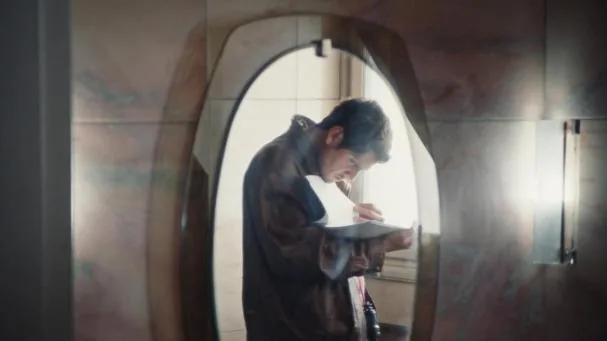
The actor and director needed to come out of the HIV closet. “I can’t take it anymore like this,” he assures. The camera captures the live reactions of close friends who were unaware of his illness. “I would find it very funny if this were like Pablo Alborán’s coming out, where when he came out people said: ‘Ah’,” he states. Sidosa seeks to help so that, “if someone else needs it, because this is a necessity, it will be easier for them.”
With this project, Casanova mainly wanted to end misinformation. “A treated person is absolutely impossible to transmit the virus,” he emphasizes. For the protagonist, Sidosa reveals with its title a strong claim against the stigma of HIV. “Just as gay men have reclaimed the insult maricón , I want to reclaim sidosa .” For Galter, “it is like re-signifying a word that has always been an insult.”
Eduardo is a very intense person and Jordi is the complete opposite. And that contrast is fantastic and makes the film very fun and moving. Because we didn’t make a drama
Lluís Galter
The director admits that what surprised him most about the filming was the relationship between Évole and Casanova. “They are a very strange couple, but they work very well. Edu is a very intense person and Jordi is the complete opposite. And that contrast is fantastic and makes the film very fun and moving. Because we didn’t make a drama.” After its run in theaters, the documentary, which is co-produced by Atresmedia, will later premiere on Atresplayer and laSexta.
Read more The Treasury collected 2.3 billion more by not updating the IRPF to inflation in 2025