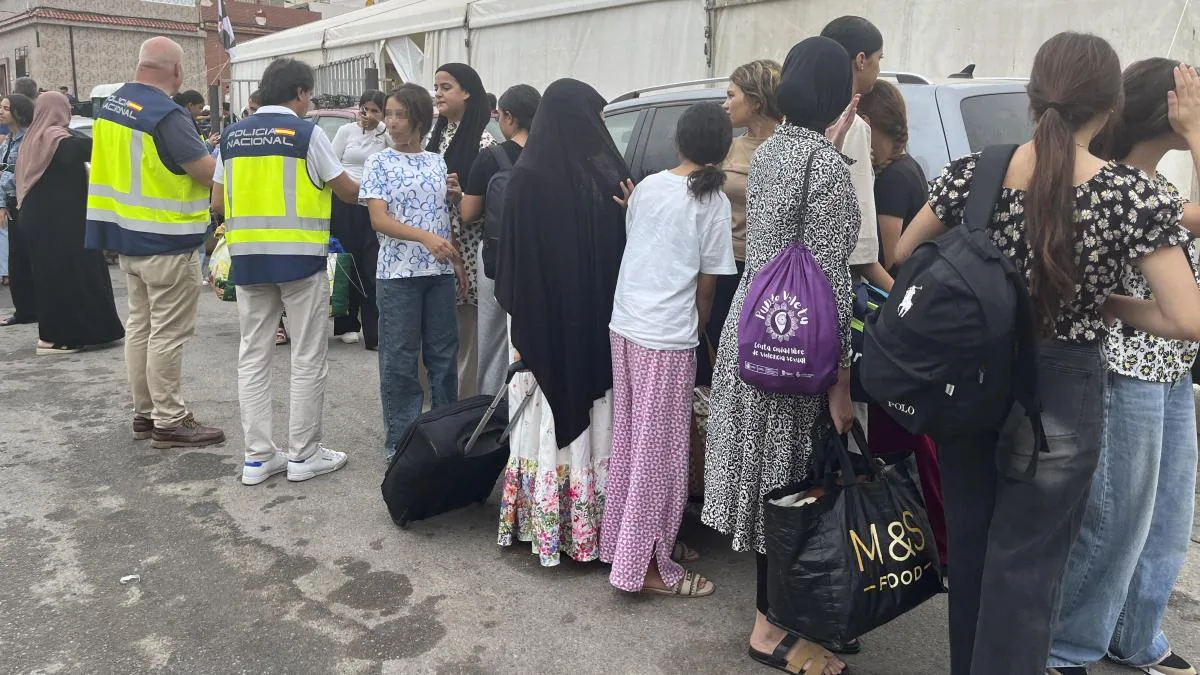
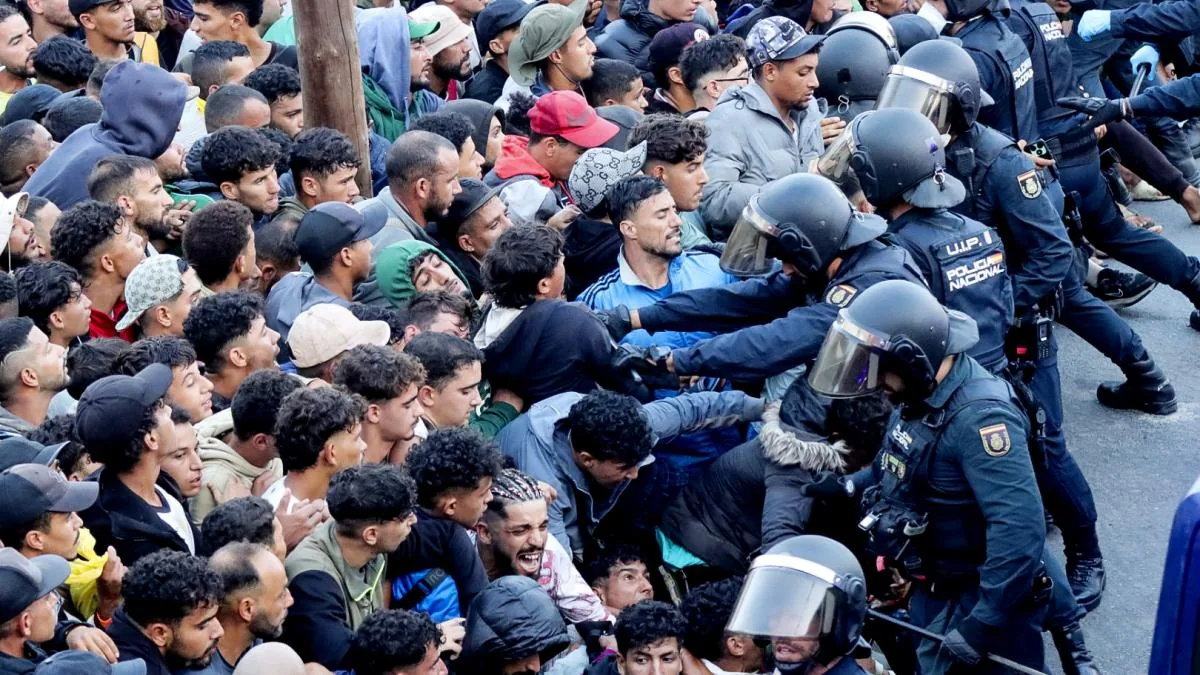
The Yunes fishmongers in the central market of Ceuta are selling far below usual on a Saturday at nine. “Normal, elderly people no longer go out to shop or stroll in the afternoons,” says a stallholder. Fátima is a hospital orderly at the University Hospital, the only one in a city whose patience determines the governability of Spain. “My 20-year-old daughter doesn’t go out when it gets dark out of fear, and in Ceuta life was on the street.” Third warning: Mercadona, Almadraba neighborhood, soldiers at the doors, carts overflowing. A couple of Muslim Ceutíes: “This isn’t going fast, when the cold comes they won’t be able to sleep outdoors and hunger is very bad.”
Read more From the fear of going out at night
Ceuta. September Saturday, two days before the start of the school year. The “gateway to the Mediterranean” has 83,000 inhabitants (43% Muslim) and a lot of patience. “This is something a city on the peninsula would experience and the streets would burn,” says the owner of a central stationery store.
Many locals believe the ‘good’ Moroccans returned after seeing the situation and the ‘bad’ ones stayed
Bus line 7 takes you in twenty minutes and for 85 cents of the first world (Constitution Square/Central Market) to the Tarajal border crossing, very quiet. It’s not the third world but the route has an air of it because it includes a panoramic view of the overcrowded Lobo Colmenar holding center where dozens of young Moroccans who arrived in 24 hours in July camp, live poorly, and urinate as best they can, and who could change Spain.
Ceuta is not exempt from the contradictions of the West: the majority feeling supports a quick return of immigrants, so they systematically oppose the State setting up accommodations for fear that this would prolong their stay. On the other hand, few locals show indifference to the desire to seek a better future. The problem is that they perceive many of these young people as undesirable. “There is no war or anything like that in Morocco, so asylum requests are not understood. We have humanity but… what about the rights of our minors?” says Carmen, a customer at the Central Market, where a spice expert, Musa, a Muslim, laments that “the good ones returned to Morocco after seeing the situation and the bad ones stayed.”

How long will Ceuta maintain its –apparent– calm if the return process lasts months? Headline of the editorial in El Pueblo de Ceuta : “the lack of resources remains shameful.” “I can’t imagine this going on beyond three months –says a civil servant on condition of anonymity, a trend–. I am one of those who voted PSOE but I think there are locals who don’t eat three times a day.”
Read more Manresa, about twenty young people and the fear of a city
Fátima is an orderly at the University Hospital, where nine immigrants wait their turn in the Emergency Room just before one o’clock. “I should come at night, that’s when it fills up. Those are their schedules,” says a colleague. Fátima is the daughter of Muslim locals, she feels compassion for these young people and at the same time reveals that “there are quite a few who are delinquents, I know because I hear their conversations. My eldest daughter, twenty years old, doesn’t dare go out at night and in Ceuta life is on the street.”
“We have humanity but… what about the rights of minors or the grandparents of Ceuta?”
The hospital is heavily guarded by soldiers. “We had many fights,” she explains. The surroundings are not Beverly Hills but the outskirts of Ceuta, which gathers the bulk of the aimless daily life of the invaders. Many locals confirm that the security device seems to prioritize the urban center at the expense of modest or directly conflictive neighborhoods like the Príncipe district. In this life there are always classes…
Ceuta changed on July 31, 2026, more than in all the decades of democracy. No one believes Rabat was unaware of the provocation but there are no militaristic invocations either because borders are commerce. At most, magical solutions. “If Sánchez has such a good relationship, it would be enough to call Rabat and have them accept the return of their citizens,” says a pensioner in charge of a cart at Mercadona (note: Juan Roig appeared in Ceuta on August 18 to encourage his employees).
Journalists bear the reproach – it stings here – of projecting the image that Ceuta is xenophobic. A Justice official sums up his life. “I arrived at six years old from Córdoba and I am 56. My father was a teacher. Our neighbors were Muslims, Jewish friends gave us sweets, and as a child I attended the funeral of a Hindu. When I told these things in Córdoba summers they were amazed.” Lessons in coexistence for Ceuta, just enough…
Read more The apathy of the stars