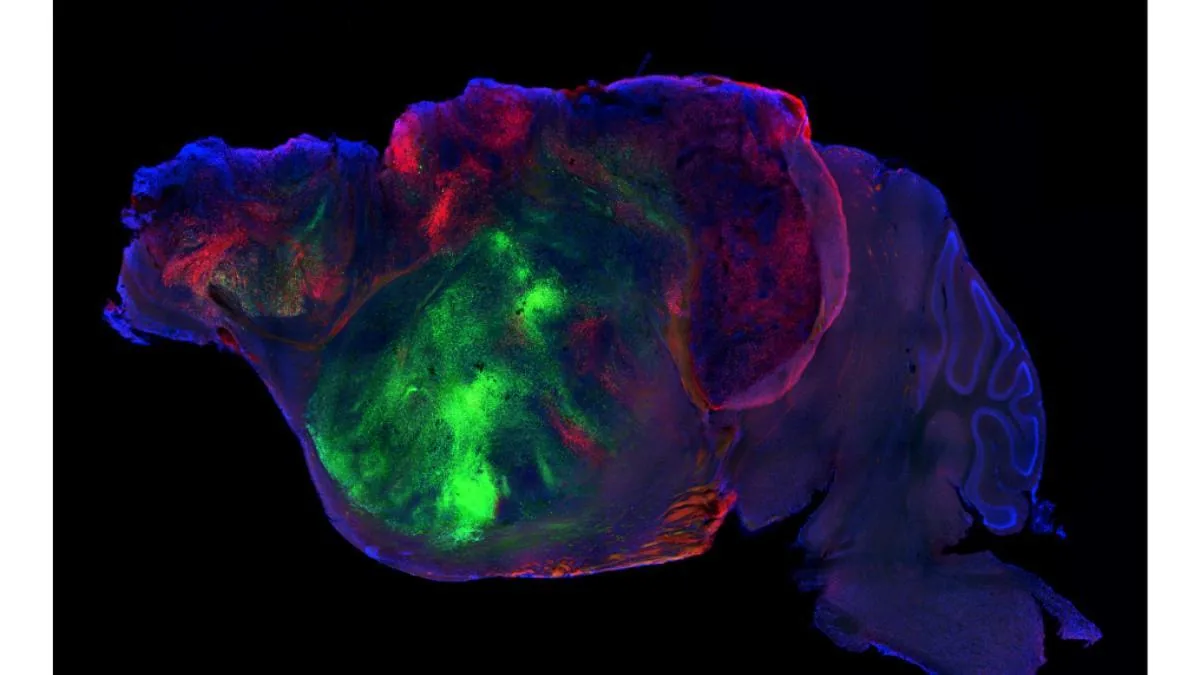
Tumors produce antioxidant molecules that inactivate immune system cells specialized in eliminating cancer. But if the antioxidants produced by tumors are removed, the immune system’s ability to control the disease can be restored.
Read more A gene therapy born in Spain that aims to reverse Alzheimer’s reaches clinical phase
This is demonstrated by an international study led by the University of Cambridge (UK) published today in the journal Science. The results suggest that taking antioxidant supplements may be harmful to people with cancer. Furthermore, modulating the antioxidant action of tumors with drugs may improve the effectiveness of immunotherapies.
“There is widespread use of antioxidant supplements by healthy people and cancer patients,” write the researchers. Those who consume them expect them to be beneficial because they eliminate oxidizing agents such as free radicals, which damage DNA and have been associated with cancer. However, for reasons not well understood, antioxidants have not improved cancer prognosis in clinical trials.
Doctors advocate a vegetable-rich diet for people with cancer but discourage antioxidant supplements
The new research was based on studying what oxidizing agents do in the tumor microenvironment, that is, in the ecosystem formed by the tumor, composed of other cells, tissues, and molecules in addition to the cancer cells.
The results show that cancer cells release antioxidant molecules into the tumor microenvironment. Among them, the most abundant is the enzyme PRDX1, which neutralizes the molecule H2O2 (or hydrogen peroxide, the molecule in hydrogen peroxide). When deprived of H2O2, T cells of the immune system have a reduced ability to eliminate cancer cells. This discovery aligns with other recent research indicating that immune T cells need small amounts of oxidizing agents to function properly.
The new work, involving research centers from seven countries, was conducted with cell cultures, cancerous mice, and human patient data. In mice, it was observed that if PRDX1 production is blocked, immune T cells regain the ability to eliminate cancer cells.
On the other hand, when the animals are immunosuppressed, cancer cells do not increase PRDX1 production. This result “suggests that there is selective pressure on cancer to produce antioxidants and thus weaken immune responses,” explain Alexander Wesolowski and Ardon Pillay, first authors of the study, in an email to La Vanguardia.
Read more Zarzuela was previously aware of Sánchez’s announcement about the King’s trip to Ceuta
Human patient data, corresponding to 21 different types of cancer, showed that PRDX1 is the antioxidant molecule produced in the greatest amount, although not the only one, in most tumors. But there is a minority of tumors in which the level of this enzyme does not increase. For example, PRDX1 has been found to be relevant in cases of melanoma and liver cancer, but not in the colorectal cancer samples analyzed.
“Antioxidant therapies may inadvertently harm antitumor immunity and promote cancer progression,” conclude the researchers in Science, who recall that “the administration of antioxidants in preclinical models [mice] has been associated with accelerated tumor growth and greater metastatic potential.”
This result may be “especially relevant for patients undergoing immunotherapy,” states Adriana Alcaraz, dietitian-nutritionist at the Vall d’Hebron Institute of Oncology (VHIO), who did not participate in the research. If antioxidants have an immunosuppressive effect on the tumor, they could limit the effectiveness of immunotherapy in this group.
Although the results question the use of antioxidant supplements, they are not sufficient to recommend dietary changes, the researchers point out. “We do not want any person with cancer to change their diet or medication based on this work,” Wesolowski and Pillay tell La Vanguardia. “Our study was done with preclinical models, evaluating antioxidants naturally produced in the tumor, and did not investigate the effects of dietary antioxidants.”
VHIO’s recommendation
Yes to a vegetable-rich diet, no to antioxidant supplements
The research results reinforce the recommendations for people with cancer from the Vall d’Hebron Institute of Oncology (VHIO). “There must be a clear distinction between foods and supplements,” says Adriana Alcaraz, oncology dietitian-nutritionist at VHIO. “We recommend diets high in plant foods and low in ultra-processed foods, processed meats, and alcohol. But we do not recommend high-dose antioxidant supplements during cancer treatment.” The reason plant foods rich in antioxidants are recommended is that “their positive effects go far beyond the activity of an isolated antioxidant compound,” explains Alcaraz.
VHIO also does not recommend antioxidant supplements to prevent cancer in healthy people “because clinical trials have not only failed to show benefits but have shown harm in some subgroups,” the specialist reports. On the contrary, a diet rich in vegetables containing antioxidants is recommended because people who consume more fruits and vegetables have a lower incidence of some of the most common cancers in epidemiological studies. The benefit, according to Alcaraz, “is not attributable to any antioxidant compound but to the overall effect of a healthy dietary pattern.”
Read more Illa meets in Kiev with the President of Ukraine Volodymyr Zelensky