There was a time when an invitation to the Met Gala conferred more authority than visibility. Those who ascended those stairs did not need to amplify their image: they already defined taste. In 2003, when the entry cost $3,500, critic Cathy Horyn described it as “the most expensive party in town.” The sponsor was Gucci, Tom Ford was at the height of his influence (not yet measured in terms of followers or likes), and the detail (4,000 peonies in the centerpieces) was not excess, but language. Taste was the theme. Taste was the argument.
Today, the entry costs $100,000. Tables reach $350,000. And the main sponsor is not a fashion house, but a couple: Jeff Bezos and Lauren Sánchez Bezos. The Met Gala has changed both in scale and nature.
The event remains the main funding mechanism for the Costume Institute, the only department of the Metropolitan Museum required to sustain itself. The money is not questioned; it is essential. The problem is where it comes from. In 2025, the gala raised $31 million, a record figure. For someone like Bezos, whose fortune exceeds $270 billion, that effort is almost irrelevant. What it buys is not access. It is something else.
For years, the night functioned as a space where capital transformed into culture. A closed circuit between industry, society, and creation, sustained by a shared idea of taste and by a system of access carefully controlled by Anna Wintour. Today, that balance has shifted. The money sustaining the system increasingly comes from big tech companies. Companies that have not only transformed the economy but also the way influence circulates.
Being at the Met Gala does not guarantee prestige, but it helps to simulate it
It is not an innocent move because with the tables they buy proximity. They need to be more than infrastructures: they aspire to be desirable, especially to women, the audience most historically linked to fashion. Haute couture is not just aesthetics; it is validation. Being at the Met Gala does not guarantee prestige, but it helps to simulate it.
This shift coincides with a deeper change within the museum itself. This year, the gala not only celebrates the Costume Art exhibition, which presents fashion as a transversal language capable of dialoguing with painting, sculpture, or architecture, but also the inauguration of the new galleries of the Costume Institute, located for the first time in a central space of the Metropolitan. Since 1937, fashion occupied a marginal place within the institution, relegated, literally, to the basement. Its new location, at the main entrance, is an unequivocal statement: fashion claims its place as an artistic discipline.
This makes the paradox harder to ignore. At the moment fashion consolidates its cultural status within one of the most influential institutions in the world, its funding increasingly depends on actors external to that same system. Not from the houses that built its language, but from fortunes whose relationship with that language is recent, strategic, and, in many cases, instrumental.
Read more Andrés Jiménez is Jimix, like Astérix, and that is why he creates comics
The composition of the night makes the tension visible. This year, the gala will be co-chaired by Beyoncé, Nicole Kidman, and Venus Williams, alongside Anna Wintour, with Jeff Bezos and Lauren Sánchez Bezos as main sponsors and honorary presidents. The hierarchy is revealing: culture, celebrity, and capital sharing space, but not necessarily the same meaning.
Around that core, the guest list; alongside designers and figures historically linked to fashion, the presence of executives from companies like Meta, OpenAI, or Snapchat is expected. Names like Mark Zuckerberg or Sam Altman, whose power has been built outside this system, but who now seek to integrate into it. They do not respond to its codes (neither in aesthetics nor in trajectory), but to a more determining logic: they are the ones who can sustain it.
Outside the museum, discomfort begins to materialize. In the streets of New York, posters have appeared renaming the event as “Bezos’s Met Gala” and questioning the origin of the money that funds it, linking it to labor conditions and its proximity to political power. Behind the campaign is Everyone Hates Elon, a collective operating between activism and media intervention, known for high-impact visual actions designed to discomfort figures like Elon Musk or Bezos himself and amplify rejection towards large tech fortunes.
The city’s mayor, Zohran Mamdani, has decided not to attend, arguing that his priority is to address the affordability crisis in one of the most expensive cities in the country, in a gesture that introduces an unusual dissonance on a night designed to align interests.
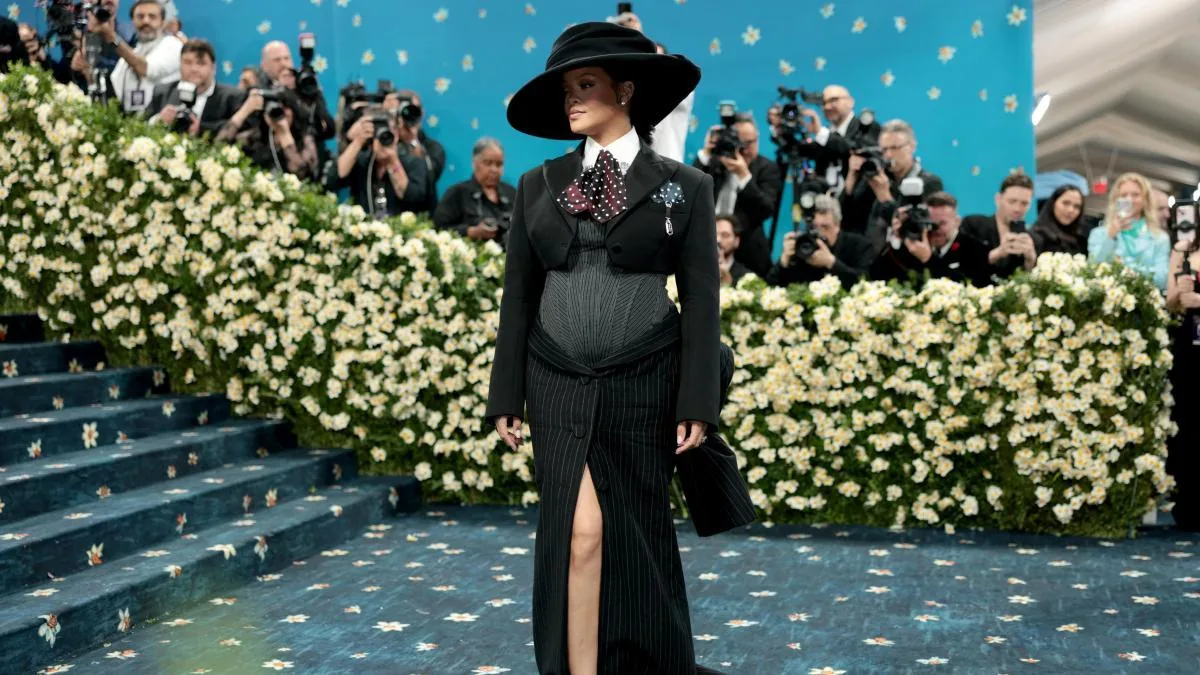
Inside, however, the machinery remains intact. On Monday night, celebrities, brands, and the staging on the building’s stairs will dominate the global conversation. The Met Gala remains, in terms of visibility, hard to eclipse, especially in an edition featuring Beyoncé after more than a decade of absence. But visibility is not the same as relevance. For years, both coincided. Today it is no longer so clear.
The attention the event continues to concentrate is not only directed at what is celebrated but also at what is in doubt: who pays, who enters, what exactly is being bought. The Met Gala has not stopped being important. What is in doubt is the type of importance it has.
Read more Happy May Second