Future archaeologists will find traces of Ceuta among the ruins of the European Union, Greco-Roman columns toppled for the second time in history. The Ceuta avalanche has reinforced the fear of “barbarians” throughout the West, straining almost all upcoming electoral calls at a time of intense stress for liberal democracies. Ceuta has sent an apocalyptic signal from the Strait of Gibraltar, the edge of the known world in Antiquity.
Read more The scam of fake tourists asking for money to return home
Who lit the torches? There are various clues and no certainty. The Moroccan secret services alone, to harass Spain, manipulating the unrest of the young people who protested a year ago against the regime and paid a price for it. (Three dead, hundreds injured, and fourteen hundred prosecuted). The Moroccan services, inspired or pushed by other foreign services, to punish Spain for its foreign policy. A ‘spontaneous’ mobilization guided by digital channels that disappeared without a trace, overwhelming the Moroccan gendarmerie. They did not shoot to avoid causing a massacre during the Throne Festival. No one knows for sure. And maybe no one will know for years. That is what a hybrid war episode consists of. Pedro Sánchez wanted to point to Israel and Russia yesterday, but most of the Spanish population cannot get Morocco out of their heads.
Also read
Ceuta influences the upcoming elections worldwide, because in many of them the central issue will be immigration. This is the calendar. Regional elections in the federal state of Saxony-Anhalt, in the former East Germany, next Sunday. Legislative elections in Sweden, September 13. Legislative elections (under control) in Russia, and regional elections in the city-state of Berlin and in the federal state of Mecklenburg-Western Pomerania, September 20. Legislative elections in Morocco, September 23. (Note the data, elections in Morocco, meaning that the events in Ceuta occurred in a context of factional struggle). Presidential elections in Brazil, October 4. Legislative elections in Israel, October 27. Midterm legislative elections in the United States, November 3. Presidential and legislative elections in Nigeria, Africa’s largest economy, in January 2027. Legislative elections in Italy, Spain, and Poland very likely between spring and summer 2027. Presidential elections in France, between April and May next year. Presidential elections in Argentina in October 2027.
The United States decides whether to reduce Donald Trump’s power or confirm him as emperor after the Iran fiasco. Israel deliberates whether to get rid of Netanyahu or not. These two elections could change the course of all international politics. Huge Brazil, pivot of the so-called ‘Global South,’ is playing its destiny, and the five largest countries of the European consortium (France, Italy, Spain, and Poland, plus Germany, at the regional level) are going to the polls. Depending on the result, the eclipse of the European Union begins.
Saxony-Anhalt opens the dance next Sunday. It is an important place in European history. According to tradition, on October 31, 1517, the Augustinian friar Martin Luther nailed the 95 theses on indulgences to the door of the church of Wittenberg Castle, attacking a practice of the Catholic Church that promised to reduce the penalties of Purgatory through financial contributions. He considered them incompatible with true Christian repentance. The Protestant Reformation began, the greatest religious schism in Europe since the year 1000 schism of the Eastern churches.
Wittenberg is located in Saxony, but the Saxons who settled in southern England from the 5th century did not come from present-day Saxony, divided into two states after World War II. Those Saxons inhabited the northwest coasts of Germany, at the mouth of the Elbe River. Nearby were the Angles who also emigrated to England. Emigration: hence the expression ‘Anglo-Saxons.’ The Saxon nobility moved further south in Germany, eventually giving name to a new region. The current Anglo-Saxons, in America and the United Kingdom, will be watching the results in Saxony next Sunday, now divided into two states, Saxony and Saxony-Anhalt, administratively merged with the old county of Anhalt. New theses will be nailed to the doors of Wittenberg Castle.

In the last German federal elections of February 2025, the far-right party Alternative for Germany (AfD) obtained 37.1% of the vote in the region, almost doubling the CDU (classic right with Christian democratic roots), which received 19.2%. The result confirmed that AfD is currently the dominant political force in the former German Democratic Republic. The latest polls place it above 40%, and although it will not be easy, it could aspire to govern the Land, as explained a few days ago by María-Paz López, correspondent for La Vanguardia in Germany.
Saxony, now divided into two, was for centuries a central territory in German history and one of the great engines of its industrialization, along with Rhineland and the Ruhr. It entered the 20th century as an intensely urban, manufacturing, and exporting economy: one of the most economically advanced and densely industrialized regions in the country. Even before industrialization, Saxony had developed a powerful economy based on mining, textiles, and numerous artisanal activities aimed at export. During the 19th century, this base favored rapid mechanization and the emergence of a modern industry around Chemnitz, Leipzig, Zwickau, and Dresden, specialized in textiles, machinery construction, metallurgy, printing, and later electrical and precision industries. Chemnitz became known as the “Saxon Manchester,” while Leipzig combined its status as an industrial center with being one of Germany’s main commercial, financial, and publishing hubs.
Saxon centrality was not only political, religious, or industrial but also cultural. Johann Sebastian Bach spent the last twenty-seven years of his life in Leipzig, from 1723 until his death in 1750. He composed around 150 cantatas there and some of the fundamental works of Western music, including The St. John Passion, The St. Matthew Passion, and later, the Christmas Oratorio.
Today, Saxony-Anhalt is peripheral. A declining region compared to the more dynamic areas of the country, a process that has intensified since German reunification. Since 1990, Saxony-Anhalt has lost approximately a quarter of its population, while the whole of Germany increased by more than 4%.
During the first years after reunification, emigration was especially concentrated among young people. Between 1990 and 2006, 43.5% of migration losses were people under 25 years old. The collapse of the GDR expelled the youth. Also leaving Saxony was KGB Lieutenant Colonel Vladimir Putin, head of the Soviet intelligence service station in the city of Dresden. Putin detests that retreat. Upon returning to the USSR, he was forced to work as a taxi driver for a time.
Saxony-Anhalt is today the most aged Land in Germany. The Federal Statistical Office has just published an analysis of demographic evolution since reunification: between 1991 and 2024, the eastern Länder lost 1.2 million inhabitants to western Germany. Young people and women. More than half of those who left were women.
Read more The PISA fiasco could have been corrected in time

At the same time, a very abrupt transformation of its productive structure has occurred. If in 1991, Saxony-Anhalt’s manufacturing industry employed nearly 350,000 workers; in 2000, there were just over 100,000 left. That is, in less than a decade, about 70% of manufacturing employment disappeared, a particularly deep shock in a territory with a long industrial tradition.
But these data reflect only part of the reality. Strong investments and the real convergence process of the two Germanys after reunification have caused Saxony’s wealth to begin to approach the German average. According to the same official statistics, in 1991 the GDP per capita of Saxony-Anhalt was barely 7,255 euros, compared to 19,902 for all of Germany: only 36% of the national average. In 2024 it had reached 36,517 euros, 72% of the 50,819 euros German average.
The Volkswagen group bet on the region practically from reunification. In the core of Zwickau, where the legendary Trabant was manufactured during the GDR era, Volkswagen built a new plant capable of producing 250,000 vehicles annually. In Saxony-Anhalt was the gigantic chemical complex of Leuna, one of the industrial symbols of the GDR. Its reconversion mobilized an investment of more than 5 billion euros and about 100 companies, with some 9,000 jobs.
Emigration, loss of manufacturing industry, and relative improvement of its wealth. Saxony has grown but still has the lowest GDP per capita of the 16 German Länder. As we have pointed out on several occasions in Penínsulas, all the evidence from academic researchers indicates that territorial discontent does not depend solely on the level of income achieved but also on its evolution and starting point, especially on expectations and the collective perception of having lost control over one’s own future.
In Germany, discontent in the East is more related to long-term economic decline, even before reunification, and a widespread belief that regions that were once prosperous and central have been abandoned by the ruling elites, obsessively attentive to a handful of very thriving cities but losing connection with the new scales of globalization. The AfD gets more votes where the difference between historical greatness and current status is felt most intensely. Saxony-Anhalt is undoubtedly one of those places.
Next Sunday, AfD will almost certainly be the most voted party. If it achieves an absolute majority, it will break the “sanitary cordon” imposed by the other parties (CDU, SPD, Greens, and Linke). If that happens, there will be a shock in Germany. A poor result for the CDU could be fatal for Federal Chancellor Friedrich Merz, who has been scoring very low in polls. Sánchez is not the only leader in trouble in Europe today. There is a fracture in the German constitutional bloc, and through the breach appears the inquisitive gaze of Alice Weidel, 47 years old, agile AfD leader, who has just declared: “If I win the federal elections, in the first hundred days I will close the borders, eliminate immigrant subsidies, and carry out the largest deportations in Germany.”
A few weeks ago, the weekly Der Spiegel, one of Germany’s most influential publications, dedicated its cover to the AfD leader in Saxony-Anhalt, Ulrich Siegmund, 35 years old, with the following title: “The most dangerous man in Germany.” We do not know if Der Spiegel gained many readers with that headline, but what is certain is that it did AfD a great favor. The new far right constantly launches provocative messages everywhere to attract attention, so that the media and scandalized people amplify them with their outrage. The “dangerous” label helps them gain votes because many of their voters are not fascists or Nazis but people who believe it is time to shake the system to express their anger over disappointed expectations. Freedom with anger. Until anger strangles freedom.
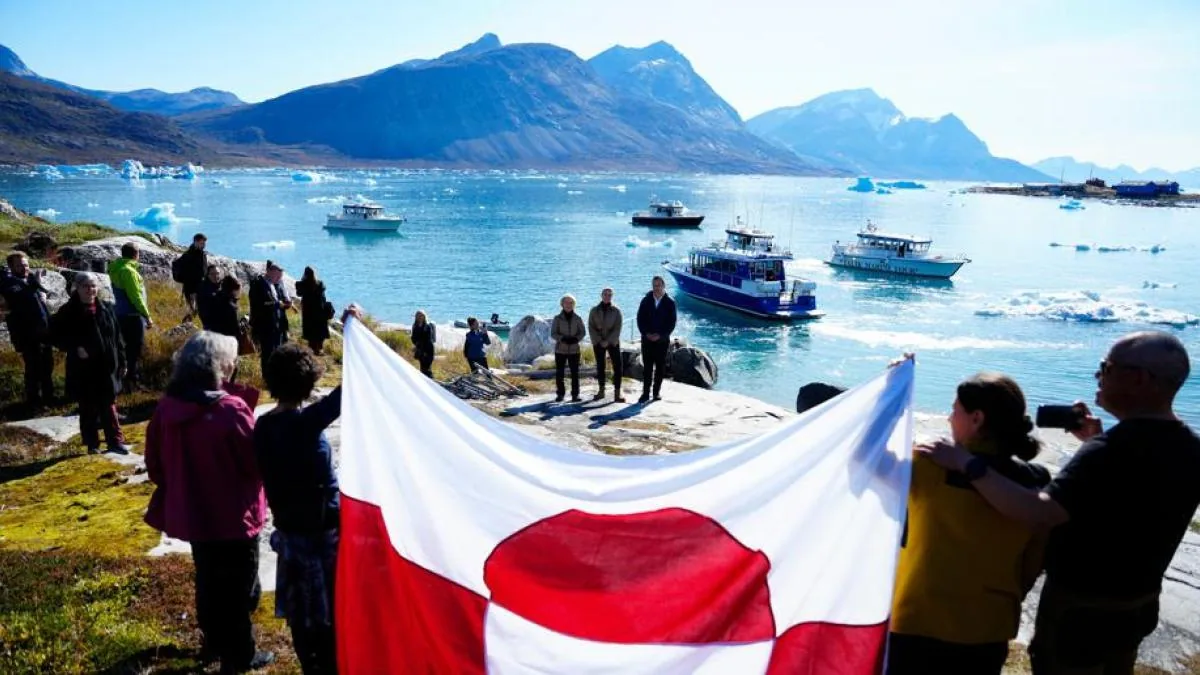
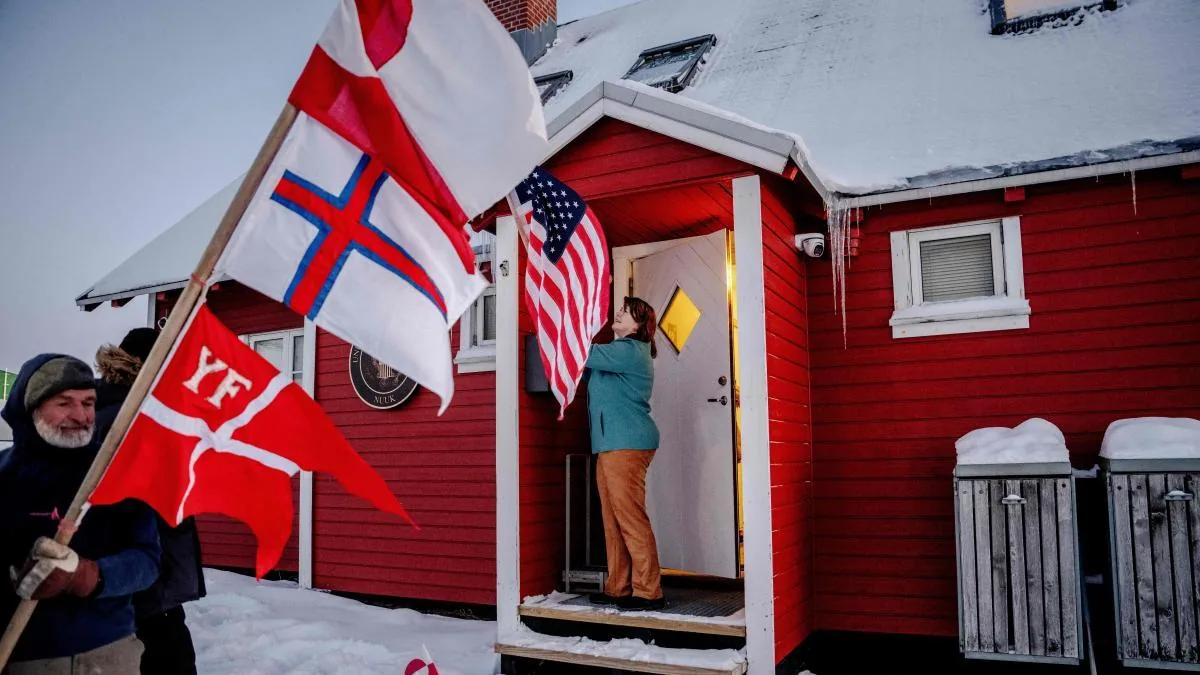
Saxony opens the dance, but last Sunday there was a prologue in Iceland. Referendum on resuming negotiations for EU membership, at a time when the United States wants to take the island of Greenland and expand in the Arctic. The no won. The EU has not been able to strongly mobilize young Icelanders, the most pro-European sector of the population. The Von der Leyen Commission is beginning to be politically inert.
One of the arguments of the no campaign was the following: “Iceland could be filled with southern Europeans fleeing the heat.”
From Ceuta to Reykjavik.
(This installment was contributed by geographer Santiago Fernández Muñoz, expert in geopolitics and public policies, partner at SILO).
Read more New reception places in Ceuta spark tension among immigrants