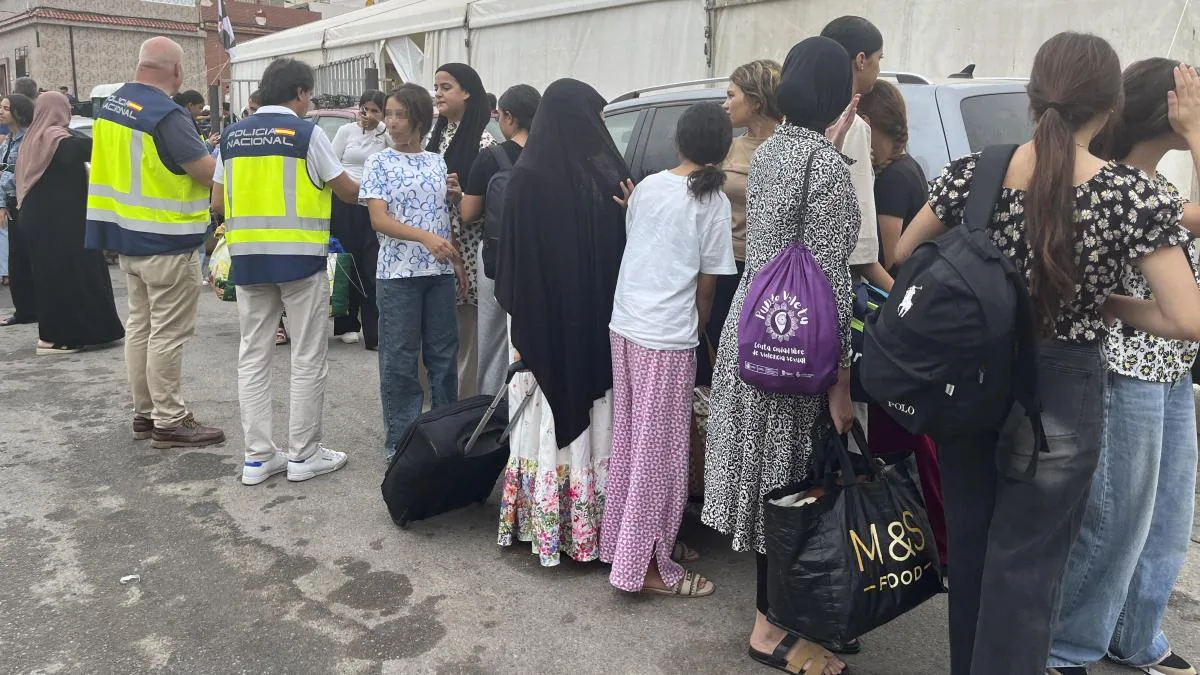
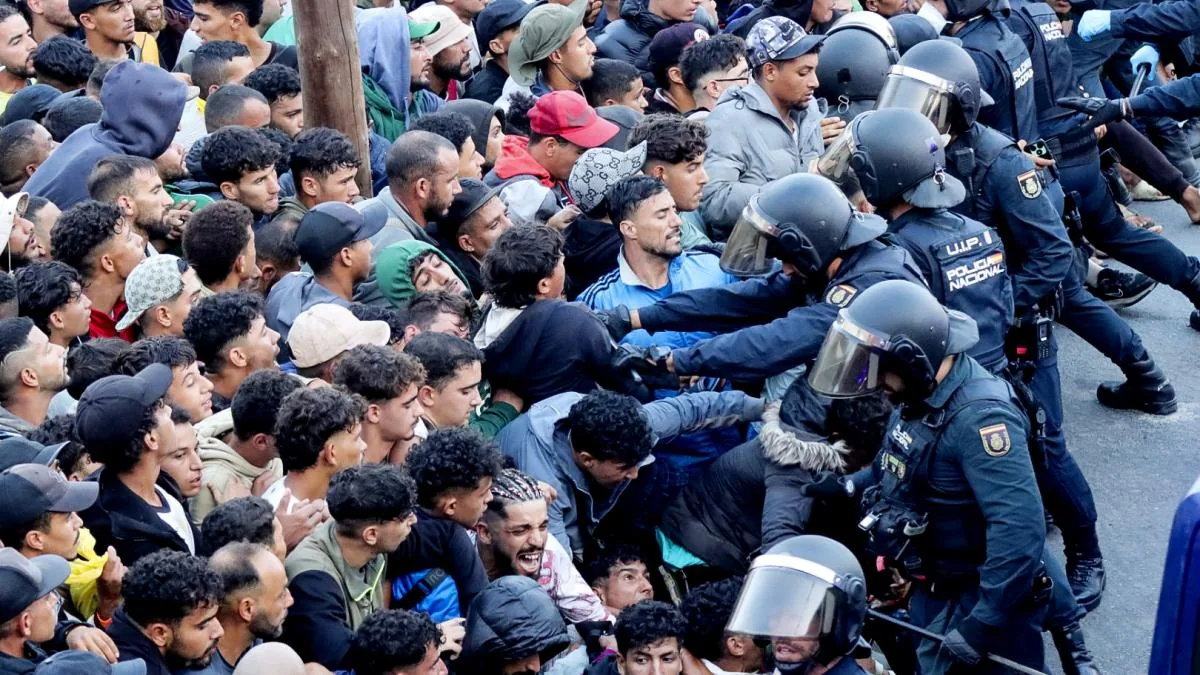
Throughout this week and next, eight government ministers will appear before the Congress of Deputies to provide explanations in their respective committees about the crisis that has been experienced in Ceuta throughout the entire month of August and that still continues today. La Vanguardia, which has closely followed the conflict since it broke out on July 30, when thousands of people jumped the El Tarajal fence, has prepared a list of 30 questions that the ministers should answer in their appearances.
Read more Could AI ever become conscious?

How many people who crossed the border remain in Ceuta? How many died? How many minors remain unprotected?
We still do not know for sure how many people crossed the border and how many perished in the attempt (Spain has counted 82 bodies on its territory, but there is no official figure for deaths on the Moroccan side). We also do not know how many stayed in Ceuta after the jump and how many of them are minors. There is also no precise data on the number of Moroccans who stayed as well as the number of people from other Middle Eastern and sub-Saharan countries.
Who is behind the massive fence assault?
The government has still not managed to explain how the fence jump was organized, in which nearly 80,000 people participated. It is clear that the Moroccan government did not prevent entry – there are testimonies that say they actually encouraged it – but the massive use of social networks originated from Morocco or were other countries involved.
What reason did Morocco give Spain for abandoning border protection for 48 hours?
It is one of the great mysteries. While thousands of young people arrived by taxi, bus, and mostly on foot from all corners of Morocco to the Castillejos border, the Moroccan police had almost disappeared. Meanwhile, barely 20 kilometers away, Mohammed VI was celebrating the Throne Day.
What did Spain know before the avalanche occurred?
Did the various Spanish intelligence services, civilian and military, have information about what was happening on the other side of the border? The answer has sparked a contradictory debate among government ministers who claim there was prior information and those who deny it and say they were surprised when the jump occurred. Were other European intelligence services aware and did not cooperate with Spain? What seems unlikely is that no one warned of a large movement.
What role has Europe played in this crisis? Should Spain protest?
Why did 22 members of the European Union react with a letter that essentially censured Spanish migration policy instead of criticizing and censuring Morocco? This letter was also promoted by the far-right Giorgia Meloni and the social-democrat Mette Frederiksen. What does Pedro Sánchez, president of the Socialist International, think of this unusual combination between parties that, in theory, should not share political positions?
Read more Take bioterrorism course online
Is Morocco still a trustworthy country?
After the crisis, Morocco opened its breakwater to allow the return of a significant part of those who had crossed the border and on August 15 made a show of force against a possible second jump attempt, which did not occur, at least not on the scale of the first. But in parallel, the Moroccan government has questioned the policy of hosting minors in Spain – in fact, it has requested their return, although it never authorizes them due to formal problems – and has also repeatedly questioned whether Ceuta and Morocco are legitimately Spanish cities.
What happened with the floating fence of El Tarajal?
Why did the Interior Ministry not install the floating fence at the El Tarajal Pier before July 30, as a deterrent element, to avoid the pull effect of swimming migrants after the Supreme Court ruling that prevented hot returns of those immigrants who found no obstacles in the sea when crossing the border? It was installed 48 hours after the assault. Was it ready? If so, why was it not installed earlier?
Why was the National Security Council not convened?
The Prime Minister described in his only visit to Ceuta during this crisis the incident at the El Tarajal fence as “a violation of territorial integrity.” Under these circumstances, why was the National Security Council not urgently convened? Has Spain played a tolerant role with the Moroccan government? And if so, why?
Is the government’s plan to expel everyone or has it changed?
In the first days after the fence jump, at least two ministers assured that the government’s plan was for everyone who had crossed the border irregularly between the 30th and 31st to return to Morocco. This was partially fulfilled the next day while some thousands of people remained in Ceuta. In the third week of the crisis, the government has begun to build temporary reception centers. Has the government changed its strategy?
Is the health of Ceutans and the migrants themselves guaranteed?
The Minister of Health visited Ceuta in the second week and there assured that Ceuta had sufficient means to face the crisis, something denied by health professionals in the autonomous city. Meanwhile, there is abundant information about the proliferation of diseases among the migrants who have remained in the city. Today, Monday, Health has convened a council of communities to collect vaccines. Beyond the health crisis, why is the information on this issue so imprecise?
Alberto Núñez Feijóo
The PP calls for lockdowns in Ceuta amid the spread of contagious diseases
Alberto Núñez Feijóo
The PP calls for lockdowns in Ceuta amid the spread of contagious diseases
Alberto Núñez Feijóo has asked the government to decree a lockdown in Ceuta due to “health risk” amid infectious contagious diseases, which according to the PP leader, have been detected such as scabies or tuberculosis. Feijóo bases his information on a meeting with the president of the Medical Association and the president of the Nursing Association of the autonomous city. Feijóo does not specify in the interview whether this lockdown should affect only the sick, the migrants, or the entire population.
Mónica Garcia
Health convenes all communities today to collect preventive vaccines
The Ministry of Health has convened the autonomous communities this Monday, August 24, to an extraordinary meeting to specify the shipment of vaccines. Mónica García has pointed out that among the most requested are the MMR, chickenpox, polio, tetanus, and diphtheria vaccines. On the other hand, the minister has rebutted the PP leader’s proposal on lockdown: “not only does it not seem justified, but it could be counterproductive,” García says.
Read more AI-designed viruses alert researchers about biosecurity