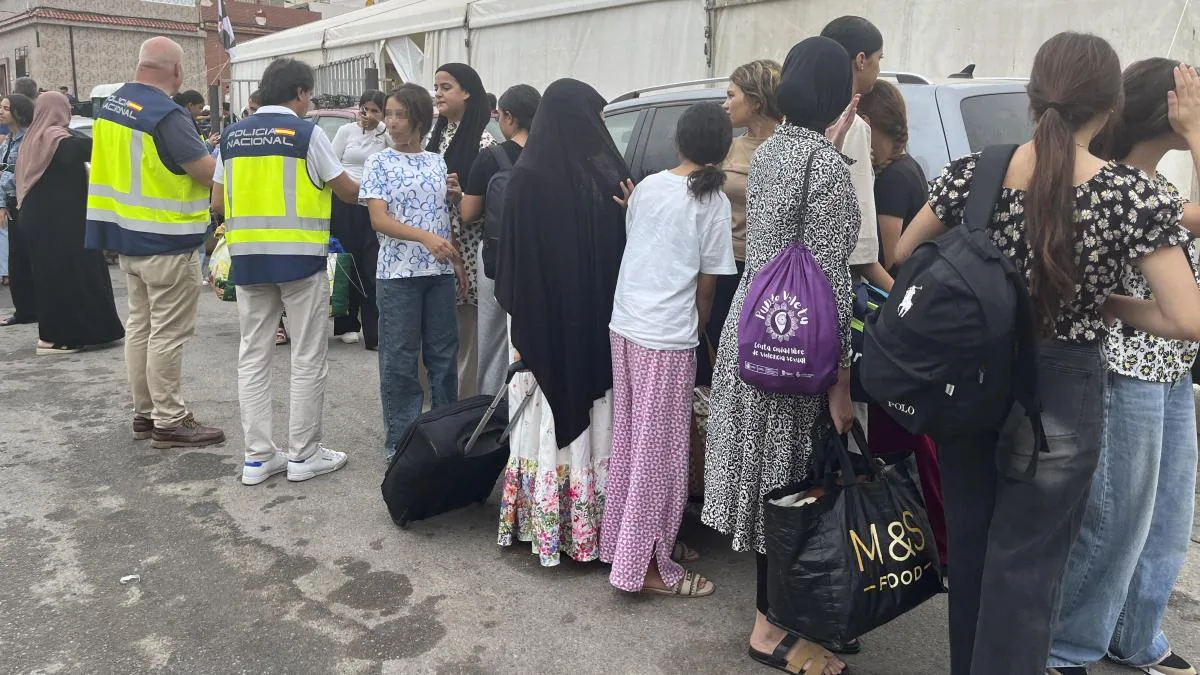
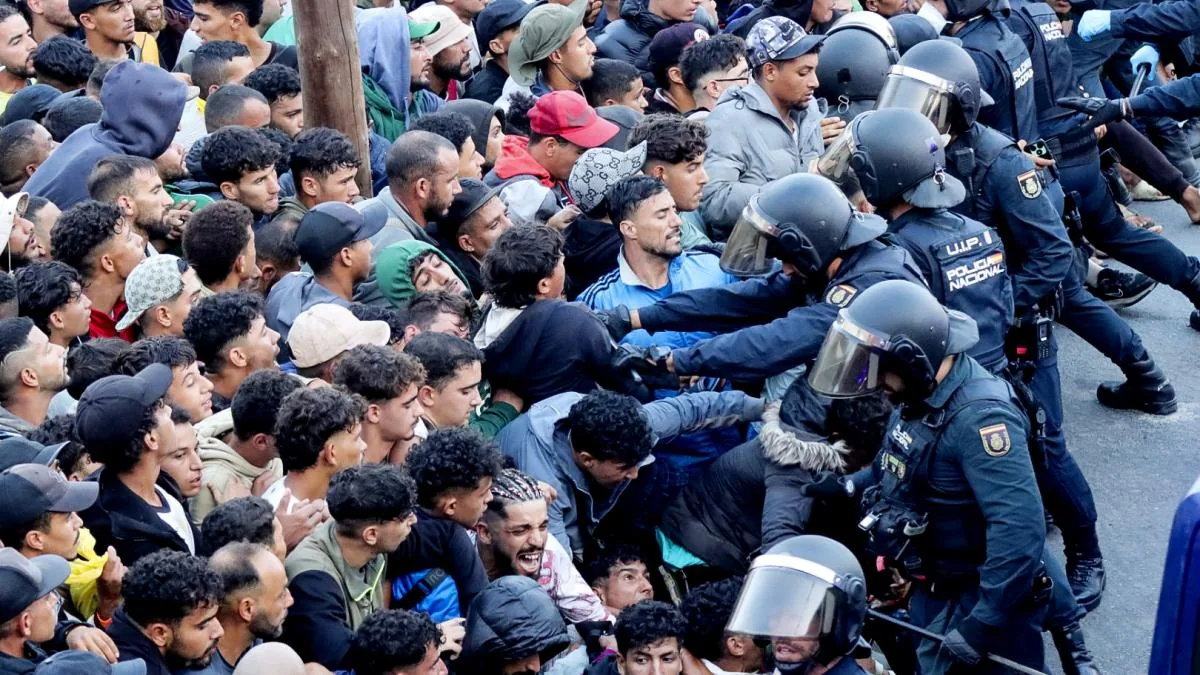
Since July 30, when more than 70,000 people entered Ceuta irregularly, a dramatic humanitarian situation has been created and maintained over time with thousands of people living in extremely precarious conditions and without any dignified and appropriate reception by the Spanish State, which has left thousands of people living in a “legal vacuum,” exposed to sexual violence and without adequate shelter, food, or sanitation for almost three weeks.” These are the two conclusions of an urgent report carried out on the ground by the human rights NGO Human Rights Watch.
Read more The long road back to the United Kingdom for Prince Harry and Meghan Markle
These two conclusions were advanced by HRW’s associate director for Europe, Judith Sunderland, in an interview on La Ser, in which she denounced that the Spanish State has not taken the necessary steps to triage these people to identify them and start legal procedures to analyze individual cases and see what can be done with them.
Sunderland also warned that while most people are Moroccan, there is a significant number of people from other African countries with conflicts who have the right to seek asylum. In fact, she pointed out that this right also applies to people of Moroccan origin if they claim it. “Every person has the right to seek asylum and an individualized analysis,” said HRW’s deputy director for Europe, who denounced that “no one has received information about their rights.”
Sunderland also criticized voices from the European Union that in recent days have advocated returning all these migrants to Morocco. “Any call for mass expulsions without any individual examination of the people is absolutely reprehensible,” she added, reminding that mass expulsions are “absolutely” prohibited by the European Convention on Human Rights “which applies in Spain and therefore in Ceuta.” “It is regrettable to hear spokespeople talk like that, especially about unaccompanied minors.” In this regard, Sunderland emphasized that in the case of minors, the “best interests of the child” “absolutely” apply.
“Despite the difficult situation, Spain must quickly mobilize sufficient resources to ensure a humane and orderly management of the crisis, for the benefit of both migrants and Ceuta residents,” the report states, based on a four-day investigative trip to the autonomous city from August 15 to 18, based on interviews with 76 migrants, including 42 individual interviews (37 adults and 5 unaccompanied minors) and group or brief conversations with 34, including 4 unaccompanied minors.
The organization highlights that while the Interior Minister, Fernando Grande-Marlaska, estimated that 5,000 migrants remain in Ceuta, local organizations raise the figure to 10,000 and emphasize that the installation of four tent camps in Ceuta with capacity for 1,500 adults and transfers to these centers “will not be enough to meet demand.”
The report indicates that many people interviewed speculated that the Government “delayed aid to convince people to return to Morocco.”
In addition to describing the precariousness in which these people are living, the organization denounces that “the shortage of showers and toilets forces people to use parks, vacant lots, and the sea.”
Read more Julián Álvarez, the last hope: Barça’s options and alternatives
According to the NGO, until August 20, there was no evidence that Spanish authorities had initiated any legal procedure or individual assessment of adults. While Moroccans appear to constitute the majority of people who arrived at the end of July, Human Rights Watch also spoke with men and boys from Chad, Senegal, Somalia, Sudan, Tunisia, Yemen, Algeria, Syria, and Egypt. Many had spent years on arduous journeys and expressed their desire to seek asylum in Spain. “I want to seek asylum,” said Mohamed, a 20-year-old young Sudanese man. “But we still have no information.”
Likewise, according to HRW, many Moroccan women spoke of having escaped domestic violence. Fátima, 47, originally from Tetouan, swam to Ceuta with her 11-year-old son to flee her abusive ex-husband. “I left my country not because I am hungry, but because my husband is a drug addict; he beats me and my son,” she said. She showed a long scar on her arm where, she said, he cut her with a knife. According to her, her attempts to report him to the Moroccan police were useless. Fátima went to the Ceuta police, but they told her to go to the warehouse district, where hundreds of people sleep outdoors “until a solution is found.”
According to European Union rules in force since mid-June, Spain should have examined all people, including security and health checks, and a “preliminary vulnerability screening” to identify stateless persons, survivors of torture or other inhuman or degrading treatment, and people with “special needs,” in accordance with EU legislation.
It is unclear – the report notes – whether Spain will resort to accelerated asylum procedures at the border, which could lead to quick rejections, among other reasons because asylum seekers were previously in Morocco, a country the EU considers a “safe third country” where they should have sought international protection.
Moroccan citizens, including women claiming fear of domestic violence, risk being returned due to a readmission agreement with Spain that considers Morocco a “safe country of origin,” warns the NGO, which recalls that the United Nations High Commissioner for Refugees (UNHCR) office in Spain has urged authorities to provide information about the right to asylum and identify protection needs through proper assessment. Migrants who do not need international protection may opt for Spain’s Humanitarian Assistance Program.
On the other hand, the report explains, four emergency doctors stated they had treated a total of two women and six girls, including a 14-year-old Moroccan and an 11-year-old girl from an unidentified African country, for sexual assault and rape. A 25-year-old Moroccan woman told HRW that a Spanish-speaking man raped her on the night of her arrival; she has not reported the rape to the police. The Ceuta Prosecutor’s Office reported having received 13 reports of sexual assault between July 30 and August 17, most victims being non-residents of the city.
The situation of unaccompanied minors is especially concerning, according to Human Rights Watch. There are no reliable statistics on how many may be in the city. In any case, on August 18, the Ministry of the Interior reported that the police had registered 2,168 unaccompanied minors.
Read more Barcelona will subsidize the purchase of electric bikes with 400 euros