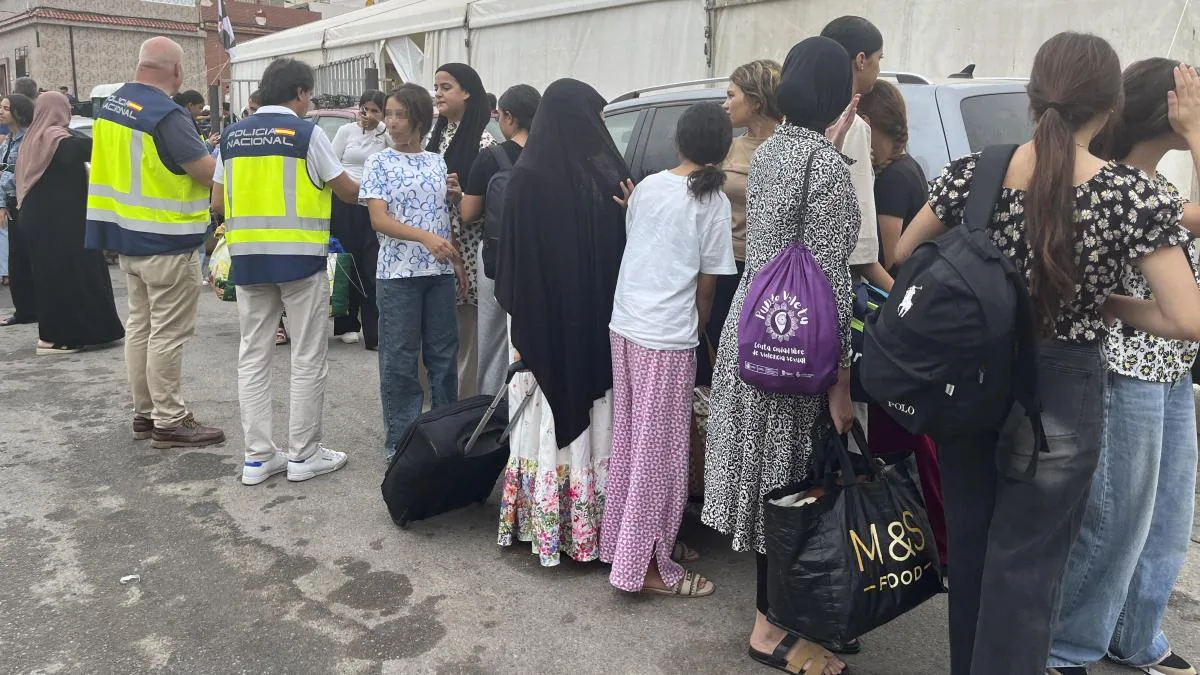
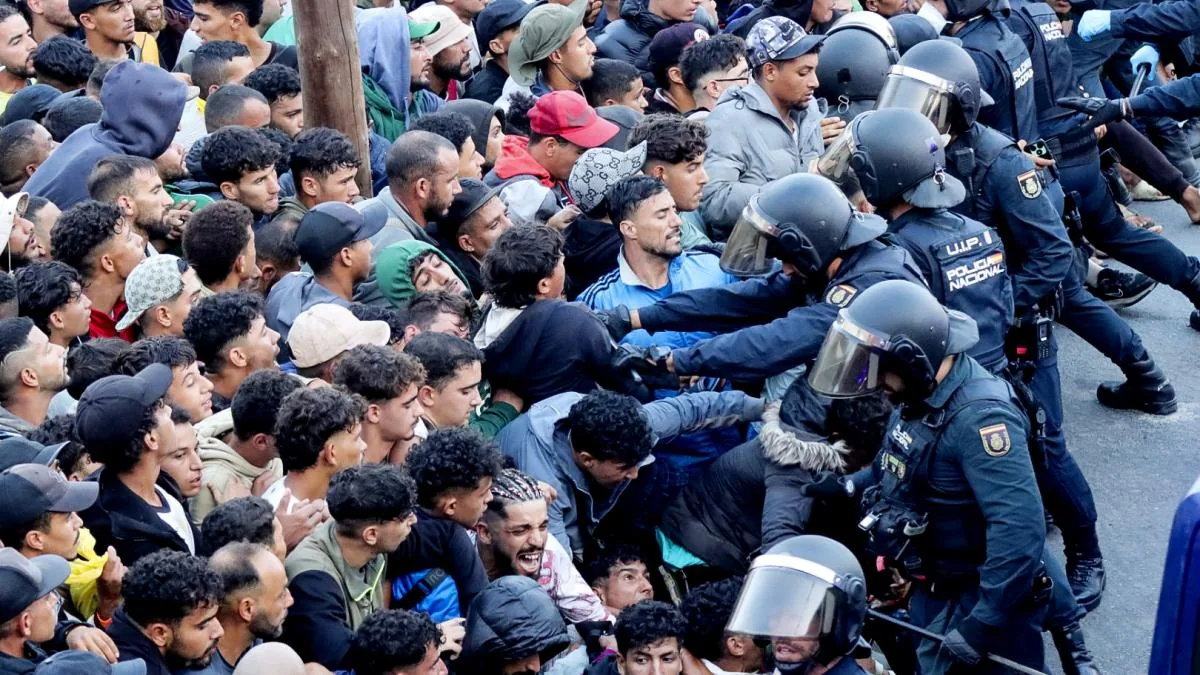
Alberto Núñez Feijóo returned this Wednesday to Ceuta, for the second time in just over fifteen days, to demand the voluntary return or expulsion of “all” immigrants who have entered illegally following the massive influx that overwhelmed the autonomous city. From the southern border, the leader of the PP raised his tone against the “inaction and irresponsibility” of the Government three weeks after the crisis and, positioning himself as a Government alternative, sent a clear message to Rabat in case Pedro Sánchez is removed from the Presidency: Spain will not act “under blackmail or threat” because “the Spanishness of Ceuta and Melilla is non-negotiable.”
Read more Thirty more packages of cocaine with a stamp appear on Malgrat beach
The Moroccan issue and border control have been the central focus of his speech. Although he defended a neighborhood based on “friendship and loyalty,” Feijóo demanded strict reciprocity and warned that the situation of healthcare and security saturation in the city could lead to “serious incidents” if firm action is not taken. “Spain does not seek enemies or conflicts, but it will not accept threats either,” he asserted, criticizing the statements of Alaouite ministers who claim sovereignty over Spain.
The visit also has an obvious strategic reading. The PP leadership is seeking to project Feijóo with a markedly presidential profile from the opposition, establishing himself as a candidate prepared to take the helm of the State ahead of general elections whose horizon is increasingly perceived as near. Pedro Sánchez’s absence in the Ceuta enclave during what Génova defines as one of the “most serious and exceptional” crises of recent times has served to accentuate that institutional contrast.
Also read
“I come out of responsibility. Since July 30, Spain lost control of one of its borders,” Feijóo argued, who hardened the diagnosis by describing the breach of the perimeter as an “invasion in full 2026.” The leader of the Popular Party criticized Moncloa for trying to treat the emergency “as a simple summer episode,” dismissing it on social media or with cultural recommendations while Ceuta remains far from normality. According to his figures, more than 10,000 people still remain in the city—compared to the 2,500 estimated in official counts—so he calls the discourse of normalization an “insult to the intelligence of the people of Ceuta.”
Furthermore, Feijóo’s analysis went beyond the migratory sphere to warn of a triple parallel crisis: national security, public order, and public health, worsened by healthcare saturation and the presence of thousands of people wandering the streets without adequate assistance.
On the institutional level, the PP has increased pressure on Sánchez’s Cabinet by announcing an appeal to the Supreme Court over the ministers’ veto to appear in the Senate. “It is devastating that some European prime ministers have appeared before in this case than the President of the Government of Spain,” Feijóo reproached, questioning the Government’s refusal to submit to the control of the Upper House.
Read more Iran points towards escalation: threatens Gulf countries and outlines targets in Europe
The offensive did not stop at denunciation. Feijóo presented a seven-point plan for Ceuta to regain normality and turned it into a future commitment. If the Government ignores his proposals, he assured that the PP will implement them if it obtains “the trust of the citizens to govern Spain.”
The package includes a single command to coordinate the response; the voluntary return or expulsion of all who have entered illegally; a relationship with Morocco based on respect and reciprocity and the defense of Spanish territorial integrity; and the use of “all means,” including the law and international allies, to defend the border.
The plan is completed with the reinforcement of the perimeter through infrastructure, human resources, technology, and legal reforms; greater presence of Ceuta in European and international institutions; and an economic reactivation plan for the city.
Feijóo wanted to close the circle of a visit designed not only to denounce the management of the crisis but to showcase an alternative. Against a Government that, according to his account, ignored warnings before the massive entry, was not up to the task during the crisis, and still does not offer a response afterward, the leader of the PP has returned to Ceuta, listened to its authorities, and presented an action program.