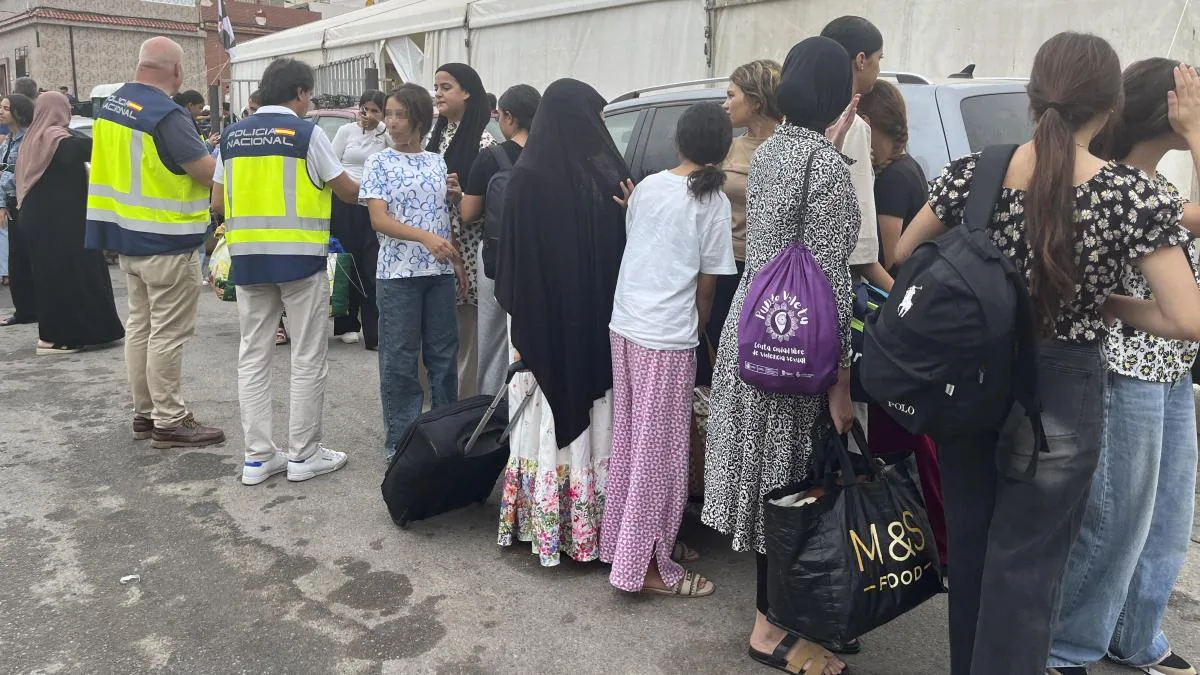
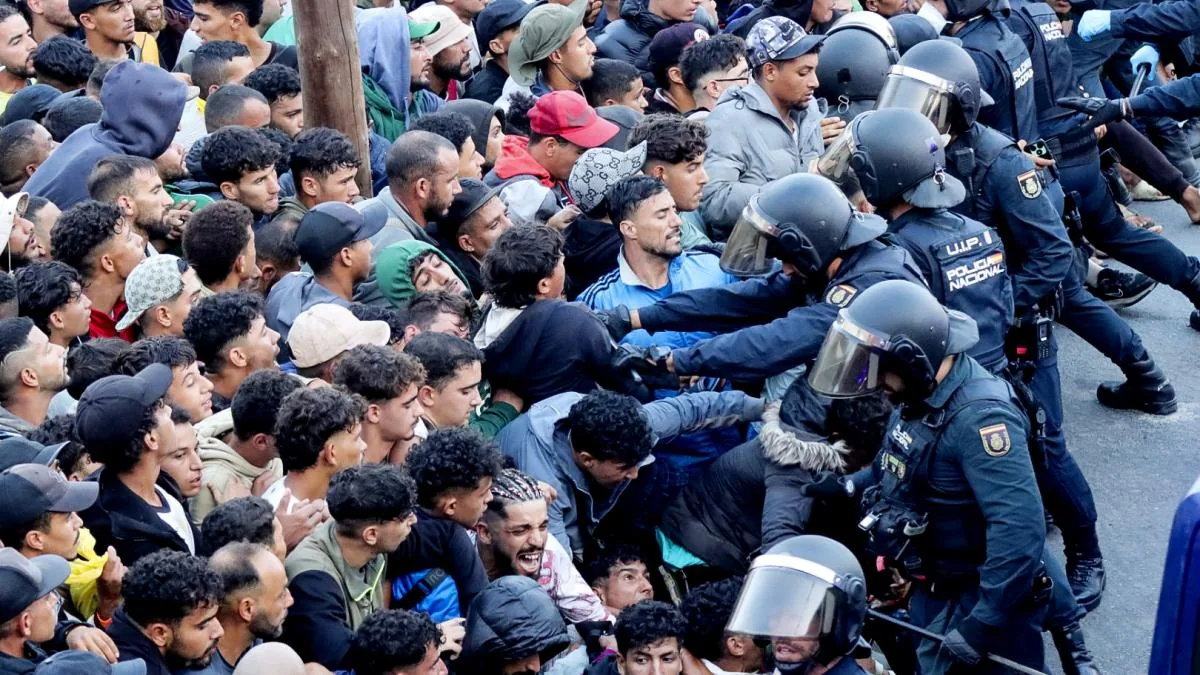
Many Spanish and Italian tourists traveling between the two countries these days may not have known what the Schengen area is. For many, the absence of borders in the European Union is normal. The measure by the Italian Prime Minister, Giorgia Meloni, to carry out document checks as a major measure against immigration does not end Schengen, but it is a sign of a drift, a danger, one more among those posed by the advance of the far right in Europe. Meloni knows that the avalanche of immigrants from Morocco who entered Ceuta last week did not pose a danger to any EU country, because Schengen had already set specific measures for those cities.
Read more The Last of the Mohicans
Spain has paid back in kind, imposing controls on those traveling from Italy. A harmless gesture, an easy response, which seeks the opposite of Meloni’s by making a banner of “national priority.” I don’t know if it is about defending Schengen or just warning that if it puts obstacles, its “nationals” can suffer them too.
We cannot let the anti-Europeans undo what has cost so much to achieve
It would be good if, besides acting for show, pedagogy were done and it were explained what the Schengen area means, which is not that terrible thing from which Italy wants to protect itself, but much more. Those of us who are old enough and saw Europe as the guarantee that there would be no going back, that Spain would be a country of progress, democratic, comparable to other European countries, will not forget the images on television of how the border between Spain and France was crossed without stopping, with the police booths abandoned.
On March 26, 1995, the borders between Spain, Portugal, Belgium, Germany, France, Luxembourg, and the Netherlands disappeared, in application of the Schengen agreement, approved in 1991. It was not an administrative detail, it was a symbol of the change experienced by Spain after Franco’s death. It was the culmination of an aspiration for normalization of a Spain that twenty years earlier lived under dictatorship, isolated from what Europe represented: freedom, progress, human rights, democracy.

It was the government of Felipe González that decided to incorporate Spain into the newly created Schengen area, but the opposition, represented by José María Aznar, who a year later would become president, supported the implementation of the area without any reservations. Only United Left was against it, but not because they opposed it, but because they thought it was too little Europe. What have we done for the situation to change so much?
Read more The PP and Vox governments currently pass the Ceuta crisis test
The entire parliamentary spectrum was very clear about what Schengen meant. The cession of sovereignty from the states, so that their borders became Europe’s borders. Spain became the southern border. The disappearance of those borders forced the strengthening of the external borders and turned immigration into a European problem, although Europe has not done enough. Schengen was also one of the first steps towards a Europe of police and judicial cooperation, which helped us so much in the fight against ETA.
Schengen was the logical step of a Europe that had started as a common market, evolved into a single market, advanced in Maastricht towards greater political cooperation and towards European citizenship, introduced the free movement of people, and later created a single currency.
So yes. Document checks are a gesture, a pose, but they hide more. Meloni’s reaction and that of some others to the Ceuta avalanche is a warning signal of what the European Union as a concept and aspiration may suffer. We cannot let the anti-Europeans undo what has cost so much to achieve. Let us face the problem of illegal immigration arriving in Spain, in Ceuta, and in Italy, in Lampedusa, without losing sight of the forest, the dreamed Europe against which the far right in power and in opposition fight today.
Read more Who watches over Rodalies?