They call it sexalescence, an expression that aims to redefine the life of active sixty-year-olds ready to seize every goal. It combines sexagenarian and adolescence, suggesting that the 60s can be a kind of new beginning. The sexalescents are active people, with autonomy and more personal time, who move away from the traditional idea of “old age” because they cultivate curiosity and knowledge – whether reading, workshops or reading circles – sports, crafts or travel.
Read more The gastronomic festival that turns Andorra into a brand story
On September 2, Salma Hayek turned 60 just as she debuted her role as a grandmother with a baby named François. “I will call him Panchito.” She is part of a list of personalities who promote a lifestyle that mixes experience with optimism. From Cindy Crawford to Robin Wright or Patrick Dempsey, turning 60 without undergoing severe aesthetic changes follows a concept of aging with dignity, with grace, without fighting age.
Turning 60 without undergoing severe aesthetic changes follows a concept of aging with dignity
In fact, the experts we interviewed agree on using the same word to define how their patients feel at this age. And the word is none other than “desire.”
There is a lot of information about osteoporosis, wrinkles, visceral fat, hypertension, cognitive decline, the negative effects of menopause (and in some media, andropause). But little is delved into the psychological liberation that accompanies this age in which guilt and prejudices lighten. Besides the desire to live fully that resurges strongly in a decade when goals can no longer be postponed.

It’s not the age
Undoubtedly, at 60 the body has changed in some aspects, but “not all discomforts can be blamed on age,” says traumatologist Félix López, head of the Joint Preservation Unit at Publio Cordón Memorial Hospital. “We have taken for granted that from a certain age it was normal for knees to hurt, to lose mobility, to have less strength or to stop doing certain things. And now we know it doesn’t have to be that way,” he explains. “One thing is aging and another is assuming that pain or loss of function are normal simply because we have turned 60.”
In his practice, he treats people in their 70s who play sports almost every day and others much younger with significant joint problems. “The age on the ID matters,” he says, “but physical activity, muscle mass, weight, previous injuries, and habits matter much more. It’s a quite important paradigm shift: it’s no longer about saying ‘this is normal because you are 60,’ but about finding out what is happening.”
Having a purpose
A friend spoke, in her 60th birthday speech, about the stomach pangs she felt at the idea of entering this new decade. A deeply youthful feeling reminiscent of what actress Halle Berry showed on social media before celebrating the same age.
The world may not say it, but some seem to know or sense that something good awaits on the other side of that imaginary door.
Purpose is one of the pillars of healthy longevity”
Dr. Mariel Silva
Dr. Mariel Silva, medical director at SHA Spain, has observed this in her patients. “Purpose is one of the pillars of healthy longevity. And at this age, many people think ‘this is my moment’ and want to do what they have been postponing for years.”
Dr. Félix López confirms it: “I think it’s a great moment in life.” In his practice, the mindset change becomes obvious when his patients speak. “Before, certain limitations were perhaps accepted with more resignation. Now people of that age don’t just come asking for pain to disappear, but ‘I want to keep playing paddle tennis,’ ‘I want to keep skiing,’ ‘I want to run,’ or ‘I have a trip and want to be able to walk without problems.’”

Paradigm shift
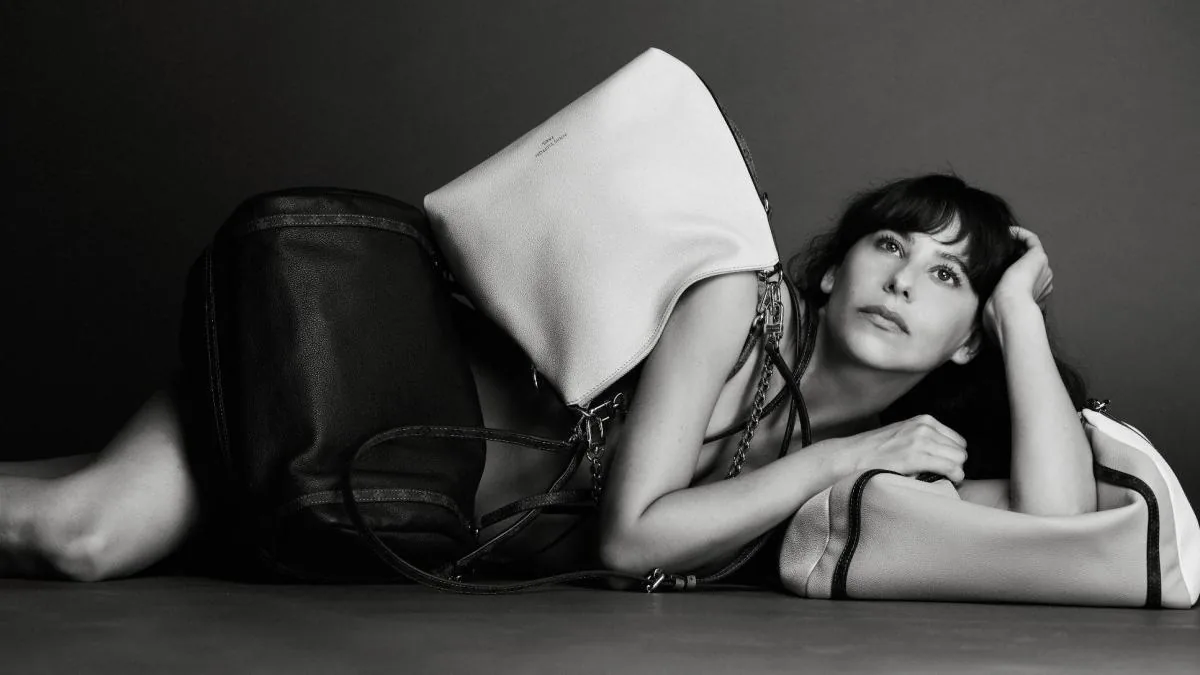
For women, this age has perhaps an unexpected gift. Peri- and menopause bring hormonal fluctuations that can play tricks. But in postmenopause, that is over. And the change is perceived in greater stability and confidence that coincide with a stage of social liberation. “No longer being within masculine standards is liberating,” said French actress Sophie Marceau on one occasion.
Dr. Silva points out that some studies on well-being in postmenopause have found “greater emotional regulation and the ability to put problematic situations into perspective. As well as less concern from women about external approval combined with greater self-knowledge.”
No longer being within masculine standards is liberating”
Sophie Marceau
Actress
This wealth of gifts associated with the liberation from social roles could also have something to do with the new hormonal stability. “There is no conclusive study,” Dr. Silva tells us, “but there is suspicion that estrogen decline could be related to a decrease in empathy and therefore suffering.” In short, with the joyfully selfish decision of “now I’m going to live for myself.”
Read more The two victims of the sex video forgive Asencio and the other three prosecuted footballers
The prodigious decade
That was the implicit message at the party entrepreneur Nuria March held when she organized the big celebration of her 60th birthday with a dress code from those years of the 20th century.
“I want to represent the age I have,” she said that day. March is the perfect example of embracing age with enthusiasm. She has gone through separations, starting over, and has reinvented herself as many times as necessary.

Her communication agency specialized in luxury and lifestyle is at its best moment, a perfect culmination to years as a director with brands like Vasari or Carolina Herrera. It is time to enjoy a freedom that allows her, for example, to appear on social media dancing in a line dancing session, something she would never have done years ago.
Muscle as a passport
The conversation about turning 60 has always had an irritating tendency to get stuck on appearance. Weight, waist measurement, wrinkles, gray hair… But in recent years, both from medicine and other sectors linked to well-being and longevity, only one thing is talked about: muscle.
“If I had to insist on one piece of advice for those turning 60, it would be muscle care,” says Dr. Félix López. “Having good muscle mass protects the joints, improves balance, and allows you to continue performing daily activities and maintain our independence.” Stopping doing things can be the mistake. “It’s more about thinking ‘what do I have to do to keep doing what I want to do for many more years.’”
Both from medicine and other sectors, only one thing is talked about: muscle
Dr. Silva agrees. “If there is something fundamental at this age and especially in women, it is strength exercise. Muscle acts as a fundamental support and helps protect the bone. It can also contribute to mood and concentration.”
You don’t need to become a bodybuilder at 60. In fact, “15 minutes of daily weight exercise can make a big difference,” adds the doctor. But there are also options for those who don’t want to lift weights. “The main culprit of physical capacity deterioration as we age is muscle mass loss, that is, sarcopenia. High-intensity muscle work should not be abandoned whether with active training or aesthetic bodybuilding,” says Alexander Pérez Roldán, founder of Wonder Technology and an engineer who has dedicated his life to muscle research. “Muscle development will increase strength and endurance. It will also improve connections between nerves and muscles, protecting motor neurons in the spinal cord.”

Salma Hayek’s 60s
The actress maintains a very active profile on Instagram. Her professional content is followed by very homey and natural ones. In one of the latest, she appears holding her husband’s first grandchild, whom she calls Panchito.
Salma embraces the role of grandmother with youthful enthusiasm dressed in gray hair, and a cheerful and unpretentious tenderness. The same she shows when talking about the dogs and cats she lives with, all rescued from the street. And she goes from there to enjoying football or appearing at a gala dressed in a long gown with her husband beside her and the name of some medical aesthetic laboratory among the tags.
Salma is overflowing with freedom and seems to be even more so as she ages.

The power of age
After separating, not by her own decision, from Tim Burton, Helena Bonham Carter went through a complicated stage. “With divorce, you go through a huge grief: it’s the death of a relationship. Your identity, everything, changes,” she told Harper’s Bazaar. No one would have told her that four years later she would find a relationship much more intense than the one she had with a man 22 years younger. “Now I’m happier than ever. It has been a kind of unexpected magic in my life.”
She had never lived with a partner before, but at 60 in 2026, she has changed the idea of what she wants. With her new partner, she shares a house and adopted animals. Bonham Carter believes that “there is a widespread fear of older women because they can be very powerful.” A conclusion she has reached through experience. “When I turned 50, I worried that everything would go downhill. I was surprised that the opposite happened. I don’t think I have ever been happier or felt more fulfilled.”
Lubricant yes, nonsense no

She celebrated her birthday on Instagram with an image in which she appears naked, with an open robe covering just enough and with a phrase that sums up her feeling of freedom. “Today… I don’t give a damn about anything!” Halle Berry has always been an activist and for some years has focused on women’s health. Respin Health is the name of her own telehealth platform. About postmenopause she said (to Vogue USA): “It’s the stage where you are the best version of yourself.”
Read more The Amazing Adventures of Bishop Prevost in Peru