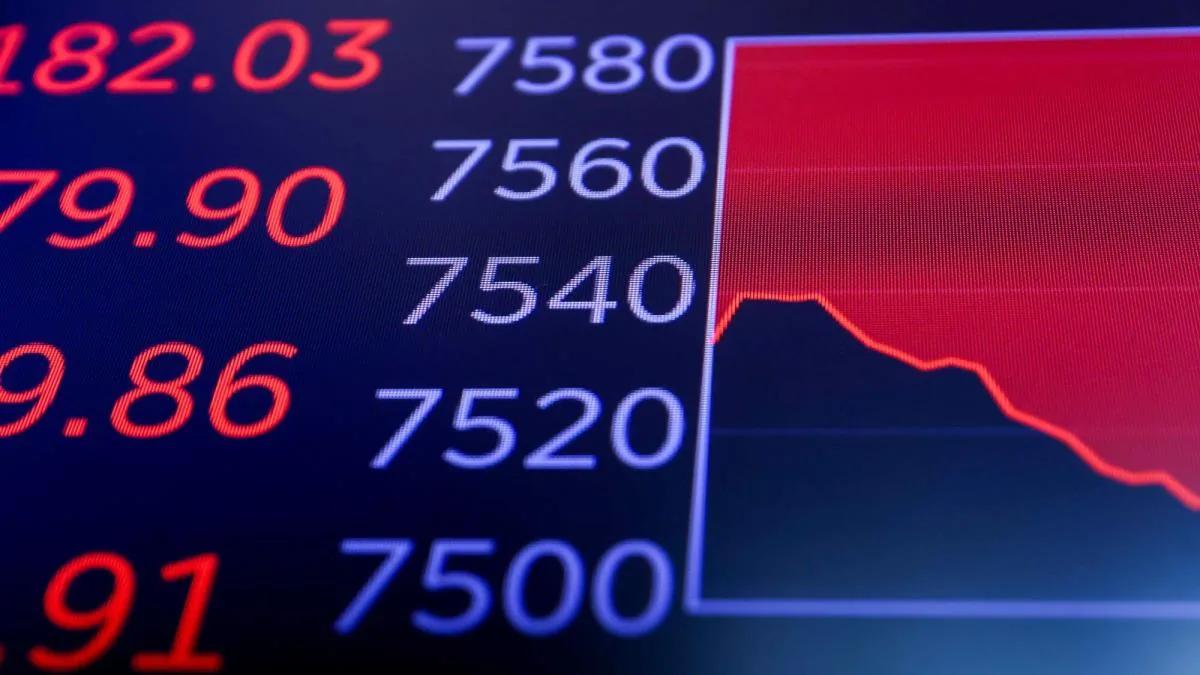
Good news in the labor market is terrible for investors. This was confirmed this Friday on Wall Street where the three indices suffered severe drops, led especially by the Nasdaq (down 4%) due to a massive sell-off of AI-related stocks once the good employment creation results were known.
The drops especially affected companies that are highly exposed to artificial intelligence investments and spread throughout the technology sector, which registered a loss of more than 5%.
The creation of 172,000 jobs in May and the prospect that this would lead to an increase in interest rates had a devastating effect on stock markets. The Dow Jones, which started strong towards a record, suddenly plummeted and closed with a loss of more than almost 700 points (down 1.3%), its worst result since March 27.
For the Standard & Poor, with a decline of more than 2.6%, it meant ending a nine-week consecutive upward streak, in the worst day since October 10.
But if any index took a hit, it was the Nasdaq, with a 4.1% drop, something not seen since April 4, 2025. That strong sell-off of shares linked to the artificial intelligence industry intensified after a much better-than-expected labor report, a matter that increases concern that the Federal Reserve (Fed) might even dare to raise interest rates in the face of an inflation outlook well above its target.
Read more Republican dissent in Congress grows and vexes Trump on Ukraine, Iran, and his ballroom
The Nasdaq Composite index suffered that plunge, dragged down by a 6% drop in Nvidia shares and a 7% decline in Broadcom shares. The relatively weak forecasts Broadcom presented on Wednesday fueled fears that AI demand might not grow as fast as previously thought.
Concern increased this Friday with a labor report that fueled inflationary fears. The yield on ten-year US Treasury bonds exceeded 4.5%. Meanwhile, the yield on two-year bonds, which typically rises and falls based on expectations for Fed-set interest rates, rose to 4.15%.
Investors now expect the Federal Reserve to keep interest rates high throughout 2026, and bets have increased that the central bank will even have to raise them. Analysts now see a nearly 70% probability that monetary authorities will raise rates before the end of the year, compared to just under 50% before the release of the labor report.
After these data were released, President Donald Trump wrote: “With an excellent employment report, like the one just announced, stocks should go up, not down.” And he clarified that “growth does not mean inflation!” Investors ignored this on Friday.
Read more Enjoy live today’s Primavera Sound: The Cure, Addison Rae and Skrillex, live