


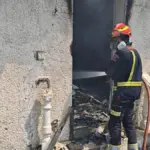
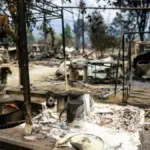
As the tug of war continues in the peace negotiations between Washington and Tehran, the United States Central Command (Centcom) reported Monday afternoon that the U.S. military opened fire again and “carried out self-defense attacks in southeastern Iran.”
Read more About new things
Since this war began last February 28, a ceasefire has been in effect for six weeks. During this period, other attacks have occurred but the truce has been maintained. On that occasion, the attacks made it seem that the ongoing talks could be derailed. The U.S. bombing took place just hours after Iranian negotiators arrived in Qatar.
Captain Tim Hawkins, Centcom spokesperson, stated in a press release that the “self-defense” actions were carried out around Bandar Abbas, in the Strait of Hormuz area, “to protect our troops from threats posed by Iranian forces.”
He also said that “the targets included missile launch sites and Iranian vessels attempting to place mines,” Hawkins said. “Central Command continues to defend our forces while acting with restraint during the current ceasefire,” he added.
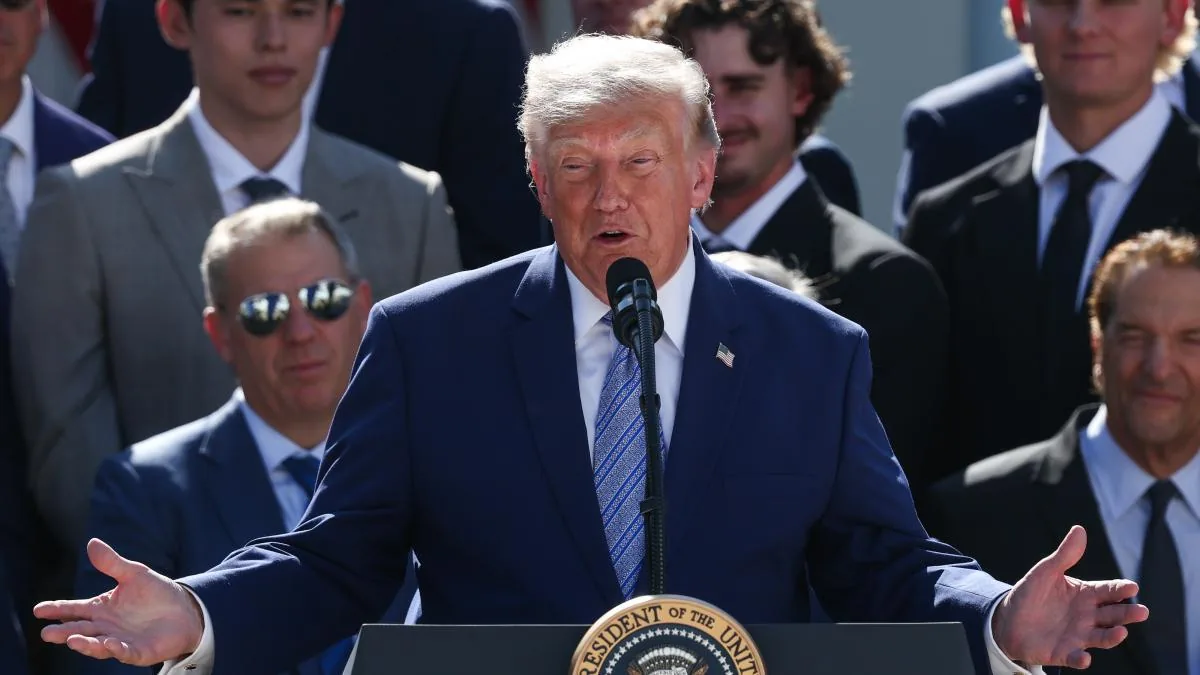
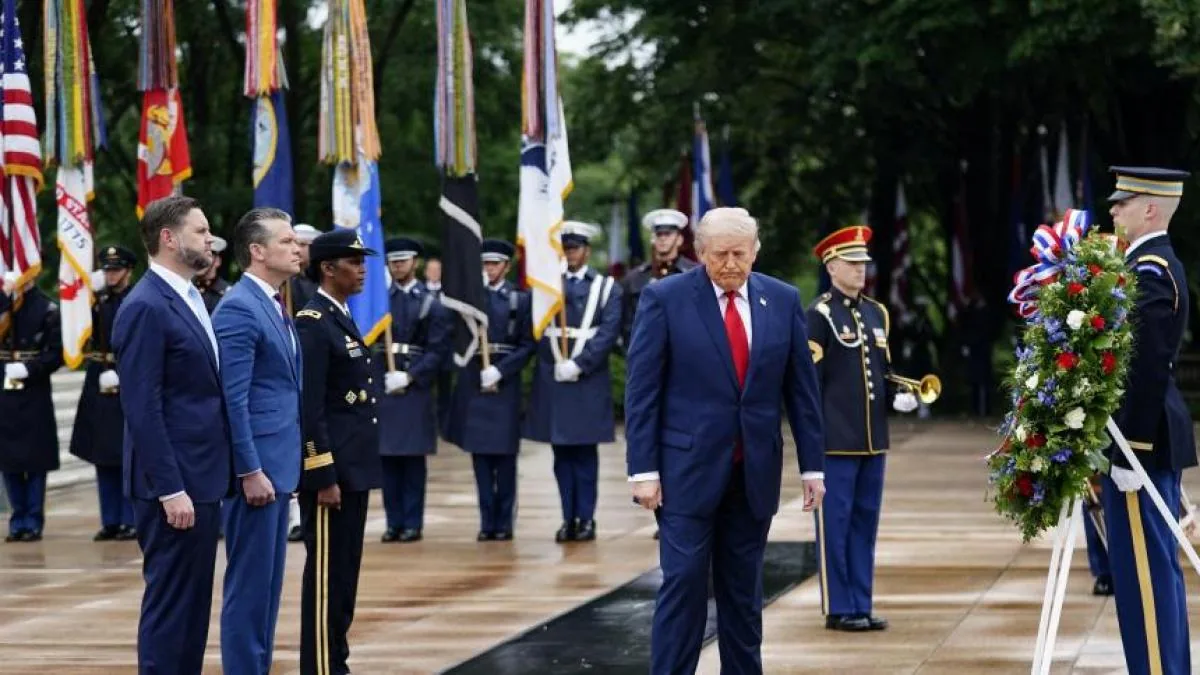
The announcement came after U.S. officials, including President Donald Trump, assured over the weekend that negotiations were progressing well. “Negotiations with the Islamic Republic of Iran are going very well,” Trump emphasized this Monday on his social media, just before traveling to Arlington to pay military honors, including those who have died on this front, as Memorial Day was observed.
But, in his usual conduct, Trump also took the opportunity to threaten. “It will be either a great deal or no deal, back to the battlefield and bombings, bigger and stronger than before, and nobody wants that,” he warned.
After this new armed intervention, there was no announcement about changes to the ceasefire between the United States and Iran, which came into effect on April 8. “The United States Central Command continues to defend our forces while acting with restraint during the current ceasefire,” Hawkins emphasized.
Semi-official Iranian media reported hearing explosions in Bandar Abbas, home to a large Iranian naval base near the Strait of Hormuz, and in coastal areas near the strait. The Iranian news agency Mehr explained that the situation in that city was under control and there was no cause for concern, according to Reuters.
After saying that any deal “will be great or it won’t be,” the president stated in another post that Iran’s enriched uranium “will be immediately delivered to the United States to be transported and destroyed” or “destroyed at a location in Iran or another acceptable location,” highlighting what is a major point of friction in the negotiations.
Read more ‘Magnifica humanitas’ by Leo XIV, a social encyclical
The statements signify a certain shift in stance, as the president had repeatedly demanded that Iran’s current reserves be removed from the country and sent either to the United States or elsewhere.
Trump added that the Atomic Energy Commission “or its equivalent” should play a role in overseeing the process.
It is not yet clear whether Iran has accepted these conditions, although U.S. sources told reporters on Sunday that the Iranians had, in principle, committed to giving up their enriched uranium reserves.
Esmail Baghaei, spokesperson for the Iranian Ministry of Foreign Affairs, emphasized that Iran was not discussing details of its nuclear program. The fate of the nuclear program was only one of the critical aspects of a possible peace agreement that remained unresolved this Monday.
On Monday, Trump issued a warning to Arab countries, U.S. allies in the region, to adhere to the Abraham Accords, which recognize Israel. The president explained on his social media that he had discussed this issue with regional leaders over the weekend, including Saudi Arabia, Qatar, Pakistan, Egypt, Jordan, Bahrain, Turkey, and the United Arab Emirates.
“I told them that, after all the work done by the United States to try to unite this very complex puzzle, it should be mandatory that all these countries, at a minimum, join the Abraham Accords simultaneously,” he insisted.
In his message, the U.S. president especially pressured Saudi Arabia and Qatar to be the first, “and everyone else should follow their example,” he stressed. “If they don’t, they should not be part of this deal, as that shows bad intent,” he reiterated.
Read more The Pope, against the technooligarchs