The energy price shock caused by the Iranian conflict is beginning to claim its first victims. A report from Caixabank Research warns that the manufacturing industry risks weakening its growth, even sinking into stagnation. The intensity of energy consumption as well as dependence on foreign trade make this sector the most sensitive to the international situation.
Read more U.S. launches “self-defense” attacks in southern Iran as conflict end is negotiated
Despite this context, the study assures that the manufacturing industry will continue to grow, albeit at a more contained pace. Specifically, growth will be 1.7% in 2026 and 1.5% in 2027. In some cases, in traditional branches such as textiles, wood, or paper, growth could be zero over the two years, due to the cost shock as well as structural headwinds, such as strong global competition from emerging economies and changes in demand.
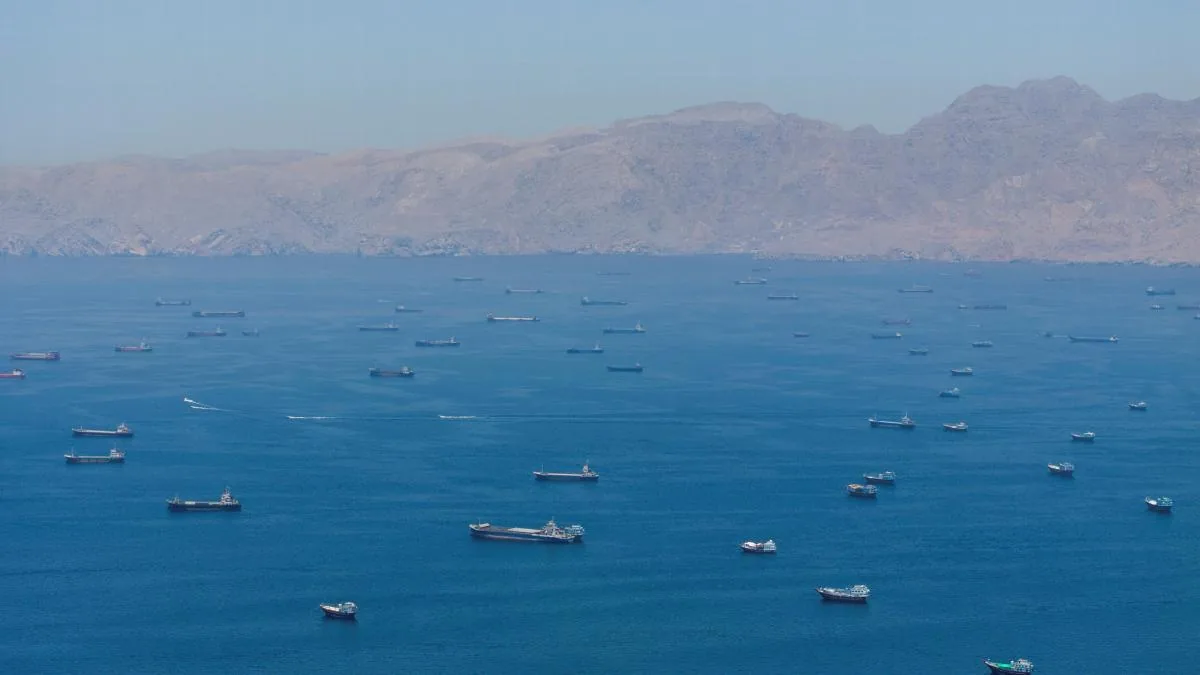
“Spain is a net energy importer and that directly penalizes the competitiveness of the exporting industry compared to other countries less dependent on the Persian Gulf. The conflict pressures costs in two ways: the increase in energy prices and the logistical difficulties derived from the narrow closure of Hormuz,” says Diego Guri, deputy general director of Amec, the Association of Internationalized Industrial Companies.
Caixabank Research warns that energy prices and foreign trade slow growth
In any case, the growth rates of the manufacturing industry for this year are higher than the historical growth of the Spanish industry and that of its European counterparts. The report points out that Spain enjoys a competitive advantage over other countries as it has less dependence on Russian gas – due to Algerian gas – and a greater share of low-cost renewables. However, the sector’s high sensitivity to oil and gas prices, which have indeed risen due to the Iranian conflict, will cause Spanish manufacturing to slow down. Additionally, the study warns that this Spanish advantage of not depending on Russian gas and having renewables will erode as competing countries are approving subsidies to lower the energy costs of their intensive industries.
From Amec, they want to downplay the situation: “there are no black or white scenarios. The motto is prudence, rigorous margin management, and constant attention to indicators,” says Guri. According to this entity, the industry must protect itself through two actions: “the first is to diversify energy sources and the second, to diversify towards closer markets, where transportation cost is not a determining factor in price. Neither task is easy,” he acknowledges.
Read more About new things
As reflected in the attached table, the best prospects go to sectors with lower energy intensity and higher domestic demand, that is, most services. Construction will also do so, which despite being sensitive to energy prices, will grow above average due to the boost in housing demand. Professional and administrative services will also grow above average, with more than 5% this year, the ICT sector, information and communications, with increases above 4%, as well as the pharmaceutical industry.
From Amec they advocate for diversification of energy sources and closer markets with less logistics
For the Spanish economy as a whole, Caixabank Research concludes that the new scenario of high energy prices will imply a slowdown in GDP. If growth was 2.8% in 2025, it is expected to decrease to 2.1% in 2026 and to 1.8% in 2027. “Although this profile is more moderate, it remains above the expected growth of the eurozone as a whole. The strength of the starting point, marked by dynamic domestic demand, an expanding labor market, and a sound financial situation, reinforces the capacity to absorb the energy shock and reduces the probability of abrupt macroeconomic adjustments,” the study assures.
Regarding the impact of inflation, Caixabank Research considers it will be moderate. Taking into account the measures announced by the Government, the price increase could be around 3.5% in 2026, and 3% in 2027, so the European Central Bank might be forced to slightly raise interest rates to 2.5%.
Read more ‘Magnifica humanitas’ by Leo XIV, a social encyclical