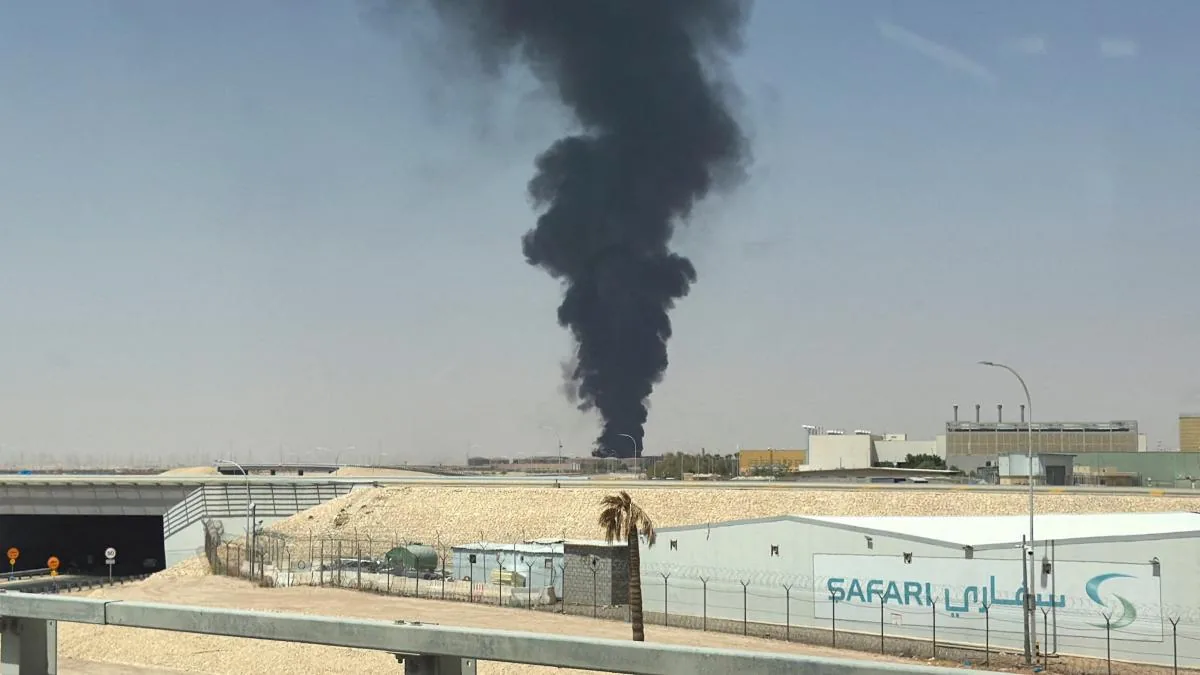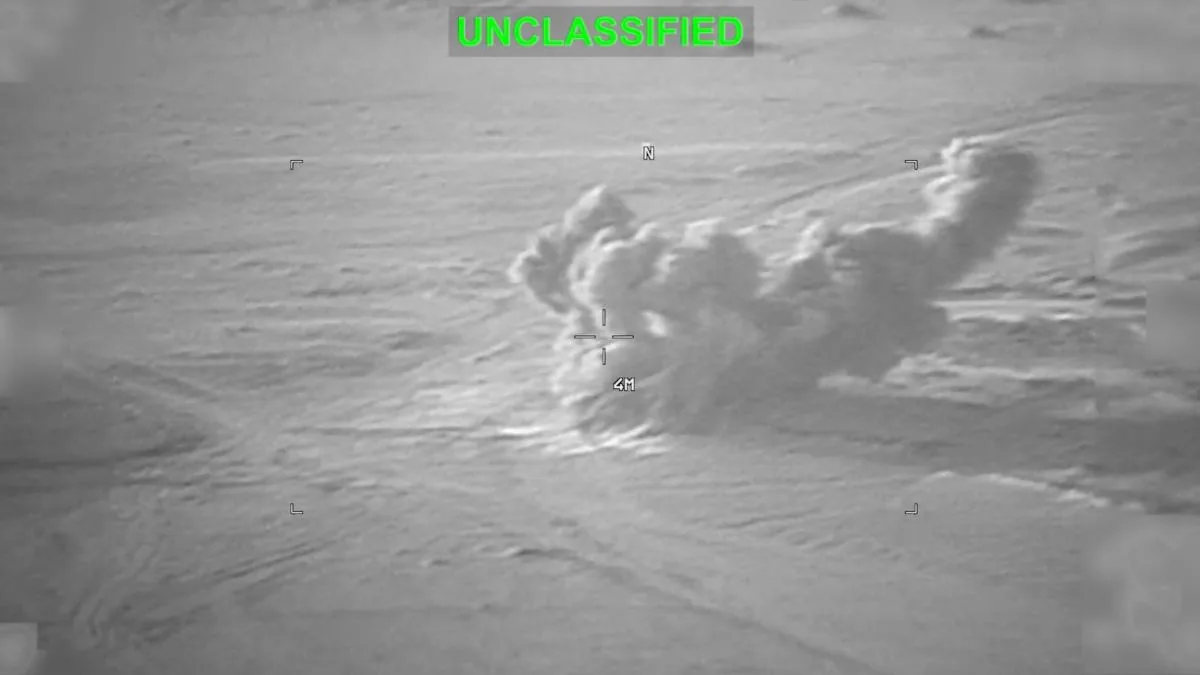
The United States and Iran are heading towards the return of war on all fronts, due to the lack of solutions to resolve their fundamental disagreement: who should control the Strait of Hormuz. Washington concluded yesterday its ninth consecutive night of attacks against Iranian military and civilian infrastructure, bombings that reached the cities of Bushehr, Chabahar, Bandar Mahshahr, and Bandar Imam Jomeini. Meanwhile, Iran attacked for the second day the Aqaba international airport in southern Jordan, as well as military bases in Bahrain and Kuwait, and two oil tankers in Hormuz, a maritime route through which 20% of the world’s oil passed before the war.
Read more Housing Secretary of State, David Lucas, dies at 58 years old
Also read
U.S. President Donald Trump said upon returning to Washington from New York, where he followed the World Cup final, that they would continue attacking “with force” and “in honor” of the last fallen American soldier since the war began on February 28. There are already 17 American victims, after three soldiers died over the weekend and another remains missing, although he is considered dead.
The preliminary agreement signed last month by Washington and Tehran, a memorandum of understanding in which they committed to cease hostilities and lift their naval blockades for 60 days, has fallen apart. Both parties accuse each other of breaching it, as Iran insists on controlling Hormuz and imposing fees on ships crossing it, while the U.S. is attacking military targets—mainly places where Tehran stores and launches its missiles—and civilian targets, including bridges, ports, and railways.
Although the justification of the U.S. Central Command (Centcom) for the recent attacks is the need to “undermine Iranian military capabilities used to attack ships transiting Hormuz,” according to the statement confirming the latest wave of bombings, the locations hit indicate an expansion of the conflict beyond the military field. “We have attacked military command centers, air defense and coastal surveillance sites, missile and drone launch platforms, and communication networks,” Centcom insisted in another statement.
Despite the exchange of bombs, both parties maintain contacts seeking de-escalation, although this seems distant because the differences are fundamental. U.S. Secretary of State Marco Rubio said on Sunday that the U.S. keeps a “door open to diplomacy,” but insisted that Iranian proposals should be “realistic,” and the blockade of Hormuz is not: “Their behavior must change for ours to change as well.”
Although that critical passage was open to international trade before the war, Iran effectively blocked it with a series of attacks on ships that made it an unsafe route. Washington initially attacked seeking a regime change in Iran and its abandonment of the nuclear program, but its war objectives have ended up prioritizing the reopening of Hormuz.
Iran states it has received proposals from mediators to de-escalate the conflict again, whose truce has fallen apart
Like Rubio, Iranian Foreign Minister Esmail Baghaei said this morning at a press conference that the mediating countries have sent a series of proposals to de-escalate tensions, which they will consider. According to Reuters, the plan would include a new temporary truce, of 10 days, allowing the renegotiation of a ceasefire agreement, like the memorandum signed last month, and in parallel negotiate until definitive peace.
But beyond the willingness to negotiate, the situation on the ground indicates the intention of both countries to continue fighting. The U.S. confirmed on Sunday that it will send dozens more warplanes to the Middle East, probably to Israel, Washington’s biggest ally in the region. Specifically, CENTCOM confirmed that Air Force F-16s and F-35 fighters will be deployed from Germany and the United Kingdom.
Read more Zapatero’s friend acknowledges that the former president advised on the Plus Ultra bailout