He does not only negotiate with Iran. President Donald Trump demands that his allies in the region accept certain conditions or they will not be part of the benefits arising from the negotiations.
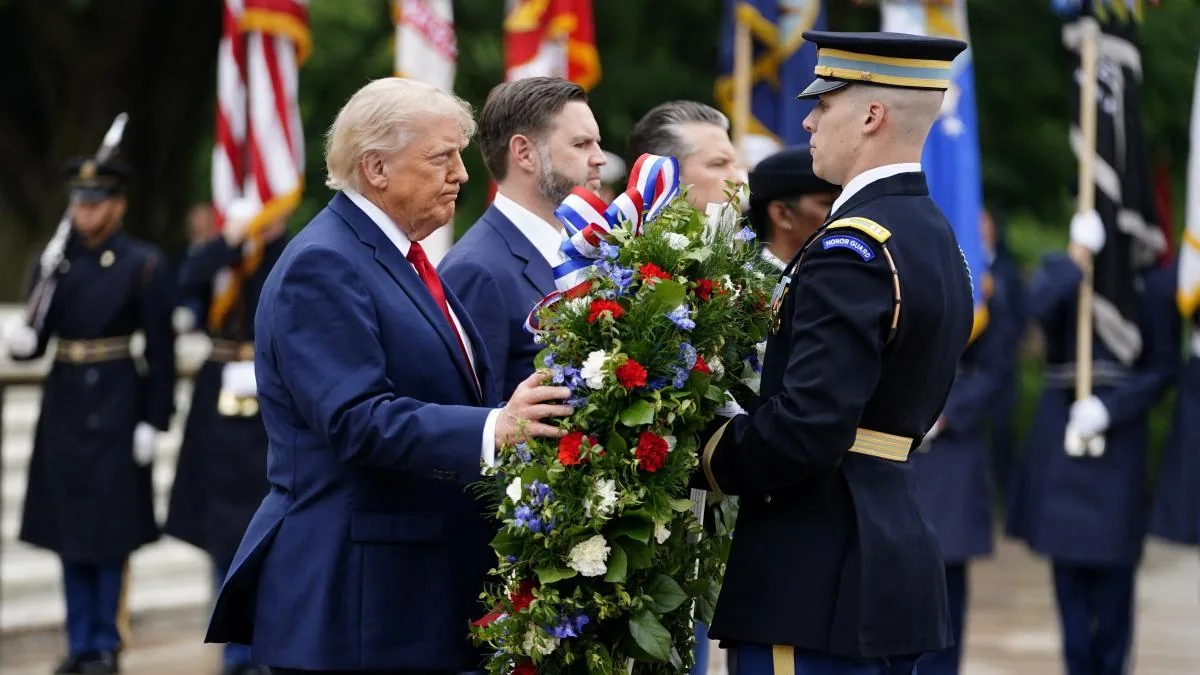
While the pact that the US leader almost closed on Saturday is being negotiated, but which he downplayed on Sunday after hearing complaints from his own ranks, Trump insisted on Monday, Memorial Day in the United States, that the talks continue.
“Negotiations with the Republic of Iran are progressing very well. It will be either a great deal or no deal, back to the battlefield and bombings, bigger and stronger than before, and no one wants that,” he warned.
His message contained a second warning aimed at friendly countries in the area, to whom he demanded adherence to the Abraham Accords, which recognize Israel. The president explained on his social network that he had spoken with regional leaders over the weekend, including Saudi Arabia, Qatar, Pakistan, Egypt, Jordan, Bahrain, Turkey, and the United Arab Emirates.
“I told them that, after all the work done by the United States to try to unite this very complex puzzle, it should be mandatory that all these countries, at a minimum, simultaneously adhere to the Abraham Accords.” The accords imply recognition of the state of Israel.
Acceptance of the agreement, Trump reasoned, would be a way of thanking Israel for its role as a watchdog against the Iranian threat. It should be noted that analysts say that Israeli Prime Minister Benjamin Netanyahu has acknowledged that, after three months of war, he has lost influence in Washington.
Trump acknowledges that the United Arab Emirates and Bahrain are already members of the Abraham Accords. “It may be possible that one or two countries have a reason not to do so, and that will be accepted, but the majority should be prepared, willing, and able to make this deal with Iran a much more historic event than it would otherwise be,” he added.
Read more Investigate the homicide of a woman in Pere Garau at the hands of a relative
The Abraham Accords were established in 2020 under the first Trump administration to foster relations between Israel and the Gulf states. In his messages, the US president pressured Saudi Arabia and Qatar to be the first, “and everyone else should follow their example,” he emphasized. “If they do not, they should not be part of this agreement, as that shows bad intent,” he stressed.
“The Abraham Accords have been magnificent for them and will be better for all countries because they bring true power, strength, and peace to the Middle East for the first time in 5,000 years. There will be respect like never before in the world, it is a matter of importance and prestige,” he insisted.
Before announcing on Saturday that the pact with Iran was long negotiated, only pending some details, Trump held a telematic meeting from the Oval Office with the region’s leaders. It is now clear that the White House wants to take advantage of the negotiations with Iran to sign a historic agreement between Israel and Saudi Arabia, which would be a crucial step for the rest of the countries in its environment to follow that path.
Some leaders, such as the president of the United Arab Emirates, Mohammed bin Zayed, who has taken a more aggressive stance in the war with Iran, said they support this collateral initiative. “Everyone said: ‘We are with you on this deal. And if it doesn’t work, we will also be with you,’” a US official explained to Axios.
Meanwhile, negotiations between the United States and Iran, having established a framework agreement according to sources from both countries, continue in the search to smooth out the last differences. According to what has emerged, the pact would lead to another 60 days of ceasefire, during which the nuclear issue and the opening of the Strait of Hormuz would be negotiated.
Read more The Moroccan state airline suspends flights to Barcelona due to the fuel crisis