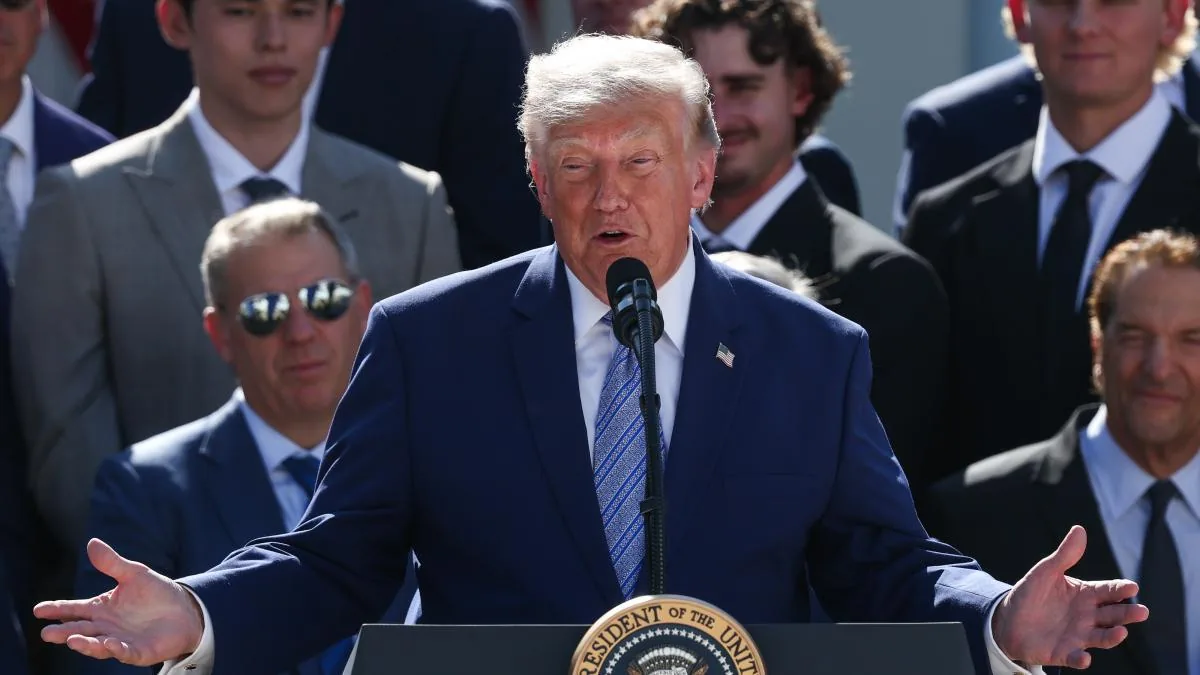









When he returned to power a year and a half ago, Donald Trump promised that he would adopt a hands-off approach to artificial intelligence development, which would allow the United States to “unleash the full potential of AI,” in contrast to the more regulatory stance of his predecessor, Joe Biden, and that of European Union countries.
Read more Trump overcomes judicial hurdle and finalizes new tariffs on 60 countries
However, motivated by China’s rapid advances, where the state plays a very active role in financing and guiding this technology, as well as by the growing cybersecurity vulnerabilities of the technology, his Administration has tightened controls on leading U.S. companies in recent months and is already preparing to restrict access to the most advanced Chinese models.
Read also
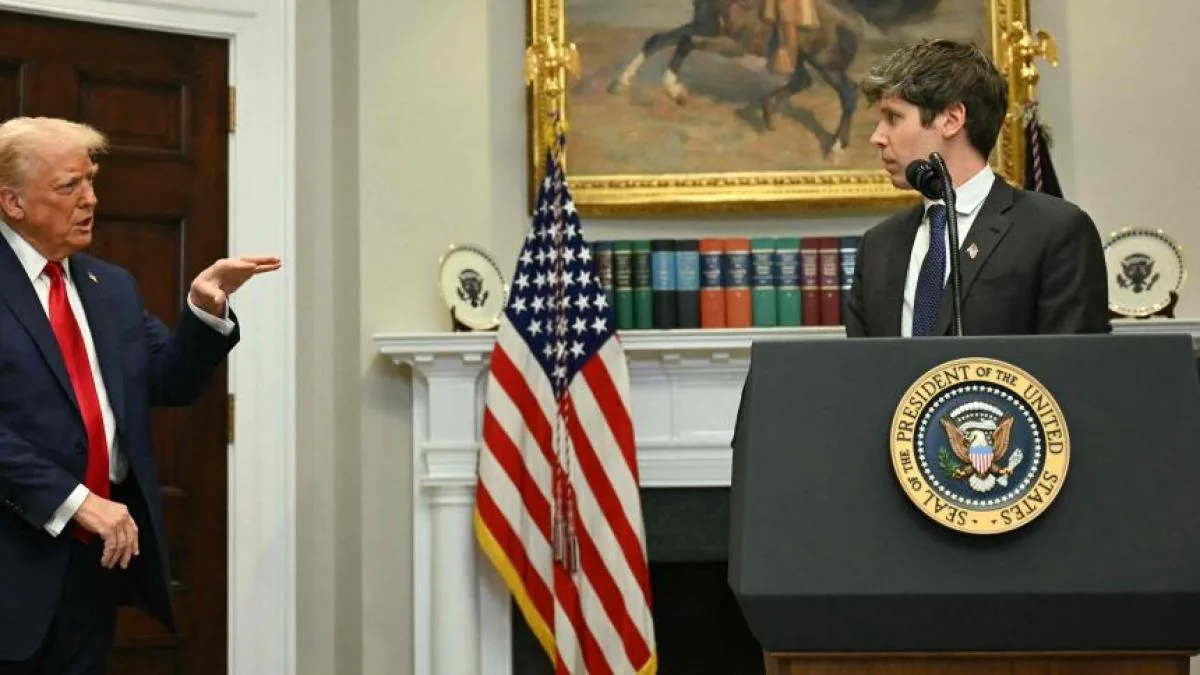
In June, President Trump signed an executive order requesting companies to submit their models to the government for review before releasing them to the general public. When OpenAI, owner of the ChatGPT chatbot, developed its most recent model (GPT-5.6), it restricted its release to a group of partners previously vetted by the government, something Sam Altman’s leading company agreed to after federal officials pushed to delay the launch.
In the case of Anthropic, owner of the Claude service, state intervention was even more direct when the Department of Commerce issued an export control order that forced the global withdrawal of the Fable 5 and Mythos 5 models, which were reinstated weeks later. As Lutnick explained, the goal is to detect and correct cybersecurity vulnerabilities, as well as to limit China’s ability to access the most advanced models.
The executive order signed by Trump in June did not oblige companies to withhold their technology for government review, although it did request their “voluntary” collaboration, adding pressure to the companies. OpenAI and Anthropic already had their own initiatives to make their models available to a small group of partners and experts before launching them, Daybreak and Project Glasswing.
This independence, however, was further diminished last week with Washington’s launch of the Gold Eagle initiative, a “coordination center” that will collaborate with the private sector to correct vulnerabilities and will give the White House the authority to decide which companies can access new AI models.
The Chinese model Kimi K3, cheaper and open source, reduces its distance from the most advanced models of Anthropic and OpenAI
The reason, beyond the need to control the development of such a disruptive technology, is to prevent U.S. adversaries from leveraging advanced models to steal information or gain unauthorized access to data, something AI is capable of doing much better and faster than any human. In the first month of Project Glasswing, Anthropic and its partners identified more than 10,000 high-severity vulnerabilities in important digital systems. The Trump Administration is working to take the reins of this independent control.
The central idea of Trump’s initial discourse, in line with broad sectors of Silicon Valley that financed his campaign, was that minimal state intervention would incentivize competition and avoid the limits of excessive bureaucracy for AI development. However, the approach has ended up being the creation of oversight mechanisms, export controls, model review, and greater direct intervention in the AI ecosystem for national security and competition reasons.
Read more Catalonia always loses
In this context of regulatory changes, this Monday the Trump Administration lost its third AI security chief, as Chris Fall, director of the Center for AI Standards and Innovation, announced his resignation just three months after taking office. Although he did not give an explanation for his departure, reported by Axios, the American media links it to the internal debate over technology restrictions.
David Sacks, White House AI advisor, warns that excessive bureaucracy “fueled by hysteria” in the U.S. will give China an advantage
This move came two days after Moonshot AI, a Beijing-based startup, unveiled Kimi K3, the most advanced publicly accessible artificial intelligence model developed in China to date. According to several AI evaluation platforms, including Arena, the model outperforms the most advanced U.S. models in some tasks.
In the last year, concern has grown in Washington and Silicon Valley over the rapid development of Chinese AI, cheaper but of similar power, which has motivated a series of Trump Administration restrictions on the export of high-performance chips, necessary for training AI, among other key resources for this technology.
Furthermore, according to U.S. media reports, the Department of Commerce is considering soon including several Chinese AI companies on its trade blacklist, which will prevent Americans from accessing their software. The measure seeks to boost the American industry to gain a competitive advantage against Beijing.
However, not all members of Trump’s circle believe that restrictions are the right solution. Investor David Sacks, who was the White House’s “AI and Cryptocurrency Czar” until he resigned in March, and who now acts as an external advisor, said Sunday that the campaign to restrict Chinese models will only benefit the “duopoly” of OpenAI and Anthropic, preventing other Silicon Valley companies from entering the market.
Sacks called it “concerning” that, for the first time, a Chinese model has surpassed American ones in front-end development for websites. Meanwhile, the White House is “getting entangled” with its restrictions and increased bureaucracy, he denounced via the social network X. “This is how you lose the AI race. The rest of the world will not play by our rules if we tie our own hands,” Sacks added, through “bureaucratic controls fueled by hysteria, fear, and companies seeking to capture the regulator for their own interests.”
Read more Peinado’s performance divides the judges