2001 marks the peak moment of the United States’ hegemony in the world. After the Cold War, following the collapse of the Soviet Union and the triumph of the capitalist bloc, the turn of the century brought with it a unipolar world led by the U.S. as the hegemonic power, accompanied by a sense of stability that left behind a century marked by wars. Peace was abruptly cut short in the most traumatic way possible: for the first time, the leading power showed vulnerability to an external attack.
Read more Felipe VI once again remembers the victims of 9/11 in Rota 25 years later
The blow changed the country’s psychology. The United States was wounded in one of the symbols of its global dominance: the World Trade Center, the center of world trade. In the following 25 years, a series of singular events occurred that indicate a change in the world prompted by what was the most traumatic event in recent Western history. These are some of those moments.
2001 – 2003
The war on terror
After the 9/11 attacks, the United States faced an unprecedented enemy to declare war on: jihadist terrorism. The war on terror was not a war against a state, but against a permanent threat. Its attacker had no defined face. Geographic boundaries disappeared and victory ceased to be a territorial dispute. The enemy’s objective — to provoke fear — placed security as the state’s priority. Under George Bush’s government, U.S. foreign policy was based on preventive intervention in countries where a threat could be brewing.
To this end, the “axis of evil” was defined and interventions in Afghanistan and Iraq were carried out during the first decade of the 21st century, in search of Al Qaeda leader Osama bin Laden and weapons of mass destruction. Neither war succeeded in ending the jihadist threat, whose ideology has proven immune to a military solution. Under Barack Obama’s leadership, the U.S. declared war on the Islamic State (practically Al Qaeda’s successor), moving away from Bush’s ground intervention and withdrawing the last troops from Iraq.

The elimination of Bin Laden in 2011 revealed a reality: terrorism did not depend on a leader, and it has continued to expand to this day. The U.S. war on terror did not achieve its objectives. Radicalism spread in Europe with new attacks in the following years, resurged in Afghanistan with the return of the Taliban in 2021, and continues to pose a threat to the world.
2007
Climate change intensifies
In 2007, six years after the attacks, a faceless threat was emerging, this time also without weapons. The United Nations published the Fourth Assessment Report of the Intergovernmental Panel on Climate Change (IPCC), the most detailed document on this phenomenon to date. The conclusions were clear: global warming was unequivocal, it was the result of human action, numerous natural systems were being affected, and the situation would continue for centuries.
Today, the world continues to lose this war. Extreme phenomena intensify, temperature and sea levels rise globally, and the planet tries to keep pace with increasingly abrupt climate changes. As a counterpoint, denialism against scientific evidence also increases, nowadays even used as an electoral appeal and political program by populist parties.

2008 – 2011
The Great Recession: housing and financial crisis
In 2007, the world discovered that prosperity rested on a huge mountain of debt. The housing bubble, supported by sophisticated financial products designed by Wall Street, burst and led to a major banking crisis that spread from the United States to the entire planet. The crisis lasted until 2009 and then extended in Europe, known as the euro crisis. This entire historical period is known as the Great Recession, the worst crisis in the West since the Great Depression of the 1930s. It caused a drop in the population’s purchasing power and, in Europe’s case, the implementation of very painful austerity policies.

2013
Xi Jinping: the Asian giant asserts itself
2013 is the year when the West stopped seeing Asia as the world’s factory and began to perceive the continent — especially China — as a real competitor. The architect of China’s progress has been Xi Jinping, who has transformed the country into an unstoppable growth machine in manufacturing and positioned it as a clear contender to replace U.S. hegemony. Xi inherited a China that had already accepted the rules of the global capitalist game and that went from being an emerging economy to becoming a global superpower.
The Asian giant is, with Xi, bigger than ever. The Communist Party leader has achieved great accomplishments, such as doubling China’s GDP since his arrival, revolutionizing and modernizing the army, and pursuing political corruption. However, his most important achievement is diplomatic. Under the “Belt and Road Initiative,” the global development strategy Xi promoted in his first year as leader, the president set his foreign policy on the idea of “negotiating, building, and sharing together” based on free trade.

In practice, this has meant unprecedented expansion across all continents, especially Africa and Latin America, where China is already the top trading partner and where large projects such as the Chinese port of Chancay in Peru or the port hubs of West Africa are underway. In fulfilling its mission, Chinese authoritarianism has encountered some obstacles in the last decade: the COVID-19 pandemic, the rapid decline in birth rates, and repression against minorities and disputed territories such as Tibet.
Read more Tribute to the victims at Ground Zero and family members’ criticism of Saudi Arabia
2016
Chaos takes over politics in the West
The year 2016 marks the eruption of chaos in Western politics, the rise of far-right populism. The first sign of change was the approval of Brexit in the United Kingdom. In the background, as a concern, the influx of refugees to Europe rekindled fear of uncontrolled immigration with the entry of more than a million people fleeing conflicts in the Middle East, mainly Syrians, Afghans, and Iraqis, awakening Islamophobia as had already happened on 9/11.

At the same time, the effects of the 2008 crisis further distanced voters from governments, causing distrust towards traditional parties. This fertile ground allowed the far right to gain strength and capture social discontent through populist measures that earned votes. Jean-Marie Le Pen revived the National Rally in France; Alternative for Germany (AfD) — now the leading force in the east of the country — entered the Bundestag; Nigel Farage, today leader of the British far right, became the visible face of Brexit; and in the United States, a populist leader from the business world polished his slogan “Make America Great Again” to reach the White House and lay the foundations of Trumpism. Trump’s first arrival promoted an anti-globalization policy, a desire to return to protectionism, and the philosophy of “America first.”
2020
Covid-19 stops the world
If the September 11 attacks marked the turning point that would define the 2010s, the COVID-19 pandemic marked the start of the following decade. The world stopped like never before to fight another common threat, a new faceless enemy that killed millions of people. The economy, still unrecovered from the 2008 crisis and far from prepared, collapsed again with even greater force. The global psychology was once again forced to readapt, with consequences still being paid today. According to WHO data, the pandemic increased the prevalence of depression and anxiety globally by up to 27%. The world had to relearn its customs, habits, and routines. As with climate change, social confusion and lack of answers to emerging questions again sparked skepticism against science. Anti-vaccine and conspiracy theories became a new political appeal of the emerging populism.

2022
The return of war to Europe: Russia invades Ukraine
The year 2022 was marked by the return of war to Europe after the terrible conflicts in the Balkans in the 1990s. Russia reminded, with the invasion of Ukraine, that war does not only happen in remote parts of the planet, but also at the doorstep. The conflict, after four long years, is far from over and the positions of both sides remain distant. During this time, Ukraine has shown it can resist thanks to the help of its allies, who are politically paying for their solidarity with the invaded. The Eurosceptic current has found in Ukraine a scapegoat for resource spending and has served as part of the political program of governments like Viktor Orbán’s in Hungary and parties like the AfD in Germany.

2023
October 7 attacks: Israel redraws the Middle East
A year after the start of the war in Ukraine, the second front of conflict that would mark this decade arrived, this time in the Middle East. It was not a new conflict, but another chapter in an endless conflict. On October 7, 2023, Israel experienced the deadliest attack on its territory, an attack that left 1,200 dead and provoked a progressively more disproportionate response against the civilian population in the Gaza Strip, under the argument of a new war against jihadist terrorism, this time caused by Hamas. It is estimated that more than 70,000 Palestinians have died in this territory in these years.

Israel thus lived its own 9/11, which caused an irreparable trauma in its relations with Palestine. Since then, the Middle East has once again become a region dominated by uncertainty, in which not even the closest U.S. allies have managed to stay out of the war. Tel Aviv, today more isolated than ever and internationally questioned for the rise in violence against Palestinians, approaches the first elections after the attacks, in which a weakened Netanyahu tries to contain the opposition, eager for answers to understand how the terror of Manhattan could reproduce itself on the Gaza border.
2025
Trump’s second term
As in 2016, international news was marked by a man who came with the intention to change the world, change America, and change the world order. It will take years to understand to what extent Trump has disrupted the international board as we knew it. The Republican leader arrived in early 2025 as Biden’s successor and, unlike his first term, with full control over Congress, he has been able to push his agenda without impediments. In just 19 months, Trump fragmented the Atlantic alliance to distance himself from Europe, returned to protectionism through the use of tariffs as a political weapon, and withdrew from most international organizations.
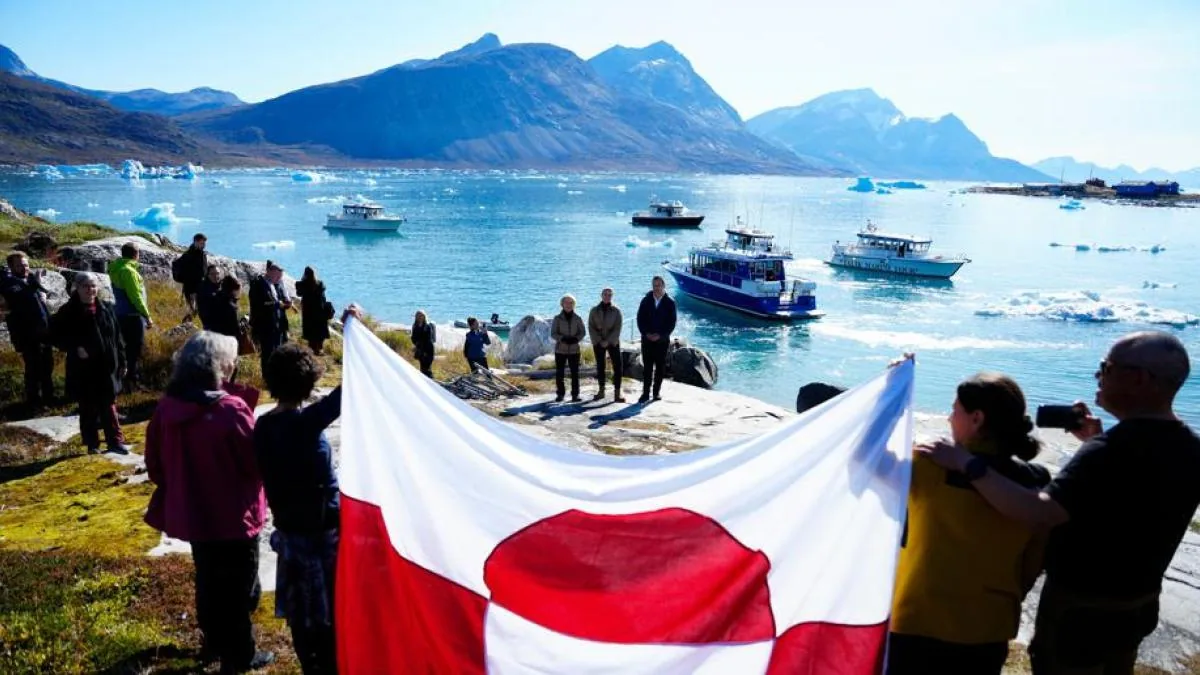
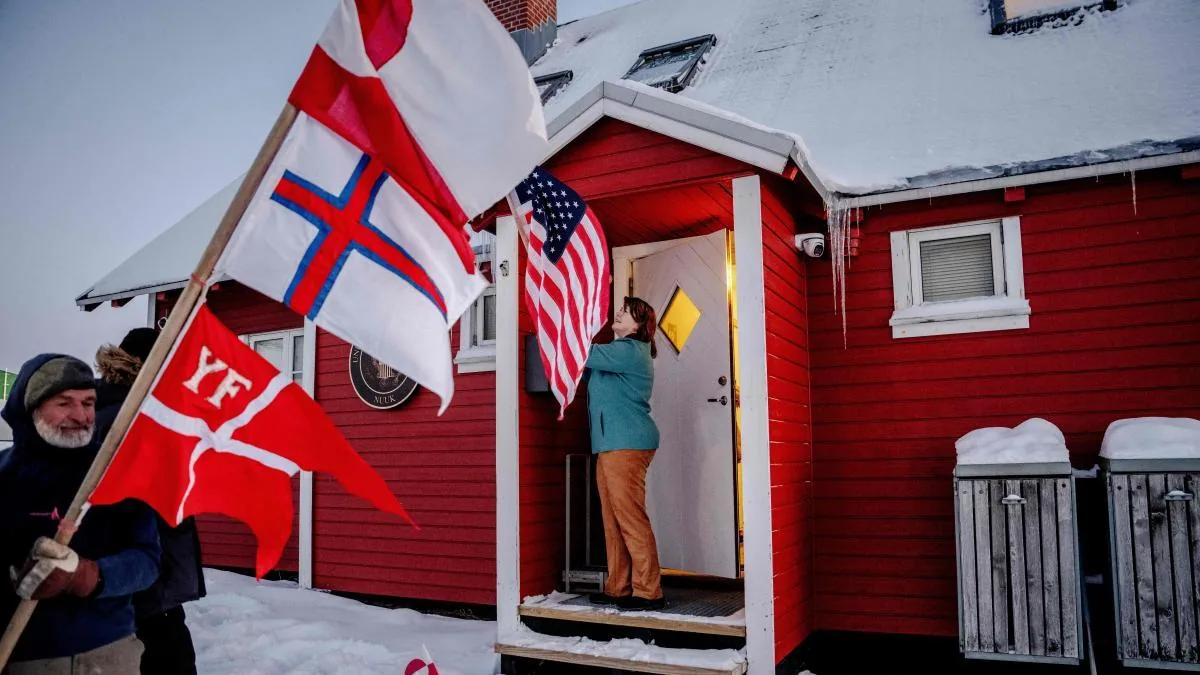
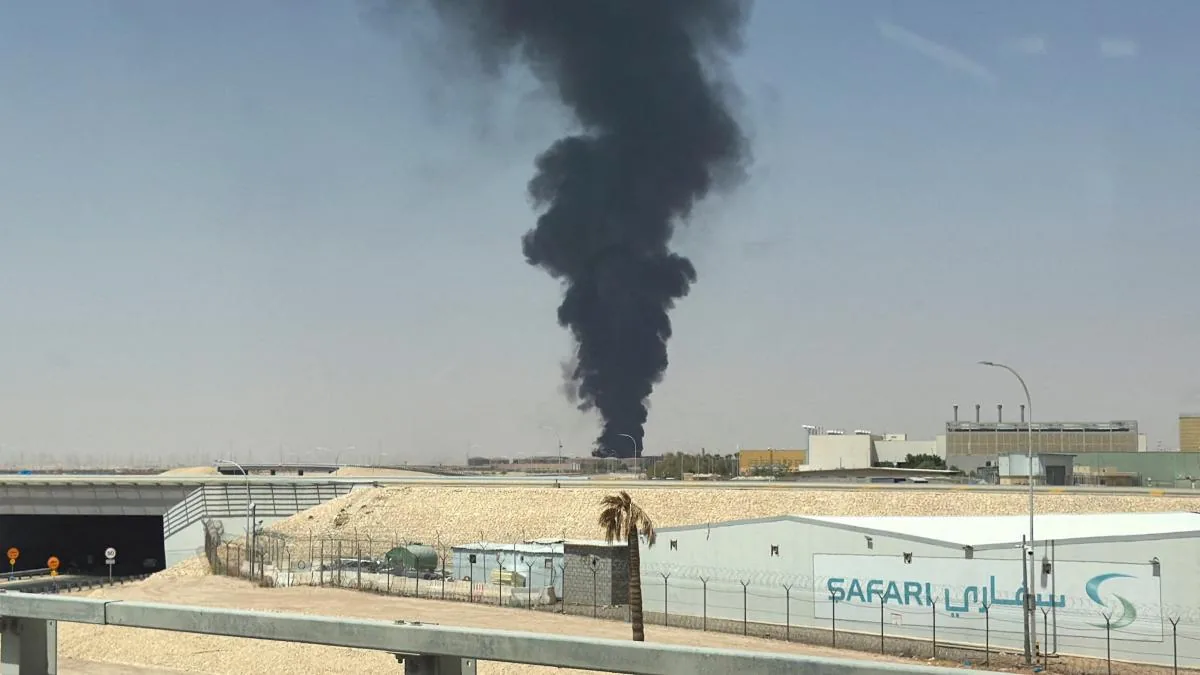
This isolationism, however, was not reflected in foreign policy. Marked by a strong expansionist will (Canada, Greenland, Mexico, and more recently Hormuz), the Republican overthrew and kidnapped Maduro to force Chavismo to negotiate economic agreements with Venezuela at his whim. In the region, as well as in Europe, he promoted the rise of far-right governments aligned with his policies. With the launch in 2026 of the war on Iran in collaboration with Israel, he contradicted one of his main pre-presidency slogans: ending the “forever wars” in the United States, like those preceding the 9/11 attacks.

Comparisons between the current war in Iran and the wars in Afghanistan and Iraq increase after 7 months of conflict in which no end is in sight, nor are the objectives fully known. The president did not take into account the lessons from the response to September 11, the political drawbacks of long wars, and the dangers posed by an entrenched enemy fighting for survival. Unable to avoid military adventurism due to his desire for protagonism, the midterm elections threaten to make Trump pay a very high price, as happened with George Bush after the Iraq invasion, since it is the American voters who truly perceive the economic cost of the war.
Read more Trump uses the 9/11 memorial event to justify his war in Iran