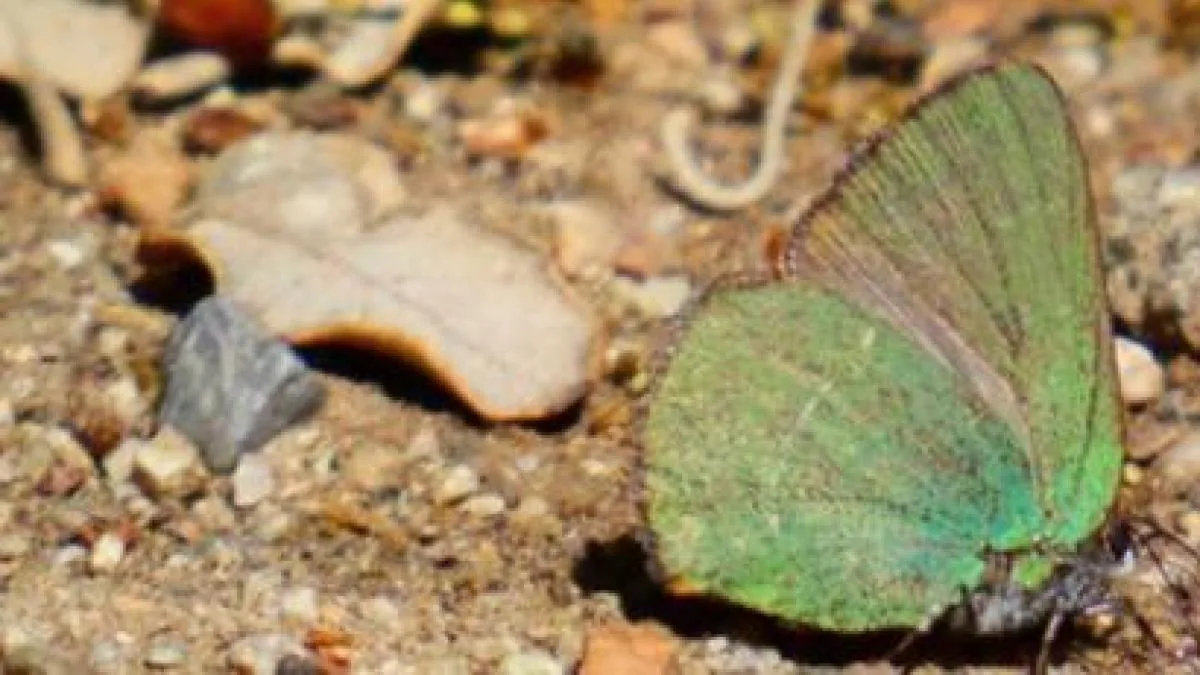
Barcelona has identified for the first time the presence of a new species of butterfly, the green hairstreak or verdeta d’ull ros in Catalan (Callophrys avis). The discovery, reported today by the City Council, was made a few weeks ago as part of the urban butterfly monitoring program of Barcelona, the uBMS observatory, during a sampling in the Laberint de Horta Park. With this observation, there are now 52 species of diurnal butterflies recorded in Barcelona, a figure that represents approximately 26% of all species present in Catalonia.
Read more Maldives: three Finnish divers will help rescue the bodies of the missing Italians
It is a univoltine species (that is, with only one generation per year), which only flies from March to May. It is a specialist butterfly that largely depends on the presence of two plants: the strawberry tree (Arbutus unedo) and the roldor (Coriaria myrtifolia).
Diurnal butterflies like the green hairstreak are considered one of the best bioindicators of environmental quality since their great sensitivity to changes in vegetation, climate, and ecological conditions allows obtaining very valuable information about the state of urban biodiversity. In the larval stage, these species depend exclusively on a limited number of plants. When these plants disappear or decrease, butterfly populations also suffer a rapid decline.
Butterflies also respond very sensitively to the effects of climate change. Besides their ecological value, butterflies play a fundamental role within urban ecosystems as primary consumers and as a food source for numerous predators and parasitoids.
They also help bring citizens closer to the knowledge of urban nature thanks to their ease of identification and their high educational and aesthetic value.
Also read
The discovery has been made possible thanks to the work of the volunteer network of the Urban Butterfly Monitoring Scheme uBMS, a project coordinated by the CREAF ecology research center that has been operating in the city since 2018, within the framework of the agreement with the Municipal Institute of Parks and Gardens of Barcelona.
Currently, about forty volunteers actively participate in the weekly monitoring of butterflies in 29 parks and gardens in the city. Between March and November, visual censuses are carried out to collect data on the presence and abundance of different species.
In addition to the monitoring carried out by the uBMS observatory, Barcelona also participates in the Catalan Butterfly Monitoring Scheme (CBMS), promoted by the Granollers Natural Sciences Museum and which carries out monitoring along two routes in Montjuïc and Carmel.
Read more A dozen new potential victims of Epstein contact the French justice system
The work of the volunteers
Butterfly monitoring programs aim primarily to obtain data on the presence and abundance of species over time to understand the diversity of species present in the city, analyze population trends, understand which urban factors favor or limit biodiversity, develop ecological management tools, and create indicators of urban biodiversity quality.
The accumulated data show that, despite the increase in the number of species detected, the five most common currently represent 64% of all observations. This pattern shows a community mainly formed by generalist species capable of better adapting to urban environments.
From Barcelona, different naturalization strategies are promoted aimed at favoring species with more specific ecological requirements. Among the main actions are the establishment of urban meadows and grasslands, low-intensity forest management in natural spaces such as Montjuïc, els Tres Turons, Collserola, or the Sèquia Comtal, and the creation of biodiversity refuges.
These measures seek to improve ecological connectivity, increase habitat quality, and balance the abundances of the different species present in the city.
Monitoring data have also allowed observing the direct impact of climatic and management factors on butterfly populations. During 2020, coinciding with the lockdown and a reduction in intervention in green spaces as well as wetter weather conditions, a notable increase in butterfly abundance was recorded in the city. In contrast, the prolonged drought period between 2021 and 2023 caused a significant decrease in observed populations. From 2024 onwards, the data show a progressive recovery.
All people interested in butterflies who want to join this network of volunteers of the uBMS observatory will find all the information on the project website: https://ubms.creaf.cat/ca/
Read more British soprano Felicity Lott dies at 79 years old