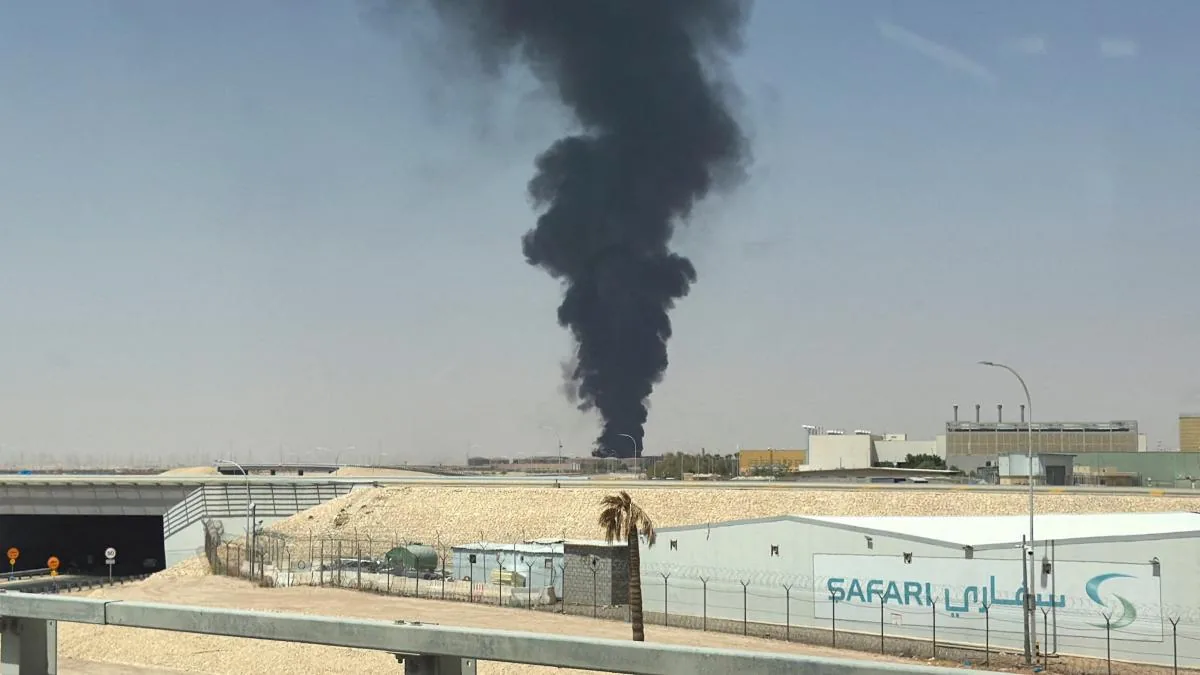
In five months of war in Iran, which according to the Pentagon has cost U.S. taxpayers $37.5 billion and more than $130 billion according to independent analyses, the United States has consumed a significant part of its arsenal. According to an exclusive from Reuters, the Department of Defense has used “practically all” of its long-range precision missiles, official sources revealed to the U.S. agency.
Specifically, the military is rapidly spending its tactical Atacms missiles and the most advanced generation of them, the PrSM precision missiles. This type of weaponry has also been key in the war in Ukraine, as its supply from Washington has allowed Kyiv to strike targets inside Russia.
Also read
This type of missile costs more than one million dollars per unit and allows the Pentagon to bomb Iran with precise attacks from safe distances. If the war, which was initially expected to last two weeks, ends up extending several more months, the depletion of the arsenal could pose a headache for the White House, not only in the Iran war but especially in other conflicts that may arise in the future.
There is no reliable alternative among U.S. munitions to these missiles. Their depletion could force the Pentagon to rely more on manned bombing missions, which poses an obvious risk to the lives of U.S. soldiers. So far, the official number of Washington casualties stands at 18 soldiers, although most have died in Iranian attacks against U.S. bases in the region.
Read more Vox will assume responsibilities on gender violence in Andalusia
The enormous spending on the Iran war has led the White House to request a 40% increase in the military budget for the next fiscal year, up to one and a half trillion dollars. Secretary of Defense Pete Hegseth informed the Senate that the budget would be used to “finish this war,” “ensure our munitions are replenished,” and “revitalize our industrial base.” According to the Reuters exclusive, the U.S. Central Command has exhausted almost all the ground missiles it had before the war, but so far it has been able to resupply using stocks stored at its bases in other parts of the world.
The Pentagon requested a 40% increase in the military budget from Congress to resupply and “revitalize” the arms industry
According to Trump, who this weekend threatened Iran with a powerful attack of a destructive level “not seen since World War II,” the conflict is close to ending, as “Iran’s military capabilities have been destroyed” and they have no choice but to “sign an agreement.” However, Tehran has continued in recent weeks attacking ships trying to cross the Strait of Hormuz, as well as U.S. bases in the Persian Gulf, both with ballistic missiles and drones, whose manufacturing cost (around $20,000 per unit) is much cheaper than the cost of defenses to intercept them.
The war in Iran could have a very high price for Washington. Beyond the 18 soldiers killed in the operation, the discredit of some international allies who were not warned, Trump’s betrayal of his campaign promise, or the risk to its allies in this major regional conflict, it will be very costly for the Pentagon in terms of economic and military impact. The conflict has awakened among lawmakers the fear that the reduction of the arsenal will leave the U.S. in a position of weakness against future attacks from China and Russia, especially if Beijing decides to attack Taiwan and Moscow intensifies its war against Ukraine.
Read more Owners ask the Government to withdraw the law to limit home purchases