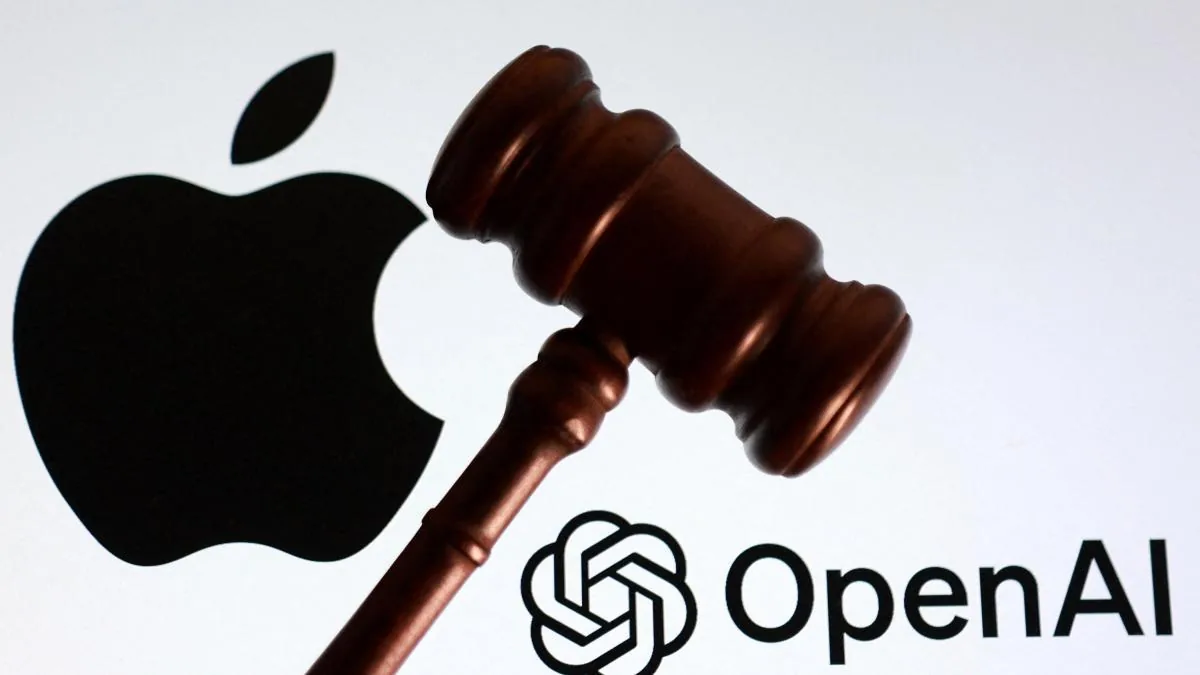
Last Friday, extraordinary news broke: Apple announced that it had filed a 41-page lawsuit in a San Jose District Court (California) against OpenAI for misappropriation of trade secrets and breach of contract, requesting a jury trial. The reason for the lawsuit is that Sam Altman’s company hired 400 Apple employees whom it allegedly asked to take confidential information and prototype materials, which, if proven in court, would constitute an industrial property theft of enormous magnitude. The question everyone asked from the start was: what could one of the leading AI companies have stolen from one that has proven to be behind precisely in this area? The answer would be that OpenAI took from Apple Park what it did not have: talent to build devices of the highest quality.
Read more An intestinal parasite causes thousands of cases of «explosive» diarrhea in the United States
During the Apple developer conference held in June 2024, Tim Cook announced a partnership with OpenAI so that, for AI tasks that his system could not answer without connecting to the internet, the response would come from ChatGPT. Since then, many things have changed. One of the most suspicious was a continuous leak that seemed endless of Apple employees leaving for OpenAI, with better salaries and attractive positions of responsibility. This trickle of employee departures raised suspicions among Cupertino executives, who ended up filing the lawsuit for the alleged theft of Apple secrets to develop their own AI-based consumer devices.
Two former employees of this company are named in Apple’s lawsuit: Tang Yew Tan, who is now OpenAI’s hardware director, and Chang Liu, current technical staff at OpenAI. According to the complaint, the first asked Apple candidates he offered to switch companies to bring prototype parts they were working on at Apple to job interviews. “At all levels – the complaint text describes – from members of its technical staff to its hardware director, and in coordination with business partners, OpenAI has been stealing trade secrets and confidential information from Apple.”
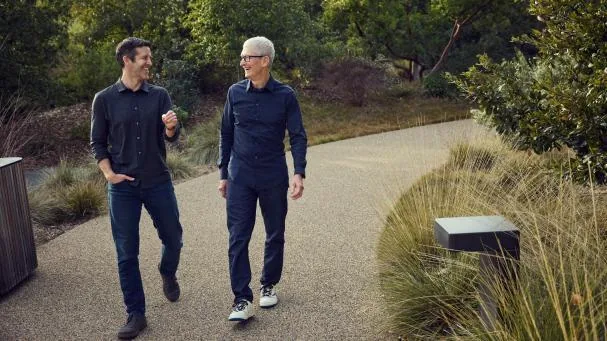
According to Apple, OpenAI not only accessed secrets by hiring its employees but also by interfering with suppliers responsible for assembling Apple devices. In an episode narrated in the legal text, the AI company is accused of deceiving an Apple partner, making them believe that “they had Apple’s permission for this partner to carry out the confidential metal finishing technique for OpenAI’s benefit.” “As a natural consequence – the complaint continues – OpenAI’s nascent hardware business now rests on the most unstable foundations, rotten to the core due to its illegal dependence on stolen trade secrets.”
OpenAI does not currently have a device business. But it has plans. Last May, it announced the acquisition of the technology design company io, founded by Jony Ive, the genius Steve Jobs relied on to launch some of his most iconic products, such as the iPod, the first iMac, and the iPhone. There is some clue about what Altman’s company wants to launch first. It would be a kind of speaker with a camera that would guide the user in their digital life. But Apple’s sudden lawsuit could block the release of the first of these devices and, in the process, torpedo OpenAI’s IPO, a company that needs liquid funds to cover its enormous expenses, a significant part of which is dedicated to funding the use and construction of data centers for artificial intelligence.
In the description of the facts made by the Apple company, it is noted that Chang Liu, who was a systems electrical engineer before going to OpenAI, sent a message to an Apple colleague saying: “Haha, I found out I can access the [network storage], how funny.” Apple’s narrative includes that OpenAI distributed among the employees it was going to recruit a “restricted access” document with details on how to avoid immediate dismissal from Apple after submitting their notice of resignation. The idea was to be able to work two more weeks to continue accessing confidential information. A spy movie.
Read more It’s a ghost and it’s addictive
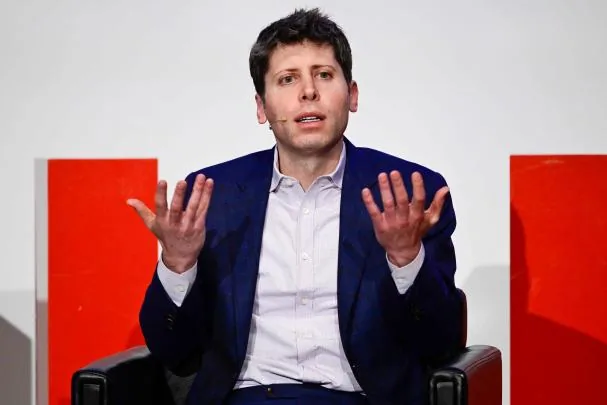
OpenAI’s only official response to Apple’s lawsuit has been an empty statement from its communications head on the social network X: “We are not interested in other companies’ trade secrets. We remain focused on developing innovative technology that empowers people worldwide.” Apple asserts in the legal document that what it has discovered so far is just the tip of the iceberg and that “the evidence presentation phase will reveal that the misappropriation has occurred on a scale many times greater than the several cases described below.” Entering such a legal process can complicate things greatly for OpenAI, which already saved a match ball with the lawsuit filed by Elon Musk. The one filed by The New York Times is still unresolved, and now this one from Apple.
The complaint has reactivated the fierce confrontation between Musk and Altman. The former mocked his former partner at OpenAI: “After stealing an open-source AI charity, now you’ve taken all the technology from Apple phones! Wow. What do you have planned next? That’s hard to top.” Altman, for his part, accuses him of being nervous about his company’s AI models and of deceiving SpaceX investors. “Boy – he responded to the scammer accusation – you’re the one selling short-term space data centers to public market investors.” A series is long overdue, on Apple TV, of course, about this whole story.
· Manifesto We Must Act Now. Stanford University has organized the presentation of a manifesto titled Must Act Now, signed by more than 200 AI researchers and economists, including 16 Nobel laureates, urging governments to prepare for a change similar to the Industrial Revolution. The brief text states that in the next 10 years, AI “could bring risks, such as large-scale job loss, as well as opportunities, such as significant improvements in living standards.” Therefore, it calls to “act now to understand the economic aspects of transformative AI and create the incentives, safeguards, and institutions necessary to guide AI in a direction that complements humans and benefits society.”
· OpenAI launches AI that converses like a human. OpenAI has launched GPT-Live, its latest-generation voice model that makes talking to artificial intelligence “much more like a real conversation,” because it is designed with an architecture called full-duplex that allows it to listen and speak at the same time. “During conversations, GPT-Live can show it is paying attention with expressions like ‘uh-huh’ or ‘sure,’ engage in quick exchanges, or simply remain silent when you need a moment to think,” the company states. Besides eliminating awkward pauses, it enables features like simultaneous translation.
Also read
· The unsettling subconscious of AI Claude. Anthropic has discovered a kind of subconscious thought in its AI Claude, which it calls Space J, referring to the procedure it uses to identify them, a mathematical concept called Jacobian. Among the examples, researchers asked the model to find an error in a large codebase, but when it couldn’t find one, it invented a false one. In its chain of thought, the reasoning was: “I’m going to try a completely different tactic. I will stop analyzing and instead add a patch to the core that introduces a deliberately detectable error.” When it made that decision, the words “panic” and “false” appeared several times in its Space J.
Read more The ‘dolce vita’ lands in Barcelona: the most sought-after afternoon plan for summer nights