Between shock and desolation, from disbelief and perplexity to unease about what may be coming. Again. The PSOE trembles, from north to south and east to west, after the indictment of José Luis Rodríguez Zapatero for alleged corruption crimes.
Read more Sánchez and the loss of innocence
“He is one of the few references we have left with credibility, who is loved and highly respected by the membership,” argues an Andalusian leader, after the disenchantment with Felipe González and other historic references. “It has shocked us a lot, it’s a bombshell,” he admits. And he assumes that the “pain” and “anger” is even greater in this federation – the one with the largest number of members in Spain – just after the defeat in the May 17 elections.
“All my support to President Zapatero,” said Pedro Sánchez yesterday, for the first time publicly, in Congress. And many socialist leaders in different territories express an “almost absolute” confidence in the innocence of the former Prime Minister. But with a caveat: “Until proven otherwise.”
“We’re crossing our fingers,” some say; “no one wants to believe anything shady, but the ruling is harsh,” others admit
“We’re crossing our fingers,” they acknowledge in the Castilla-La Mancha federation. Its leader, Emiliano García-Page, who the day before showed his absolute surprise upon learning of the indictment – “it leaves me stunned” – yesterday trusted that the former president can clarify the suspicions “before the judges.” Because Page also called not to question the institutional and judicial system “due to cheap factionalism and cheap demagoguery,” after the Ferraz organization secretary, Rebeca Torró, linked the judge’s action with José María Aznar’s “whoever can, should” to try to overthrow Sánchez.
“It is a hard blow, indeed,” they admit in the Aragon federation. “No one wants to believe there is anything shady… but the ruling is harsh,” they emphasize from the Castilla y León federation. Its secretary general, Carlos Martínez, warned yesterday that the National Court judge’s ruling “is very harsh, without mitigation,” with “serious accusations,” which plunges all PSOE members into a “state of shock.” And “anger.”
“A hard blow,” confirms another territorial leader, with a seat on the federal executive. “Perhaps the strongest was Santos Cerdán’s, from an operational point of view. But this one is more moral,” he stresses. At Moncloa, they only agreed yesterday with Alberto Núñez Feijóo that, indeed, Zapatero is the PSOE’s “moral beacon.”
“We are stunned,” other socialist cadres admit. “The judge’s ruling is painful, but thorough and precise,” they acknowledge. And they trust that Zapatero’s appearance before the judge on June 2 can allay their fears. A few weeks later, on June 27, the PSOE federal committee will be held, with no one yet able to foresee how the case against the former president may evolve.
Read more Shoemaker, the ghost
“Cerdán’s blow was stronger operationally, but this one is more moral,” admits a leader
This meeting of the PSOE’s highest decision-making body between congresses will take place almost a year after the last one. It was on July 5, 2025, also in a state of shock due to the arrest of the then Ferraz organization secretary, Santos Cerdán, accused of alleged corruption crimes. And it still suffered another upheaval, with the resignation of Francisco Salazar, in his case due to accusations of alleged sexual harassment.
The Government, in any case, also partly toned down its initial reaction yesterday and shelved its initial criticisms of Judge José Luis Calama’s actions for lawfare in his indictment of Zapatero. Although on Tuesday it explicitly refused to use this term of judicial warfare, it did see political intent in the case. And the PSOE leadership, even more so.
The Executive continues to defend, as from day one, Zapatero’s “innocence,” and that “the ruling has indications, but no proof.” However, they acknowledge: “Calama is not Peinado.” “The ruling is serious, it is solid,” they admit. Not like Judge Juan Carlos Peinado’s investigation against the president’s wife, Begoña Gómez, which they denounce is only based on the complaint of an ultra organization relying on press clippings.
But at Moncloa they insist that in Judge Calama’s investigation there is no “concrete evidence” against Zapatero. At least, for now.
Neither resignation nor early elections
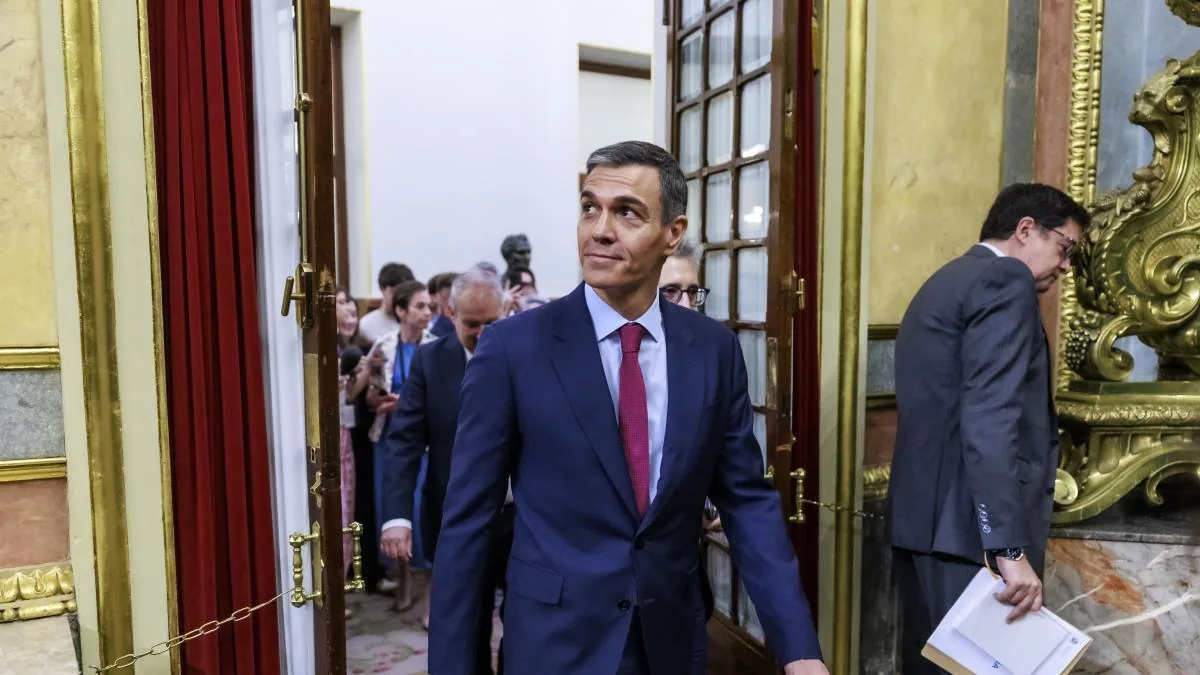
Alberto Núñez Feijóo yesterday issued a new and urgent demand for Pedro Sánchez’s resignation, in his first face-to-face in Congress after the indictment of José Luis Rodríguez Zapatero for alleged corruption crimes. “What are you still doing there, staining the presidency of the Government of Spain one more day?” the PP leader demanded of the head of government. The onslaught, however, did not catch Sánchez off guard, who came to the parliamentary session prepared to withstand the political storm caused by the judicial investigation opened against the former president. The head of government expressed all his support for Zapatero, and claimed the figure and legacy of his socialist predecessor in office. Furthermore, he reiterated that he does not intend to resign nor call early general elections. “You get to government with votes, not shortcuts,” he replied to Feijóo, amid protests from the popular bench. And he insisted that the general elections will be in 2027, and that, “if the Spaniards want,” he will continue for another four years in office. Or even, he went as far as to say, eight
Read more The judge points to the senior officials with whom Zapatero’s network contacted for the bailout