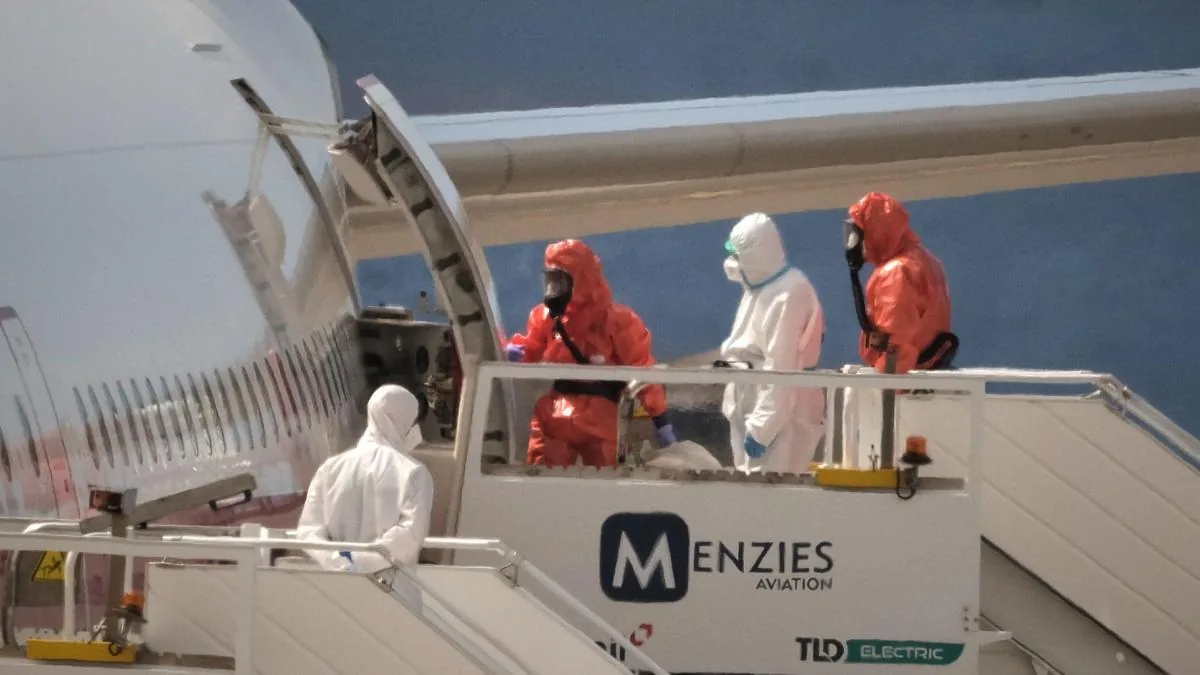
In the largest outbreak of Andes hantavirus ever recorded, 23 of the 34 affected people (68%) did not infect anyone. Not a single one of the 82 healthcare professionals who treated the 34 patients became infected, despite most not using protective equipment. Eleven of the 34 patients died.
These data indicate that the Andes hantavirus has a hard time spreading but, when it does, it can cause a severe infection. It is a low-risk virus for public health but high-risk for individual health.
For this reason, the World Health Organization (WHO) and the European Centre for Disease Prevention and Control (ECDC) have said from day one that the risk of hantavirus to the general population is minimal. But Spain, with its penchant for sensationalism, has reacted as if it were a reincarnation of Ebola.
The ECDC has stated, in a technical report with recommendations for governments, that people who traveled on the cruise and have no symptoms should quarantine at home for six weeks, in a single room, and that they can go out wearing a mask (although not using public transport) if needed for their mental health. In Spain, it was preferred to confine them in a military hospital.
Acting more forcefully than necessary, as has been done against the hantavirus, has the advantage that one thinks what they are doing is effective. But, as any doctor knows, more effectiveness entails more adverse effects, whether in drug treatments or, as here, in public health measures.
In this case, the adverse effects harm the people who had the bad luck of boarding a cruise where a hantavirus had slipped in, and who will now be deprived of their freedom for a time. But also the population supposedly being protected, who are subjected to unnecessary anxiety by presenting a virus incapable of causing an epidemic as fearsome.
It is not that the hantavirus outbreak on the cruise is irrelevant. The WHO has acted correctly by reacting quickly and decisively to cut the chains of transmission. Only a week after the first detection of the virus in a passenger, the outbreak is perfectly controlled.
But other viruses will come in the future, equally unexpected. Some will have more capacity to spread than others, and some will cause more severe diseases than others. It will be necessary to understand how each virus acts and properly assess the risk it poses to know how to respond to each one with the appropriate force.
If we treat every new virus as if it were another Ebola or another COVID, we condemn ourselves to live with a permanent fear of pathogens that will inevitably come. And fear is not the best strategy to face a threat.