A letter with a death threat and two 9-millimeter caliber bullets in the envelope. The message could not have been more forceful. Even in the digital age, there is a difference between a cold email and a physical package with two real bullets. The warning gains greater credibility. Mafiosi prefer the classic.
Read more Hooked on the internet: This is how digital seniors redraw old age
The recipient of the letter was the mayor of Alès, the conservative Christophe Rivenq, in the Gard department (Occitania), a city of 46,000 inhabitants in deep rural France, about 75 kilometers north of Montpellier. This town serves as the gateway to the Cévennes National Park, the typical place that used to be peaceful, a bucolic postcard for aerial views of a Tour stage. But even there, the Marseille organized crime has arrived, now dominated by the bloodthirsty DZ Mafia clan, which did not hesitate to identify itself to its targeted victim with graffiti on the wall of his house.
“I had never received threats at this level,” said the 60-year-old mayor to the AFP agency. “That shows that the actions we are taking against DZ and drug trafficking are bearing fruit,” added Rivenq. “I will continue doing my job and will not be intimidated.”
A year ago, DZ, whose leaders have Algerian origins, extended its tentacles in Alès to eliminate the local drug network. As it does in Marseille and other markets, its methods to impose itself on the competition were brutal. There have already been two murders in the city since the beginning of the year.
It cannot be a coincidence that the letter to the mayor and the graffiti arrived just one day after the municipal police seized four kilos of cannabis in the center of Alès. The local officers are very active. The DZ mafiosi must not like this police zeal.
The threat to the mayor of Alès is the kind of event that the right wing—and even more so the far right—exploits to denounce the insecurity situation the country suffers and the worsening during Macron’s years in the Élysée. This kind of sentiment is always relative, emotional, but it works. An ideal fuel for the next spring’s presidential campaign.
Read more The Cambres law is delayed due to the controversy over the silver chairs
The CNews channel, one of the ideological platforms of the media galaxy that favors the far right, has focused on the issue this Friday, which will last for days. The thesis of its analysts is that, although very similar patterns are observed to those used by Italian mafias—the Sicilian Cosa Nostra, the Calabrian ‘Ndrangheta, and the Neapolitan Camorra—such as extortion and threats to state representatives, the big difference is that in the Italian country these organizations have a local origin, while in France it is largely an “imported” phenomenon. And this is where arguments about immigration control and border sealing arise, as well as the demand for tougher prison legislation, like that adopted by Rome years ago, to limit as much as possible the possibility that imprisoned mafiosi can continue to run their networks and businesses from prison.
It is true, however, that mafia organizations linked to drug trafficking have colonized new territories and continue to expand their range of action, and no small city or town is safe anymore, even if its location is remote or isolated. Marseille remains the epicenter of settling scores, but not the only scene. Hitmen and victims are increasingly younger, sometimes minors.
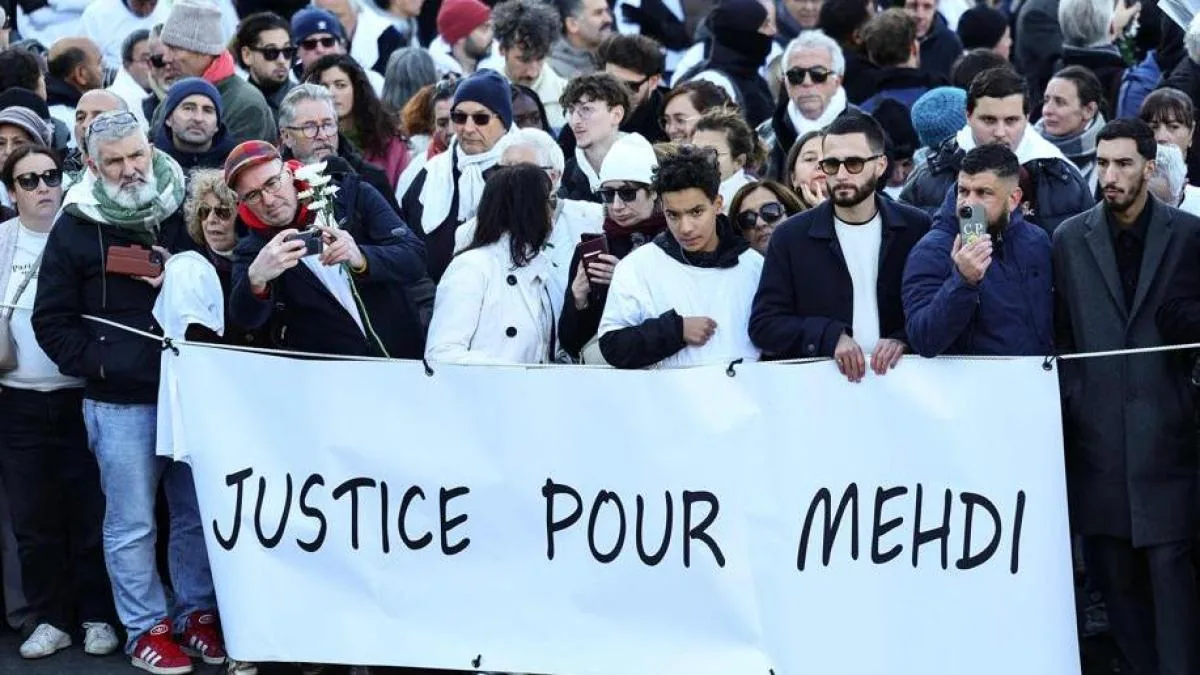
One of the events that shocked the country the most was the murder in Marseille, last November, of Mehdi Kessaci, 20 years old, younger brother of the anti-drug activist Amine Kessaci, who had been threatened and lived protected in another city. Mehdi was shot dead in broad daylight at a roundabout.
The news from Alès coincided with the publication by the newspaper Le Parisien of the results of an investigation, Octopus, about the DZ Mafia, especially about the role women play in the operation of this criminal network, many of whose leaders are in prison. “Without women, this does not work,” admits one of the organization’s bosses. Wives, girlfriends, lovers, or sisters assume in many cases important logistical functions for the chain of command, communications, logistics, money laundering, as managers of the accumulated assets and even control of drug sales points.
Elements of the investigation revealed by Le Parisien show that some women linked to DZ Mafia detainees have acted as intermediaries in the purchase of weapons or as front persons to acquire real estate in Algeria and Dubai. The prominence of women represents a qualitative leap over the traditional Marseille banditry, which considered them untouchable. The fact that they assume relevant roles makes them possible targets of settling scores.
Read more The digestion of amnesty