Today’s Council of Ministers, the first after the summer holidays, has approved a Royal Decree-law for the creation of a “public and mandatory” register of lobbies to ensure greater transparency and accountability.
The inability to process the Lobby Law project, which has stalled in Congress due to lack of consensus, has caused this new procedure. The regulation will come into force when published in the Official State Gazette (BOE) and must be ratified by Congress within a maximum period of 30 days.
“The substantial regulation included in this Royal Decree-law is based on the work carried out during the processing of the lobby bill currently in Congress. Thus, it incorporates amendments submitted by the groups during that process,” emphasized the Ministry for Digital Transformation and Public Function in a statement.
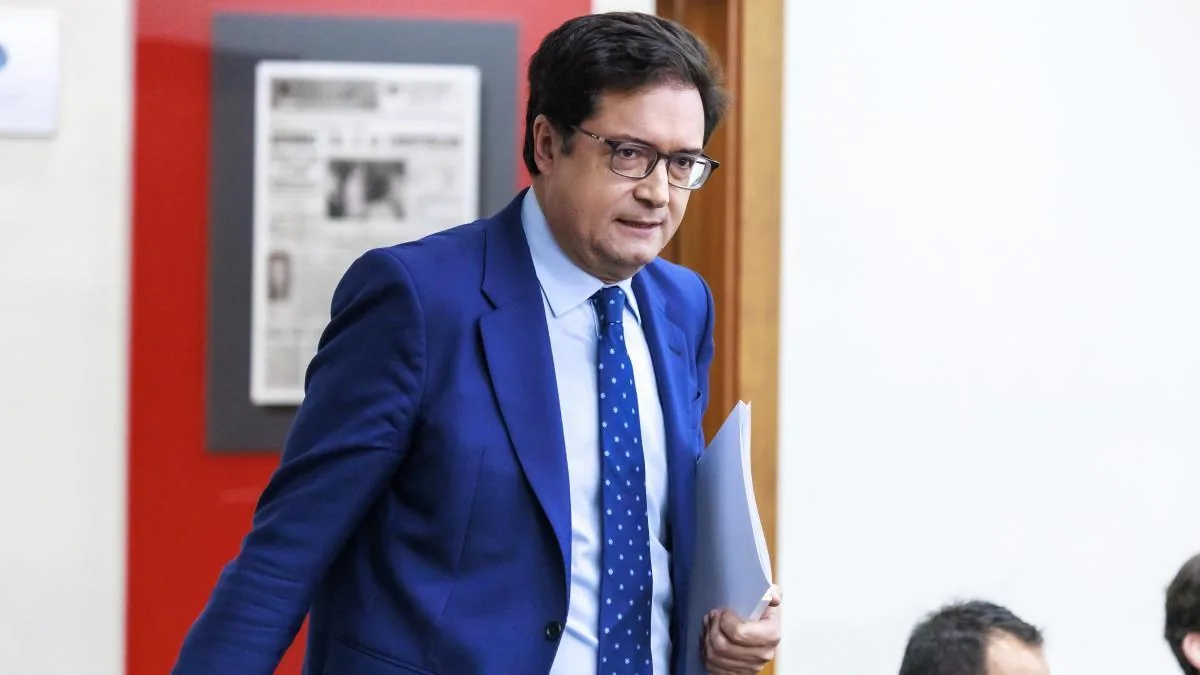
The regulation creates a public and mandatory state register of interest groups, as explained by the government spokesperson and Minister of Inclusion, Social Security and Migration, Elma Saiz, at the press conference following the Council of Ministers.
This register will also be public, free, and electronic
Registration in the lobby register will be mandatory and the data it contains must be available and accessible through the Transparency Portal of the General State Administration and the website of the Transparency and Good Governance Council.
This register will also be public, free, electronic, and will contain information about the people who carry out lobbying activities (including specifically those who have held public positions or offices during the last five years from the moment the group is registered), as well as their address or registered office, the identification of the interest group and its representatives, the activity carried out, and sources of funding, among others.
Furthermore, this State Administration register can be connected with those of the autonomous communities and local entities that already have one and with the EU Transparency register.
Specifically, the spokesperson minister explained, the regulation also details who are considered interest groups, what lobbying activity is, and who may receive it. Additionally, it will review within the State Administration the relationship between interest groups and public personnel susceptible to influence.
Includes advisors or trusted personnel as susceptible to receiving influence
According to this regulation, interest groups are natural and legal persons and unincorporated associations, including platforms, forums, networks, or other forms of collective activity, whether acting on their own behalf or on behalf of others, regardless of their form or legal status, and who carry out lobbying activities on public personnel and/or officeholders. For example, companies and NGOs intending to perform lobbying functions before the General State Administration (AGE).
The regulation considers lobbying activity any direct or indirect communication from an interest group with public personnel and/or officeholders susceptible to influence, carried out by any means or channel, with the purpose of affecting public decision-making, the design or implementation of public policies, or the drafting, modification, or approval of regulatory projects, for the benefit of their own or third-party interests.
Read more Joan Laporta calls and shows interest in the minor who was beaten by the Police in Elche
On the other hand, the text determines that those susceptible to receiving influence are public personnel or officeholders who perform public functions with the capacity to intervene in the formulation, execution, or supervision of public policies, regulatory drafting, or administrative decision-making processes, within the AGE and its institutional public sector.
Among them are senior officials (up to the level of director general) and, for the first time in a regulation approved in the field of public integrity and ethics, also trusted personnel, advisors, and temporary staff, as highlighted by the Ministry.
“The Government of Spain thus fulfills its commitment to transparency, institutional regeneration, and democratic quality. Three indispensable pieces in the puzzle of citizen trust,” valued the Minister for Digital Transformation and Public Function, Óscar López, in a press release.
According to the Ministry, this Royal Decree-law strengthens the Spanish framework of transparency and public integrity by fulfilling European obligations and commitments, aligning it with the standards promoted by the European Union, the Organisation for Economic Co-operation and Development (OECD), and the Group of States against Corruption of the Council of Europe.
Furthermore, it states, its approval respects the commitment reflected in the V Open Government Plan 2025-2029 to create a register of interest groups of the AGE and complies with milestone 432 of the Recovery, Transformation, and Resilience Plan.
The competent body for initiating, instructing, and resolving sanctioning procedures affecting interest groups will also be the Transparency and Good Governance Council.
Likewise, the Royal Decree-law regulates the sanctioning regime, classifying infractions as very serious, serious, and minor, and establishing penalties for committing infractions.
Public personnel susceptible to influence will be obliged to make public on the Transparency Portal, within one month of their occurrence, all meetings and contacts they have with interest groups registered in the register.
Activities carried out by interest groups with the aim of influencing the drafting and adoption of any regulatory project and, where appropriate, their impact on it, will be reflected by the competent department in a regulatory footprint report, which will be referenced in the corresponding regulatory impact analysis report, according to the Ministry.
Read more Ulrich Siegmund, the new face of the German far-right