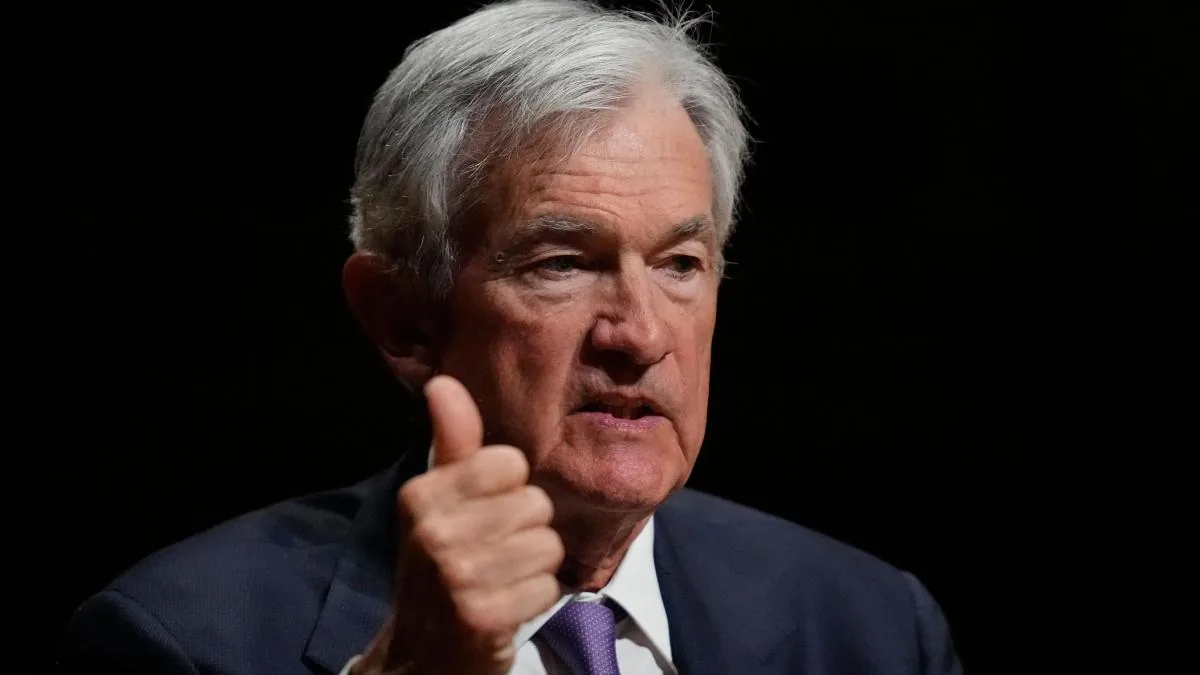
The Federal Reserve closed its April meeting with the third consecutive pause of caution on interest rates (3.5%-3.75%), without changing its agenda since the cut last December, amid economic tension and uncertainty generated by the war in Iran. This is supposedly the last meeting led by Jerome Powell at the helm.
Read more Celsa returns to profits in the first quarter of this year: «We are out of the hospital»
The resolution had more drama than expected because there were four dissents among the twelve governors with voting rights, something more than unusual: It hadn’t happened since 1992. Stephen Miran, appointed by President Donald Trump, repeated his vote in favor of cutting a quarter point. But this time there were three who disagreed with the language of the statement because they wanted to remove the bias of monetary easing that the official note apparently has. This was interpreted as a warning that the door cannot be left open to cuts in the coming months, when Kevin Warsh, a hawk of cuts, is expected to be in charge of the house.
As that statement states and Powell later reiterated, economic activity has expanded at a solid pace, but job creation remained low and inflation is high as a reflection of the global increase in energy prices.
After more than 60 days of armed conflict, the average price per gallon of oil nationwide this week in the United States is above four dollars, a record in nearly five years and one of the worst indicators of the country’s economic health for Americans. And this weighs on the Fed.
However, since that decision not to change anything was expected by Wall Street analysts (without so much division), the focus this time was much more on May. Barring an accident, the April meeting has been Powell’s last at the helm of the Fed, whose presidency ends on the 15th. The next two-day meeting of the U.S. central bank will be in June and Kevin Warsh, Donald Trump’s battering ram to fulfill his wish to blow up the rates imposed on money, is expected to be in charge.
Just hours before the Fed’s decision was announced, the Senate banking committee removed obstacles to bring Warsh’s nomination to the full chamber, once the Department of Justice dropped criminal charges against Powell last Friday.
The Federal Reserve’s cautious approach, which Powell has repeated so many times over several months of “wait and see” before making a cut, is justified by inflation running above the limits set by the Fed, an apparently stable labor market, and shocks from the Middle East war.
Wednesday’s decision was made in a context of high energy prices and a central bank that has been above its 2% inflation target for five years, while the labor market appears weak but not in a critical situation. All this creates a scenario that does not advise easing monetary policy, at least for now, the Fed governors emphasized.
“Regarding the dual mandate, I would say we are roughly in a stable labor market,” said Roger Ferguson, economist and former vice chairman of the Federal Reserve, to CNBC. “On the price index side, there is much more work to do with persistent 3% inflation, and I expect they will argue they will hold firm for a while to see how all this evolves,” he predicted. Even for Warsh, problems are foreseen if he wants to fulfill Trump’s wishes.
Powell’s press conference after the meeting, usually a highly followed appearance by the markets, this time was perceived less as a guide to future monetary policy steps and more as a farewell from a Fed leader who has maintained one of the most conflictive relationships with a U.S. president in the institution’s history.
Read more Putin and Trump talk on the phone and make progress on a possible ceasefire for Ukraine
Powell joined the central bank in 2018 nominated by Trump himself. Once there was a change in the White House, Joe Biden supported his second term. But before Trump’s return to the White House in January 2025, the interest rate war had already started.
The ultra-conservative leader insisted on cuts and Powell, wielding the institution’s independence, refused to listen to the president and bet on preventing inflation from soaring and harming citizens’ pockets.
This clash led the Department of Justice, under Trump’s orders, to file a criminal complaint against the Fed dissident for the increased cost of renovation works at the Federal Reserve’s Washington headquarters and whether Powell lied about it in a congressional hearing.
Republican Senator Thom Tillis demanded, as has happened, that this case be dropped to clear the way for Warsh’s confirmation. This will make the leadership change possible, but the case will continue through administrative channels and it cannot be ruled out, given Trump’s vindictive nature, that the Department of Justice revives that criminal complaint. This suggests Powell will decide to serve out his term until 2028 as one of the central bank governors to protect himself from the White House’s wrath.
The banking committee followed partisan lines. All 13 Republican members voted in favor of the nominee, while the 11 Democrats opposed. This forecasts what will happen in the Senate plenary, where conservatives hold the majority.
Democratic Senator Elizabeth Warren, the highest-ranking member of that committee, harshly criticized Kevin Warsh before the vote, warning that his confirmation would erode the central bank’s independence from the executive branch.
“Donald Trump’s economy is in real trouble. Inflation is rising, job creation is falling. The smell of stagflation is in the air, and President Trump is getting desperate,” Warren said.
“A vote today by this committee to push Warsh forward will bring the president one step closer to completing his illegal attempt to take control of the Fed and artificially stimulate the economy,” she denounced.
Read more The U.S. Supreme Court dismantles a pillar of the Voting Rights Act against racial discrimination