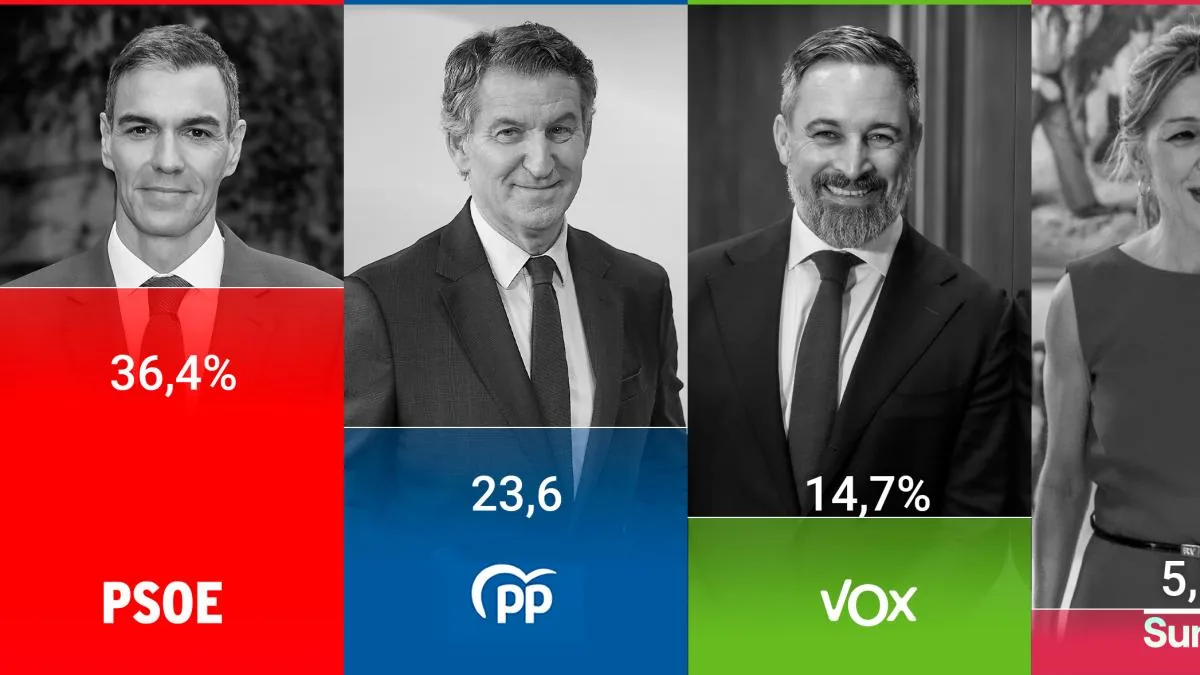
The PSOE would win the general elections if they were held now, and would do so with the maximum support of the entire legislature, an estimated 36.4% of the vote, according to the April barometer from the Center for Sociological Research (CIS), released this Monday, which places the PP thirteen points behind the socialists, with 23.6% – a similar result to recent months – and portrays Vox in free fall, with 14.7%, four points less than in February.
Read more What makes Sánchez happy
The study, with fieldwork of 4,020 interviews conducted from April 6 to 10, 2026, does not ask about the two judicial cases that have focused media attention in the last two weeks and that have put on trial the former Interior leadership of Mariano Rajoy’s government – the Kitchen case, about the parapolice plot to spy on former treasurer Bárcenas – and former minister José Luis Ábalos – the Koldo case, about alleged corruption in the purchase of masks during the pandemic.
However, both trials do not seem to have affected the estimated vote received by PSOE, which improves by 4.6 points compared to March, and PP, which improves by three tenths. Completely different is the electoral outlook that the April CIS foresees for Vox, with the impact of the war in the Middle East and the loss of support for Donald Trump. The Spanish far-right, which has been losing support for two consecutive months, had not dropped below 15% since June 2025.
There is also no good news for Sumar, which drops to 5.8%, nor for Podemos, which would obtain 2.2%. The “morados” (purples) would be surpassed by ERC, which has gained half a point compared to the March barometer and is now close to 3% (2.9), while Junts is at 0.8%. EH Bildu also gains support (1.3%) compared to PNV at 0.8%.
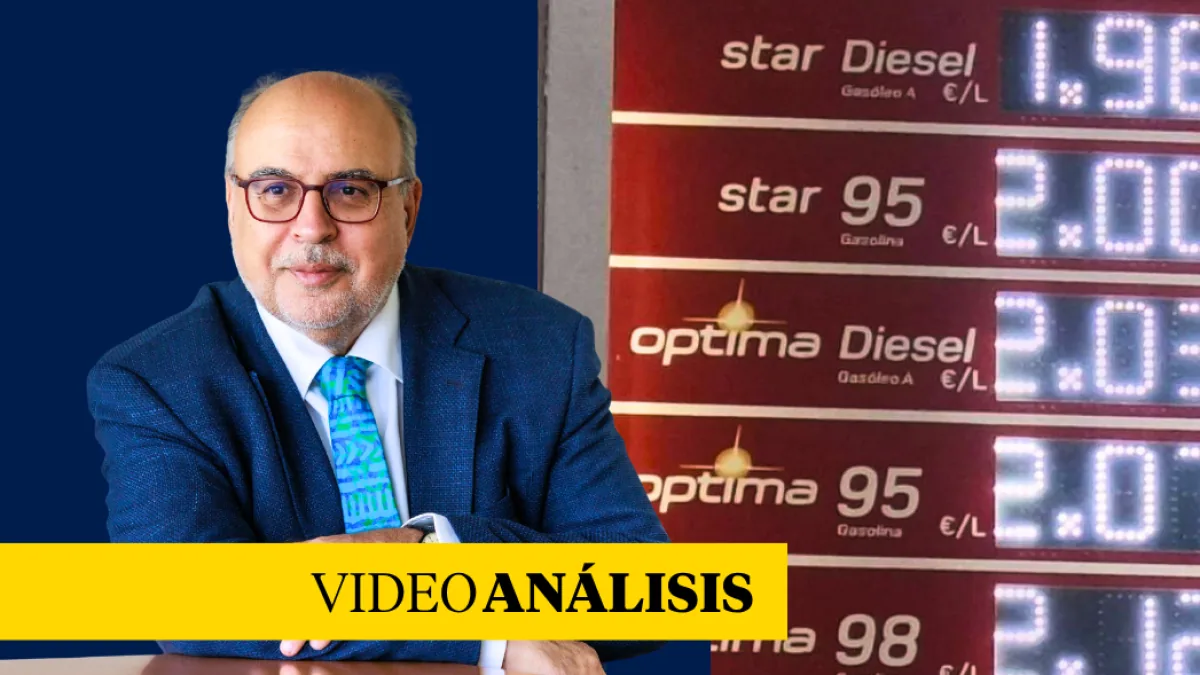
Six out of ten say the war is affecting them, due to rising fuel, shopping, electricity and gas prices
As every three months, the barometer also offers an evaluation of the ministers. The best-rated is, once again, the Minister of Economy and, since March 27, First Vice President, Carlos Cuerpo, with an average of 5.93 on a scale of 1 to 10, his highest score since joining the Council of Ministers in December 2023. He is followed in evaluation by the Minister of Defense, Margarita Robles, with 5.33; the Minister of Social Rights, Pablo Bustinduy, with 5.27, and the Minister of Culture, Ernest Urtasun, with 5.05.
Almost two months after the attacks by the United States and Israel against Iran that started the war in the Middle East, eight out of ten interviewees (83.9%) express concern, to varying degrees, about this escalation, and 86.9% believe it poses a significant risk to international peace.
Read more U.S. wants to investigate whether the ‘patriotic police’ misled it to close the Andorran bank BPA
In this context, half of the interviewees (50.4%) believe, to a greater or lesser extent, that Spain’s image has improved internationally, with the stance adopted by the President of the Government, Pedro Sánchez, regarding the war in Iran.
Regarding the repercussions of the war, 58.5% of respondents state that it is personally affecting them. Of these, 94.5% indicate that it affects them through rising fuel prices, 92.5% through the increased cost of the shopping basket, and 80.1% through the increased cost of electricity and gas bills. 69.6% perceive a greater sense of insecurity or risk, and 56.2% admit an impact on their emotional well-being or mood.
Housing continues to be the main problem – and has been for sixteen consecutive months – with 41.3% of mentions, followed by the economic crisis (24.9%), and problems related to employment quality (19.2%).
The survey also asks about the time change that occurs twice a year. 65.7% are in favor of ending daylight saving time, compared to 24.5% who would keep it. The majority (66.4%) would stick with summer time, which is the current one – more hours of daylight in the afternoon and evening – while 22% choose winter time.
Read more Hazte Oír demands 24 years in prison for Begoña Gómez, who seeks to annul her prosecution