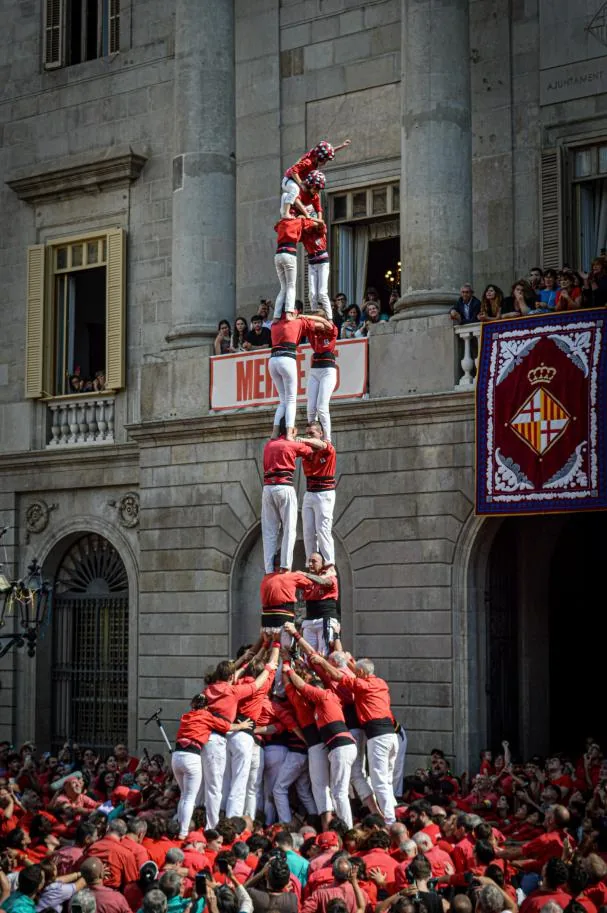
The Castellers de Barcelona are preparing to export the castell tradition to an unprecedented altitude. This June 25, the group from the Catalan capital will travel to the Swiss Alps with the aim of performing what is announced as the “highest castell in history,” in the words of their public relations manager, Jordi Planas, to La Vanguardia.
Read more The WhatsApp creator’s helicopter leaves Barcelona on a crane; his yacht remains in Port Vell
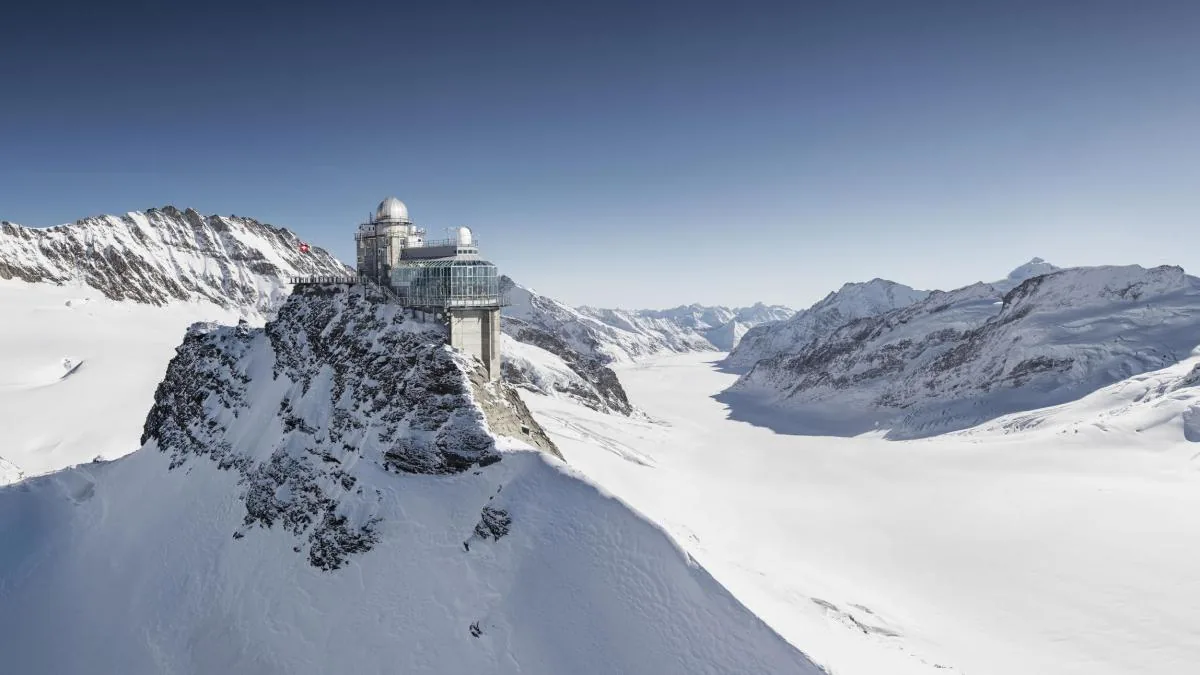
The chosen setting is the Jungfraujoch, known as Top of Europe, located at 3,454 meters, which houses the highest train station in Europe between the peaks of Jungfrau (4,158 meters) and Mönch (4,107 meters), and provides access to the Aletsch glacier, declared a natural heritage site by UNESCO.
The logistics of this castell exodus involve the participation of the Swiss Tourism office in Spain, the result of a collaboration started earlier this year, which has facilitated mobility across the country with the Swiss Travel Pass — covering the network of trains, buses, boats, and some cable cars — and mediated with the Jungfrau office to organize the cultural event at the Top of Europe. They also provide support for the stay in Interlaken and coordinate the planned events in Montreux and Lausanne.
Also read
Swiss Tourism defends the collaboration as a way to do “something important for the dissemination of Catalan culture to Switzerland and the world, uniting the two cultures,” and highlights the logistical challenge posed by “mobilizing a group of almost 200 people from Barcelona to the emblematic alpine location.”
The challenge involves performing 7-level castells and a 4-level pillar. “It will be spectacular, we will perform in a scenic place; we couldn’t miss the opportunity,” Planas emphasizes the magnitude of the performance. The intention is also to raise a pillar at the Sphinx observatory viewpoint, the highest point of the complex, located at the dizzying 3,571 meters. “It would be great to go a few meters higher,” he adds, although the plan established by the local office is to perform at the viewpoint overlooking the glacier.
Beyond the spectacular nature of the challenge, the trip aims at the international expansion of Catalan and castell culture with the baptism of the Castellers de Lausanne. This group, created in 2023 by the initiative of Albert García del Campo and currently co-captained alongside Joan Blanco, will have its official debut on Saturday, June 27, sponsored by the red-shirted group. During this event, in which the Castellers de Zurich will not participate due to scheduling conflicts, the local group expects to gather about fifty members, wearing their green shirts — in honor of the colors of the canton of Vaud — and complete their first performance with three 6-level castells to reach their new status.
Read more Match in Jódar interrupted due to smoke from Inter fans after winning the Coppa Italia
As a prelude to the big event, the Swiss group will also accompany the Barcelona expedition on Thursday, June 25, to Jungfraujoch to “lend a hand in the pinyes” and try to raise their own pillar. On Friday, June 26, they will offer castells and public rehearsals in front of Chillon Castle (Montreux) and at the Olympic Museum in Lausanne prior to the event the following day in the capital of the canton of Vaud.
So far, the feat of building a castell at the highest altitude is held by the Castellers de l’Alt Maresme, known as Maduixots. In August 2017, they performed a 4-level pillar at Pica d’Estats (3,143 m), an iconic peak and the highest in Catalonia. That performance, however, required a two-day ascent on foot from the Vallferrera refuge. “These are different situations, the way they carried it out is different,” Planas distances himself when asked about this precedent. “What matters is enjoying the castells wherever they are,” he points out.
And unlike the Maresme expedition, those from Barcelona will not have to climb but will reach over 3,000 meters thanks to Swiss railway engineering. Although the comfort will allow moving most of the expedition, the altitude and weather will turn the cold and thin air into the real barrier to overcome for the group.
In 2017, the Maduixots performed a 4-level pillar at Pica d’Estats (3,143 m)
This is not the first time the Castellers de Barcelona, founded in 1969, export the castell tradition to international settings. In 1989, they built a 3 of 7 at the foot of the Eiffel Tower during the centenary events of the Parisian structure. Additionally, the group has helped found about twenty other groups, gathering 19 of them active during the celebration of their 50th anniversary in 2019.
Read more The Vatican threatens schism to the Lefebvrians if they ordain bishops