








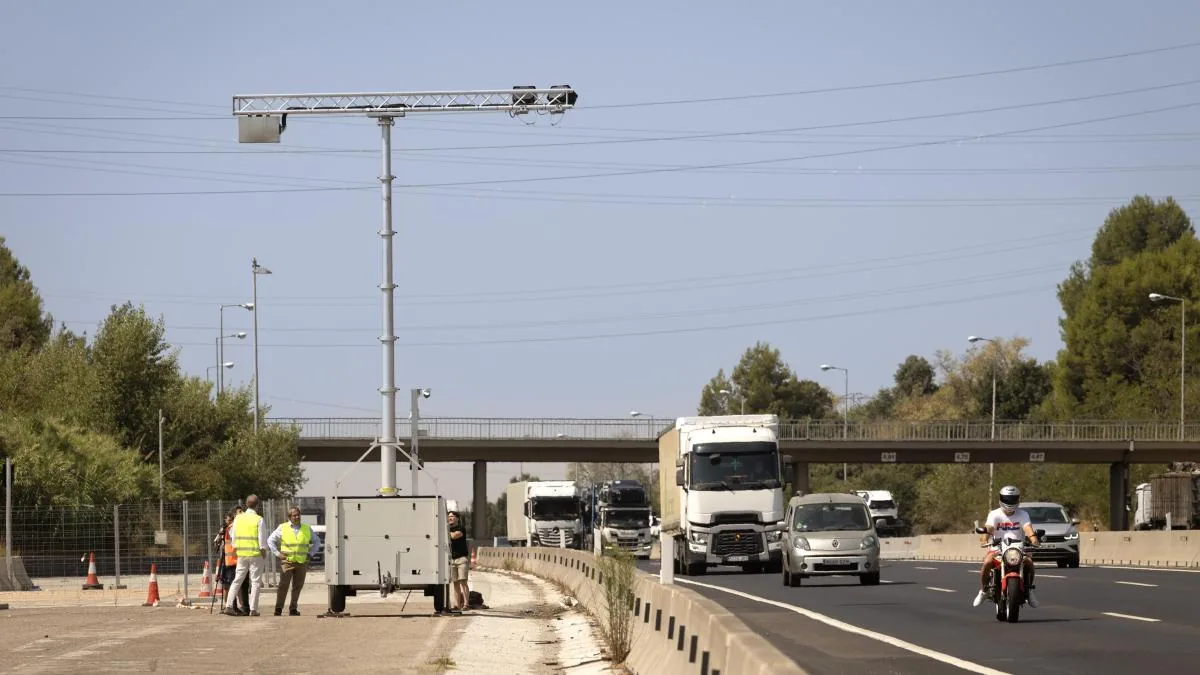
The speed cameras deployed by the Servei Català de Trànsit in recent years will not be limited to fining for speeding. This new type of radar mounted on a trailer that the Mossos d’Esquadra move around the roads also allows the incorporation of elevated cameras equipped with new Australian technology that serves to detect inappropriate behavior inside vehicles.
Read more A 94-year-old woman admitted requests free television in all hospitals
With two high-definition cameras and an artificial intelligence system to read the images, these new radars are capable of detecting if the driver is using a mobile phone while driving. They also identify if the driver or the passenger is not wearing the seatbelt or is wearing it incorrectly.
The results obtained by the AI and subsequently reviewed by humans are alarming: 4.3% of drivers were holding the phone in their hand or on their lap while driving on the A-2 highway or the AP-7 motorway. In other words, one in twenty drivers had their eyes on a screen at that moment instead of on the road, with the risk that entails. In absolute numbers, in just one month, more than 8,500 drivers would have been fined, although the pilot test was only designed to assess its operation, still without sanctioning capacity.
Approximately half of the offenders held the device directly in their hand, the other half on their lap. “On the seat or on the legs is even more dangerous than in the hand, because the gaze is taken off the road for even longer,” warns Ramon Lamiel, director of Trànsit.
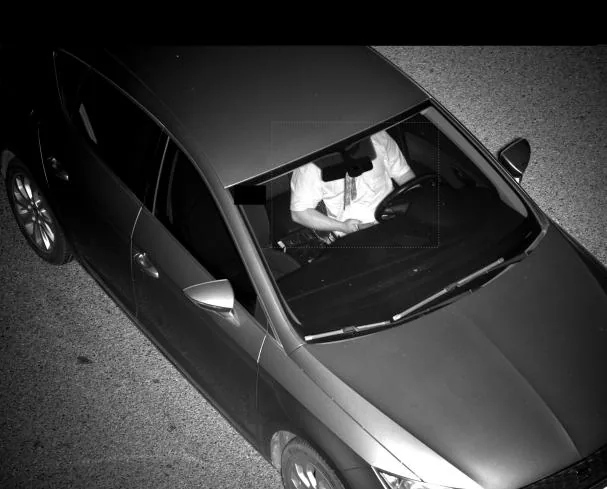
About 1.5% of vehicle occupants were also detected not using the seatbelt correctly, an issue that seemed already overcome in road safety and sounds as old-fashioned as the obligation to wear a helmet when riding a motorcycle.
Read more Barça receives complaint from Atlético de Madrid over Julián Álvarez
The infraction is more common in the urban environment of the A-2 than on the long trips of the AP-7
The preliminary results also offer trends on these violations that allow extrapolating tendencies. The most notable is the difference between the AP-7 motorway, near La Roca del Vallès, and the A-2, in Cornellà de Llobregat, near the Espanyol stadium. While many vehicles on the motorway make long trips, the highway is a more urban displacement, a short trip to work or similar. There, a much higher use of the phone is detected than on the motorway, concentrated during working hours. The opposite happens with the seatbelt, where there are more violations on the AP-7 than on the A-2, concentrated on weekends and during night and early morning hours.
The test in Catalonia is part of a global project that has tested the same technology in ten different places around the world that have not been specified. Leading the ranking of mobile phone use while driving is a U.S. state, reaching 11.8%. Catalonia ranks third in non-compliance, ranking worse even than an African country.
The technology used represents a paradigm shift since while radars are usually seen by the driver with enough time to brake and comply with the speed limit, in this case the cameras focus on the driver’s face. When the driver notices the device, they have already been recorded, as one of the two cameras focuses from a distance before reaching the radar. The other offers a more overhead shot to capture those who carry the phone in a place that apparently the police should not see.
Given the worrying percentages recorded and the good detection results provided by the technology tested during these weeks, Trànsit is clear that this type of camera will be part of the next road safety plan 2027-2029, which the department’s technicians are already shaping.
Read more Manolo Solo, the actor who came from rock, dies at 62 years old