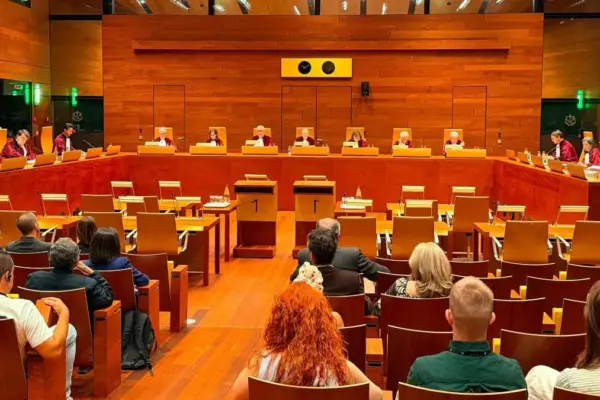
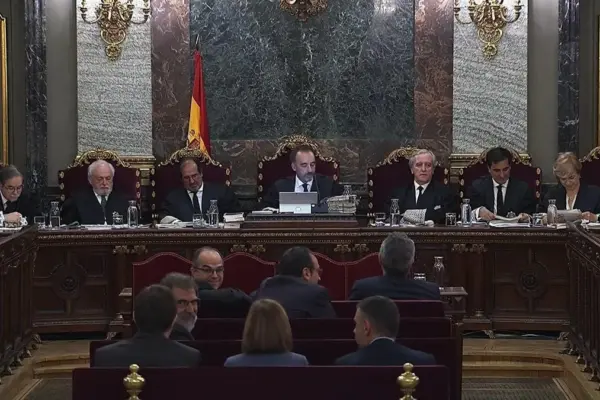
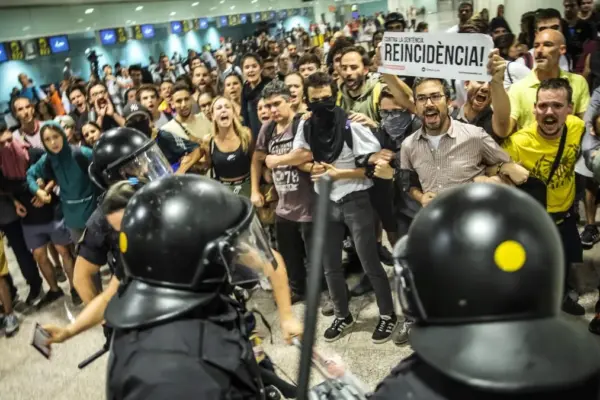
The amnesty law approved two years ago has benefited a total of 403 people, of whom 181 are protesters or pro-independence activists, 158 police officers, and 64 political officials, according to data from the lawyers’ platform Alerta Solidària. Two years later, a total of 93 political officials are still awaiting its application. These are the cases that were pending resolution by the Court of Justice of the European Union (CJEU), which ruled in their favor this Thursday. Among them are Carles Puigdemont, Toni Comín, and Lluís Puig, declared in rebellion and with an arrest warrant issued by the Supreme Court; as well as Oriol Junqueras, Jordi Turull, Raül Romeva, and Dolors Bassa, who were pardoned from the prison sentence for the crime of sedition for which they were convicted, but not from the sentence for embezzlement, which involved disqualification from holding public office.