The Barcelona-based company Openchip, dedicated to designing very high-performance chips for artificial intelligence and supercomputing, is facing major strategic changes. Among them, its financial strengthening and the search for a new partner with economic muscle, but also industrial capacity.
Read more China accounts for 60% of electric car sales worldwide
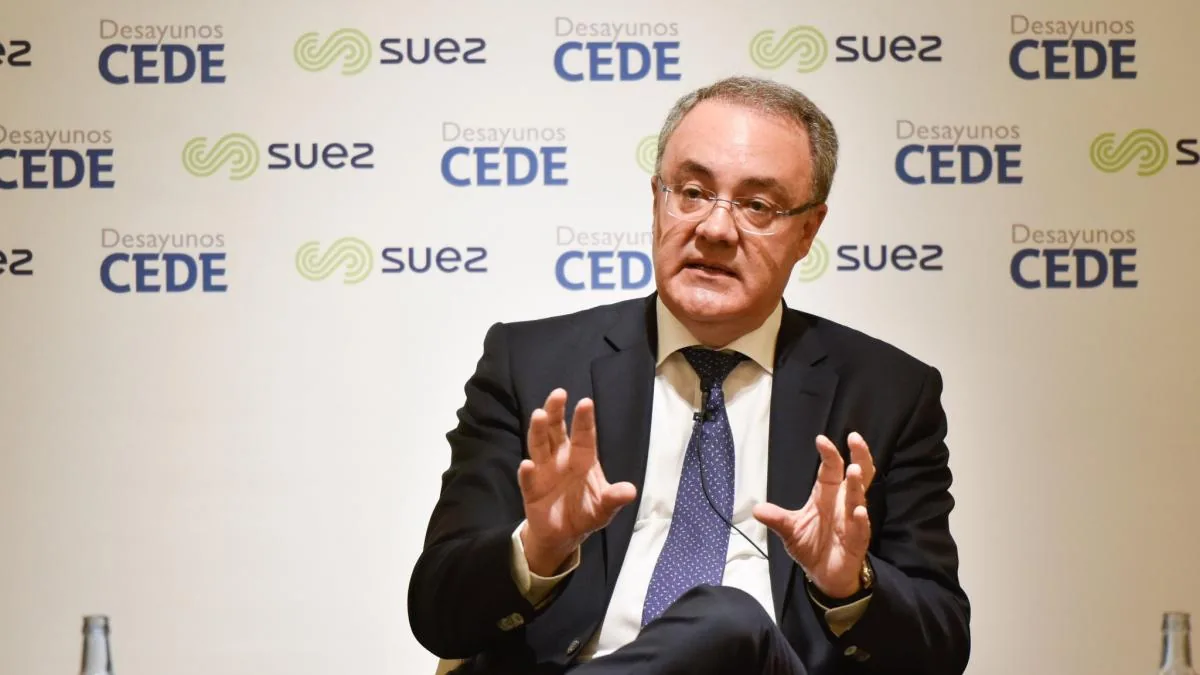
Soon, Tobías Martínez, the former president of Cellnex, currently an independent director of the company, will assume the non-executive presidency, replacing Carles Kinder. The CEO will continue to be Francesc Guim.
Currently, the company’s capital is divided between the Barcelona-based company GTD Innovation & Technologie, with 53%, and the Barcelona Supercomputing Center (BSC), of which Openchip is a spin-off, with the remaining 47%. The former is part of the GTD Ingeniería de Sistemas y de Software group, a pioneering company founded in 1987 and focused on the space, aeronautical, and defense sectors.
Future financial moves also seek to reduce the weight of the public sector, the BSC, a public consortium involving the Spanish Government, the Generalitat, and the Universitat Politècnica de Catalunya, led by Mateo Valero.
In addition to public participation in the company’s capital, Openchip has received 111 million in European funds and 25 million more in public financing to fund its activities. But the development of the technology necessary for the production of advanced chips, key to Europe’s future technological independence, is very costly, and therefore the aim is to strengthen the company’s capital and incorporate partners with technological power.
Those involved in the project recall that Nvidia, the world leader in the design and production of next-generation chips, which the United States has banned from exporting to China, was founded in 1991. Openchip, for its part, was born thirty years later, in the midst of the COVID pandemic.
Precisely because of that public participation, the new definition of Openchip’s strategy and the reconfiguration of its leadership has involved the direct participation of the Catalan administration and the team from the Departament d’Economia, headed by the councilor Alícia Romero.
Currently, the company employs 336 people from 37 nationalities, and most come from leading technology companies such as Nvidia, Intel, NEC, Google, or Qualcomm, according to official company sources consulted.
Read more A confidential report from Meloni’s party seeks to dismantle the «Sánchez model»
+++
In an interview last week in La Vanguardia, Enrique Riquelme, the businessman from Alicante who has decided to challenge the unstoppable Florentino Pérez and will compete against him in the upcoming Real Madrid presidential elections, made a diagnosis of the economic management of the Madrid club – also applicable to Barça, which has already been discussed in these pages –.
Real Madrid is the club that earns the most in the world, not only in football. In any professional sport. Barça comes next. Despite this, the presidents of both clubs lament the limitations they suffer or the competition from the so-called state clubs and always long to further increase their budgets. Riquelme attributed this contradiction to “excessive non-sporting general expenses. The number of people in various executive departments of the club earning more than a million makes no sense.” Again, criticism also applicable to the eternal rival.
Well, Florentino Pérez, in an interview given yesterday to the newspaper El País, replied to Riquelme, setting an even greater goal. “I want to reach 2,000 million as soon as possible,” says the president of the construction company ACS. In this case, that challenge is adorned by a still vague proposal to sell a part of the club, 5% says the Real Madrid president, with unclear purpose or how it will affect the traditional social structure of the sports entity.
What is the logic behind inflating the revenue balloon so excessively? Certainly not to improve the situation of the club’s other divisions. For example, Florentino does not seem to consider the women’s football section a priority, in which Barça stands out despite the latter’s efforts in that area seeming to falter. Could it have to do with ego and the power boost it grants?
So far, history shows that the more clubs earn, the more money professional footballers in their ranks earn. That is, the salary bubble destined for the small elite group that goes from one big club to another like a Ferris wheel is fed more. A secondary consequence of this phenomenon is the distribution of all kinds of perks and commissions among those participating in this vanity fair. As Riquelme says, with exorbitant payments within the clubs and also to an endless list of intermediaries.
Florentino Pérez’s interview drops another very explosive pearl. He announces that he has already cooked up a solution with the Madrid authorities, presumably with the president, Isabel Díaz Ayuso, and the mayor, José Luis Martínez-Almeida, for the serious economic problem caused by the judicial ban on holding concerts at the remodeled Santiago Bernabéu: “It is already settled, we have won in the courts, we will hold concerts. We have the support of the City Council and the Community, which will make special rules.” Florentino’s old method in pure form: if the rules don’t allow me, they are changed and that’s it. Let’s see what the neighbors say.
Read more The Trump supporter De la Espriella wins the first round of elections in Colombia