The president of Telefónica, Marc Murtra, considers it “extraordinarily dangerous” for Europe to depend on critical technologies developed outside the continent. “It creates extreme fragility,” he warned. This dependence on other countries becomes evident in cases of cyberattacks or hybrid attacks, such as the one that occurred this week at Leipzig airport in Germany. The top executive of the telecommunications operator made a plea this Friday in favor of the defense and rearmament of the region during a colloquium organized by the employers’ association Foment del Treball.
Murtra has encouraged developing a defense industry in Catalonia “without any kind of complexes” and has positioned this sector as essential for any democratic country. In this regard, he urged the development of proprietary technologies in this field to avoid dependence on other powers such as the United States and China. What role can Telefónica play in this field? The executive explained that companies like his can facilitate, for example, communications and control of military drones, in coordination with defense giants like Indra, which Murtra chaired until 2025.
During the conference – attended by business personalities such as Javier Godó, Count of Godó and editor of La Vanguardia; the president of Banc Sabadell, Josep Oliu; the vice president of the Grifols board, Raimon Grífols Roura; and the co-founder of Glovo, Sacha Michaud – Murtra urged them to help Catalan companies win contracts to develop defense technology. The president of Telefónica recalled that there will be an “extraordinary” investment in this industry and that it will be necessary to “build many things,” infrastructures that, once installed in a territory, will remain there “forever.”
Murtra recalls that there will be an “extraordinary” investment in this industry and that it will be necessary to “build many things”
From the Foment del Treball headquarters, Murtra compared the transformation that Via Laietana represented with the major changes his sector is currently facing. Before the president of the organization, Josep Sánchez Llibre, he also recalled as an anecdote that the first test of a telephone line in Spain was done a short distance from this historic building and that the grandmother of Álvaro Echevarría, the director of his office, was the first woman to work at the Catalan employers’ association in 1920.
For Murtra, Europe has another chance to beat South African magnate Elon Musk and his company Starlink, and for that, you only have to look to the sky. The executive believes the EU should bet on developing its own constellation of satellites to avoid dependence on a single provider, capable of connecting or disconnecting the service at will. Still, for Telefónica, this technology will continue to be a complement to terrestrial networks and communication towers. “It can be useful for the Monegros or a remote region of Brazil, but not for São Paulo or Sant Vicenç de Montalt,” he argued during his speech.
Regarding the future of the telecommunications sector, Murtra referred to another of his fixations: mergers. The president of Telefónica celebrated the “Copernican shift” of the European Commission in its directives on concentration to allow companies on the continent to gain scale. “It will not happen in six months or twelve, but it is already underway,” he pointed out.
The executive admitted that we are entering an uncertain moment of technological disruptions that are having “very real” political, social, and economic consequences. However, he insisted that these changes will generate opportunities “for those who are able to identify them.” Artificial intelligence (AI), quantum computing, and technological sovereignty processes, he listed, are some of the fronts that will define a new scenario requiring “European champions.”
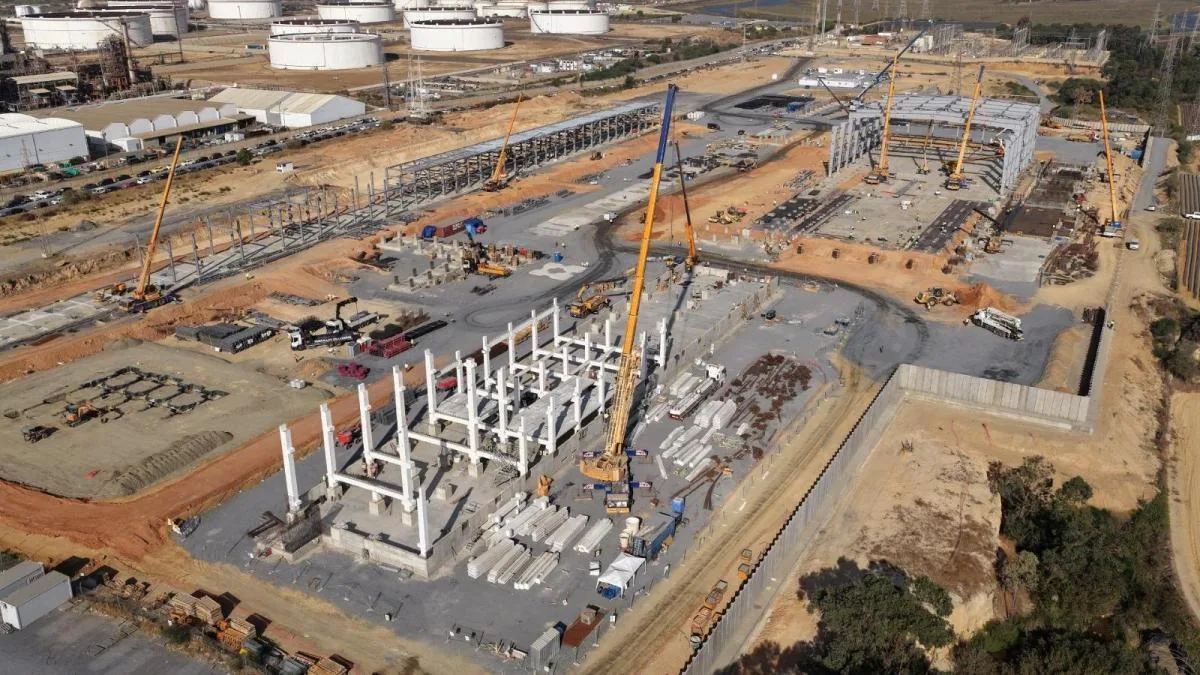
Murtra, a Catalan born in England, also took pride in Telefónica’s commitment to Catalonia. In 2025, the group invested 128 million euros in the autonomous community, where it employs 1,043 workers, has 6.5 million accesses, and hosted four shoots of Movistar Plus+ audiovisual productions. Its ambition is that the next “great transformative project” in Catalan territory will be the AI gigafactory in Móra la Nova, a public-private consortium that, according to the executive, embodies the Draghi report’s maxim of “moving from diagnosis to execution.”
Read more Russia attacks the headquarters of the Ukrainian security service with Illa in an adjacent building