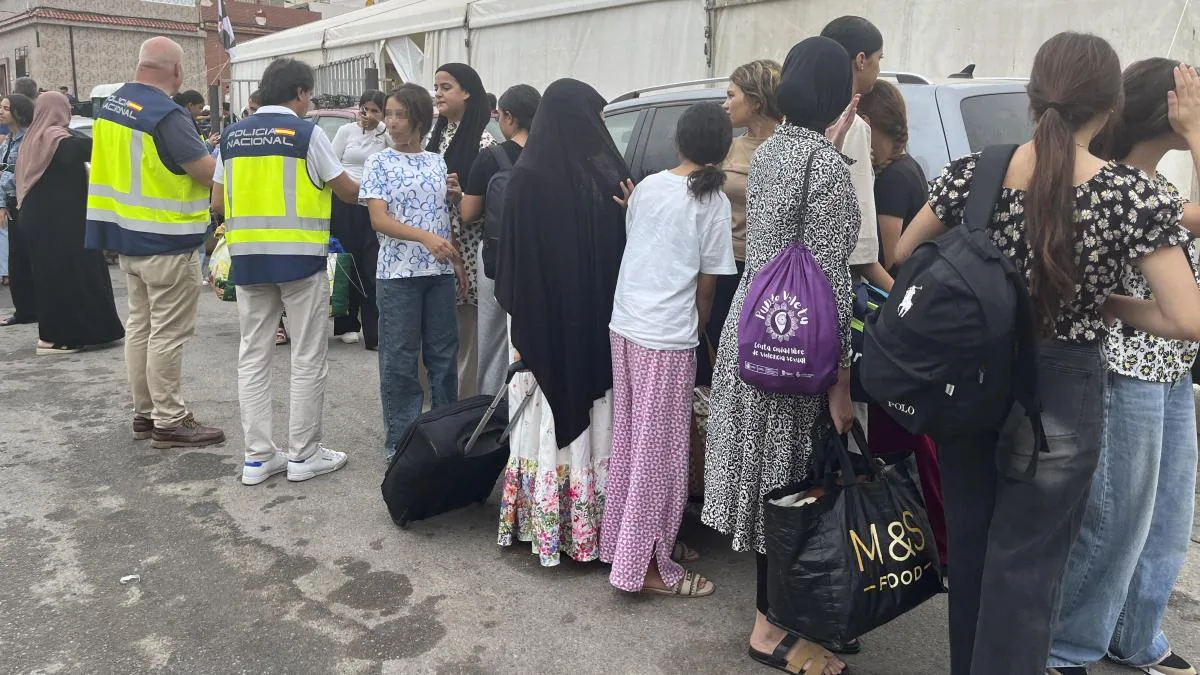
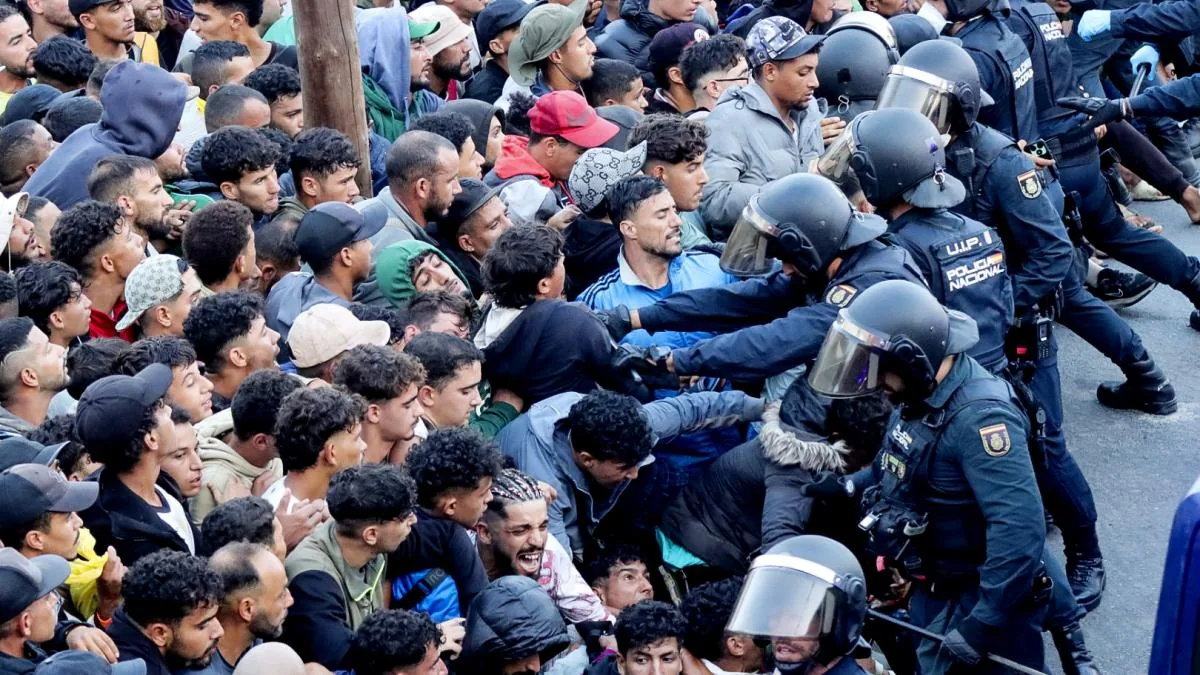
The Government has announced that it will transfer to the peninsula 500 girls who arrived in Ceuta on July 30 and have remained in the autonomous city for 20 days under very harsh conditions: outdoors, without water or food or the possibility to clean themselves, and under the threat of being victims of sexual assaults. The NGO Save the Children estimates that about 4,000 minors still remain in Ceuta. Europe and the PP advocate for their expulsion from the country. The Government has also stated on several occasions that “all” immigrants remaining in Ceuta will be repatriated. Is it possible to expel unaccompanied minors from Spain?
Read more The new house of Ayuso raises more doubts about the failed purchase of the 6.3 million penthouse

What law is applied to proceed with the expulsion of immigrants who arrive in Spain irregularly?
In these cases, Organic Law 4/2000, of January 11, on the rights and freedoms of foreigners in Spain and their social integration (LOEX) and its implementing regulation, Royal Decree 1155/2024, in force since May 20, 2025, are applied.
What happens when the immigrants are minors?
Spanish law establishes that immigrant minors who arrive irregularly are legally considered Unaccompanied Foreign Minors (MENAS). Their protection absolutely prevails over their migratory status, so an ordinary expulsion process cannot be applied to them. Article 35 of the LOEX regulates a specific protection regime for unaccompanied foreign minors.
How is this specific regime implemented?
If any of the immigrants settled in Ceuta claim to be 16 or 17 years old, or there are reasonable indications that they may be minors, they cannot simply be treated as an irregular adult foreigner and expelled. Their age must be determined and, if applicable, the minor protection system activated.
Who is responsible for taking the first steps in the process?
The Juvenile Prosecutor’s Office is responsible for coordinating the protection of the children and legally determining their age through medical tests if there are doubts. Previously, unaccompanied minors undergo a medical examination where their physical and mental state is evaluated. Afterwards, they automatically come under the guardianship of the minor protection services of the Autonomous Community where they are located.
Can these minors be expelled?
After being under guardianship, an administrative expulsion process can be initiated, but very sparingly. The law makes it very clear that the aim is not to sanction the minors, but to seek their “greater protection.” Thus, a child can only be repatriated after confirming that the “best interest of the minor” is fulfilled by returning with their family or under the protection services of their country of origin.

What are the first procedures?
The General Immigration and Borders Police Station must carry out procedures to try to locate the parents or, failing that, verify that the institutions of the country of origin can safely take charge of the minor.
What does the procedure consist of?
Article 193 of the regulation regulates a procedure in which the entity responsible for guardianship must provide a report on the minor’s psychological situation and their ties and specify whether their return is advisable. A report from the country of origin, obtained through diplomatic representations, must also be included.
Must the minor be heard?
Yes. The child must be heard with the help of an interpreter and a court-appointed lawyer. It is assessed whether they have sufficient maturity. If they are over 16 years old, they have autonomous legal capacity to oppose and act in the process. Then a 10-day period for allegations opens, during which the minor, their guardian, or the Public Prosecutor can present objections to the return if risks are detected.
Who is responsible for issuing the resolution?
The Government delegation is responsible for processing the file and issuing the resolution, which must be reasoned. Repatriation can be approved if it is confirmed that the minor’s family awaits them in dignified conditions or that their country offers a safe environment. Conversely, it is denied if it is proven that the child is at risk of abandonment, persecution, or neglect. In that case, they will remain under the guardianship of the Spanish State.
Read more China sentences Evergrande founder, the real estate tycoon, to life imprisonment
What happens if it is decided that the minor be repatriated?
If it is agreed that the minor returns to their country of origin, the Police must accompany them and formally hand them over to their family or the designated authorities of their country.
What happens if the expulsion is not authorized?
If as a result of the file it is concluded that the minor cannot return home because it is not safe for them, because their family cannot be located, or because their country of origin does not cooperate, Spain assumes their full and prolonged protection, with the child under the definitive legal guardianship of the Minor Protection Entity of the Autonomous Community where they are located. This implies that the State must provide them with food, accommodation, healthcare, and schooling.
What happens if the expulsion file is not resolved within three months from its initiation?
This is a fairly common scenario because often the countries of origin do not cooperate. Thus, the law, always protective, determines that after three months without the file being resolved, the case is closed and the minor is automatically issued a legal residence card.
What risks does the Government delegate face if they do not comply with these procedures and directly expel the minor?
Non-compliance with immigration law can end up in court. There is a precedent. The former Government delegate in Ceuta Salvadora Mateos and the former president of the autonomous city government Mabel Deu were sentenced for malfeasance to nine years of disqualification by the Provincial Court of Cádiz for having rapidly repatriated 55 Moroccan minors in 2021 without complying with all procedural requirements.
Is European law different?
Yes. European law is not as protective as Spanish law. The expulsion process for immigrants, adults and minors, is regulated in the European Union Return Directive (Directive 2008/115/EC), which was transposed into Spanish legislation in 2009, 2011, and 2015. However, European regulations clash with Spanish law, which remains more protective, which is possible because the directive is somewhat like a framework law, establishing general criteria, but when adapting to internal legislation, the principle of the most favorable norm prevails.
What are the differences?
European law allows minors in some cases to be placed in Detention Centers for Foreigners (CIE) alongside adults, and Spanish law does not contemplate this possibility. Also, Europe does not provide for the file to be closed and, consequently, for the minor to be given papers if the process has not been completed within three months as happens in Spain. But in any case, European regulations are not without guarantees and, although they allow the return of minors to their country, they also require ensuring that the children are handed over to their family or suitable reception services in their place of origin.
Does Europe want to toughen the laws?
Yes. The European Union has drafted a new legislative package, which has not yet come into force, composed of nine regulations and one directive, which toughen immigration regulation. However, the new regulations maintain the idea of protecting the best interest of the minor and exclude unaccompanied minors from the harshest return processes.
What conclusions can be drawn from the application of these laws?
There is a possibility that the children who have arrived in Ceuta can return home as long as it is with their family or under the guardianship of their country of origin, but it is a very remote option, since in most cases the children have fled their homes and countries because they felt unsafe there.
Read more The Government labels the deportations of minors proposed by Feijóo as “manifest illegality”