CaixaBank’s CEO, Gonzalo Gortázar, is aware of the enormous uncertainty generated by the war in Iran and the consequent blockade of the Strait of Hormuz, but he is confident in the “resilience” of the Spanish economy to overcome the blow.
Read more The Pope denounces ‘chaos’ in Hormuz: ‘As a pastor, I cannot be in favor of war’
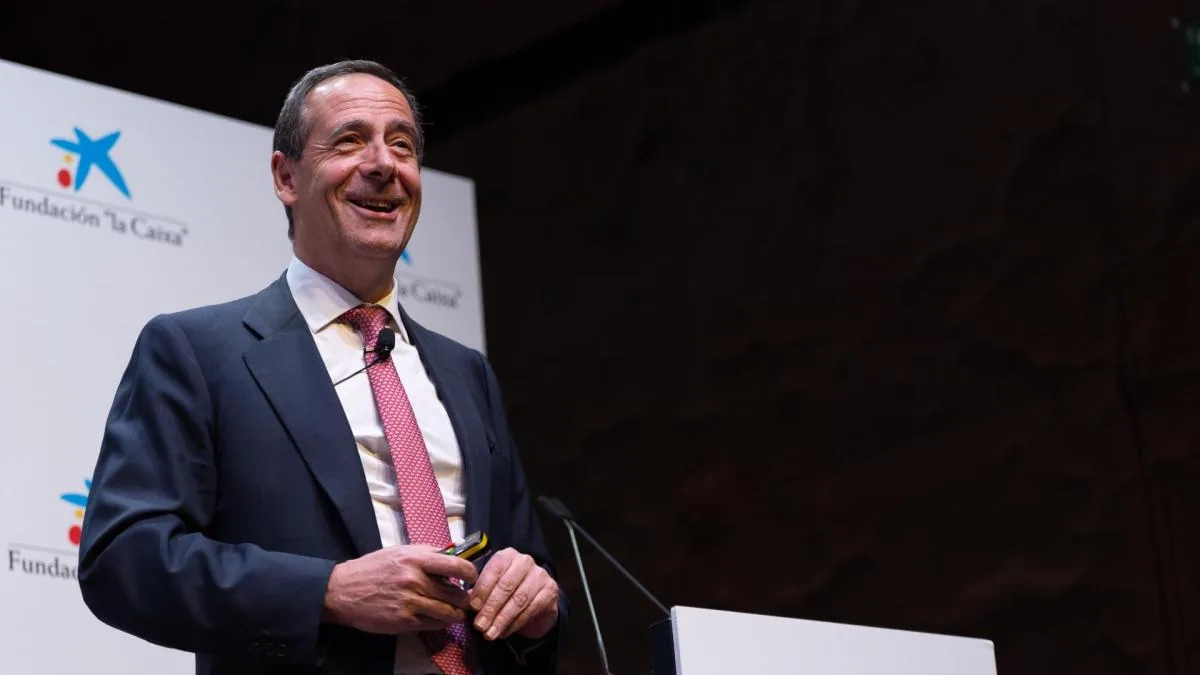
“It is a strong shock, but somehow manageable, particularly in Spain,” the executive assured at a conference of the Fundación La Caixa Economy and Society chair held at CaixaForum in Madrid.
Gortázar explained that the duration and intensity of the conflict will ultimately determine the impact on GDP. As a reference, CaixaBank analysts work with the premise that every ten dollars increase in the price of oil causes a damage of 0.15 points on GDP, to which is added the additional effect of the increase in gas prices.
CaixaBank economists are confident that 100 million tourists will be reached this year despite the war
Despite the risks, he insisted on the resilience of the Spanish economy. “Our research department expects us to exceed 100 million tourists this year” despite the war, while the commitment to renewables is cushioning the “blow” associated with the increase in hydrocarbon prices and places the country in a “privileged position.”
CaixaBank’s CEO also indicated that markets anticipate a “relatively short” conflict, but warned of some risks, including eventual second-round effects derived from new inflation.
His forecast is that the ECB will raise interest rates twice this year, from 2% to 2.5%. The central bank itself has already reduced the eurozone’s GDP growth forecast by three tenths, to 0.9%.
Deficit, productivity, demography, and infrastructure are “pending tasks”
He also alluded to the “pending tasks” in Spain. They have to do, he indicated, with public accounts, with improving productivity, with demography, and with infrastructures, among which are hydraulic, railway, and housing.
Read more Tel Aviv and Beirut dialogue at the White House under fire in southern Lebanon
Regarding housing, he assured that CaixaBank already estimates the housing deficit at 730,000 units and alluded to the lack of land and agility as two of the elements that hinder the resolution of the access problem.
However, he insisted that the situation is very different from that of 2008. If before the Great Recession 866,000 homes were built per year, now it is 140,000. If 24% of the total credit at the time went to developers, now it is barely 4%. If before 4% of mortgages were at a fixed rate, now the percentage is 73%. In addition, mortgage debt has gone from equaling 64% of GDP to 30%.
“Welcome immigration, we need labor”
Gortázar also expressed support for taking advantage of artificial intelligence and in favor of immigration. “Welcome immigration, we need labor,” he assured. “How we regulate and integrate these people is another matter, but it is necessary,” he added.
He also alluded, in response to a question from the audience, to the risks of private credit, which has already generated some problems in the United States. “In Spain, we don’t have that problem.” His impression is that it is not “a systemic problem” in North America either, but he predicted that “there will be certain entities that will have worse results and some consequences in the Anglo-Saxon world.”
“I am more concerned about the trend we have of a hyper-regulated system in Europe that makes us less competitive,” he assured. “American banks are large, with scale and margins, and here, on the other hand, market dynamics are not improving, but rather competitiveness is being added,” he added in allusion to Europe.
Read more Arc de Triomf becomes the setting for comics and fantasy on Sant Jordi