Not all past times were better. In fact, most of the time it was worse than the deceptive memory suggests. It is understandable that older people feel nostalgia for their youth, when – for better or worse – they had their whole lives ahead of them. It is more surprising that young people feel nostalgia for an idealized time they have not lived through. But beyond the ignorance it reveals – and which, given the levels of reading comprehension of our schoolchildren, shows no signs of improving – it is an indicator of the discomfort and bewilderment that the present arouses in part of society.
Read more The strange place where it never rains
In the United States, many young people – and some of their elders – do not know which side their country fought on in World War II, and even today wonder if they should have aligned with Hitler’s Germany. In China, on the fiftieth anniversary of his disappearance, some are interested in the figure of Mao, while in Spain others mindlessly repeat the litany that “life was better under Franco.” Without having, in any case, the slightest idea of what they are idealizing: false dreams of security that mask real atrocities.
In Germany, the sweetening of History is twofold. Not only has the feeling of guilt for the crimes committed by Hitler and the Nazis – as well as the memory of the death and destruction they brought to their own country – faded, but in East Germany the sinister communist regime of the GDR is also idealized and longed for today. It is in this part of the country, which lived more than half a century under totalitarian regimes – the years from the neutralization of Parliament by Hitler in 1933 to the fall of the Berlin Wall in 1989 – where the far right has taken root and is expanding most strongly.
The political radicalization in Germany has its center of gravity in the eastern Länder
The overwhelming victory of Alternative for Germany (AfD, in its German acronym) in the regional elections of the state of Saxony-Anhalt last Sunday was a real wake-up call, although it cannot be said that it was unexpected. The AfD ultras, who were born as a Eurosceptic force before taking up the banner against Muslim immigration in 2015 – following the massive entry of Syrian refugees decided by Angela Merkel – have been growing steadily over the last decade. Until last Sunday, when they became the most voted force in a regional election for the first time: they won easily with 44% of the votes – nearly an absolute majority – while the two government parties, the CDU (17.5%) and the SPD (9%), collapsed.
At the national level, voting intention polls also give them first place today with 28%, eight points ahead of the Christian Democrats. However, the overall average masks two relevant facts. First, AfD voters, including many young people, are mostly male (a 2024 Pew Research Center study revealed that 26% of German men had a positive opinion of the AfD, compared to only 11% of women). And second, although growth is general, the electoral map of Germany shows that this process of political radicalization has its center of gravity in the eastern Länder, where German reunification has been experienced with a feeling of dispossession and humiliation.
Let us focus on the state of Saxony-Anhalt, one of the least populated in Germany (just over 2 million inhabitants, with an aging and very dispersed population). It is a declining mining and industrial area – mainly chemical – that lost many jobs in the years following reunification, with an unemployment rate slightly above the national average, an average salary below the national level, and where demographic decline threatens the maintenance of a sufficient workforce to sustain economic growth. The low density also contributes to the progressive commercial and service desertification in many population centers. A portrait that can be seen repeated in the “emptied” or declining regions of many European countries.

Not all the picture is so bleak, however. Here, housing prices are the cheapest in Germany. And, what is most striking given the election result on Sunday, the level of foreign presence is relatively low: the proportion of foreign citizens in Saxony-Anhalt is 9%, rising to 11% if those of foreign origin who have acquired German nationality are included. But this data, in the end, weighs little against the virtual reality spread by social networks, where fear runs rampant.
“What my parents taught me is that they lived in peace and tranquility, without having to feel fear in their own country,” said a young Saxon AfD sympathizer to the BBC in relation to the – real or supposed – attacks carried out by asylum seekers. It is not clear that real life is a well of violence committed by foreigners as the far-right discourse claims, but that is what one sees – constantly, persistently – on the social network X, governed by its owner – the American billionaire Elon Musk, a fervent supporter of AfD – as a gigantic forum of agitation and propaganda, where disinformation has reached stratospheric proportions. Just spending a few minutes in that swamp is enough to, without looking for it, come across continuous scenes of violence involving blacks and Arabs. The far right has been very active and very skillful on social networks – both on X and TikTok – while traditional parties lost connection with part of the electorate.
Read more More than half of Spain fits in a Mercadona
AfD intends to deport millions of foreign immigrants and close the borders tightly
If the European far right has gradations – with the Brothers of Italy of Giorgia Meloni apparently being the most pragmatic and consensual – Alternative for Germany is among the most radical, to the point that in the European Parliament it stands apart from the two major groups of this ideology, the one led by the Italian prime minister and the one of the French Marine Le Pen (National Rally).
Its government program, as its leader Alice Weidel recently recalled, includes the mass deportation of citizens of foreign nationality – and perhaps origin – and in particular the more than one million Syrian refugees residing in the country, something that Chancellor Friedrich Merz has denounced as “ethnic cleansing” and which led in 2025 to the Federal Office for the Protection of the Constitution (BfV), the German domestic intelligence services, to declare AfD as a “confirmed case of right-wing extremism” whose postulates are “incompatible with the democratic constitutional order.”
In favor of denouncing the Schengen treaty and completely closing Germany’s borders, as well as abandoning the euro and recovering the mark, a possible AfD access to the German government would also represent an existential threat to Europe.

Distrust in the future. The latest study by the European Council on Foreign Relations (ECFR), based on more than 5,000 interviews conducted in six countries (including Germany, France, the United Kingdom, and Italy, but not Spain), has found a growing gap between the aspirations of European citizens and their trust in their political leaders. 75% want more Europe, but 68% perceive a progressive deterioration of the European project and 56% are convinced that the future of an increasingly closer Union is in danger. According to citizens, the main problems are the war in Ukraine (47%) and economic difficulties (33%), but they do not see political responses as adequate and pessimism already reaches 39%. The study director, Pawel Zerka, emphasizes that “when the future we believe in fades away, the past is a very attractive space to look for another possible future.” Nostalgia is in fashion.
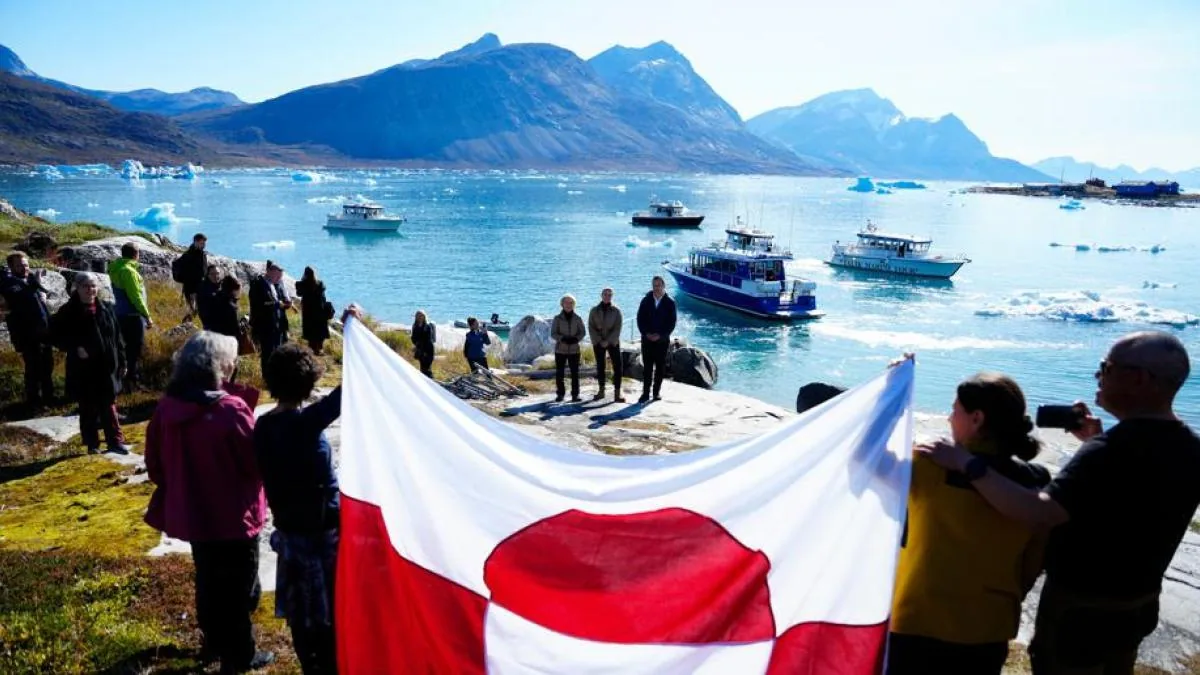
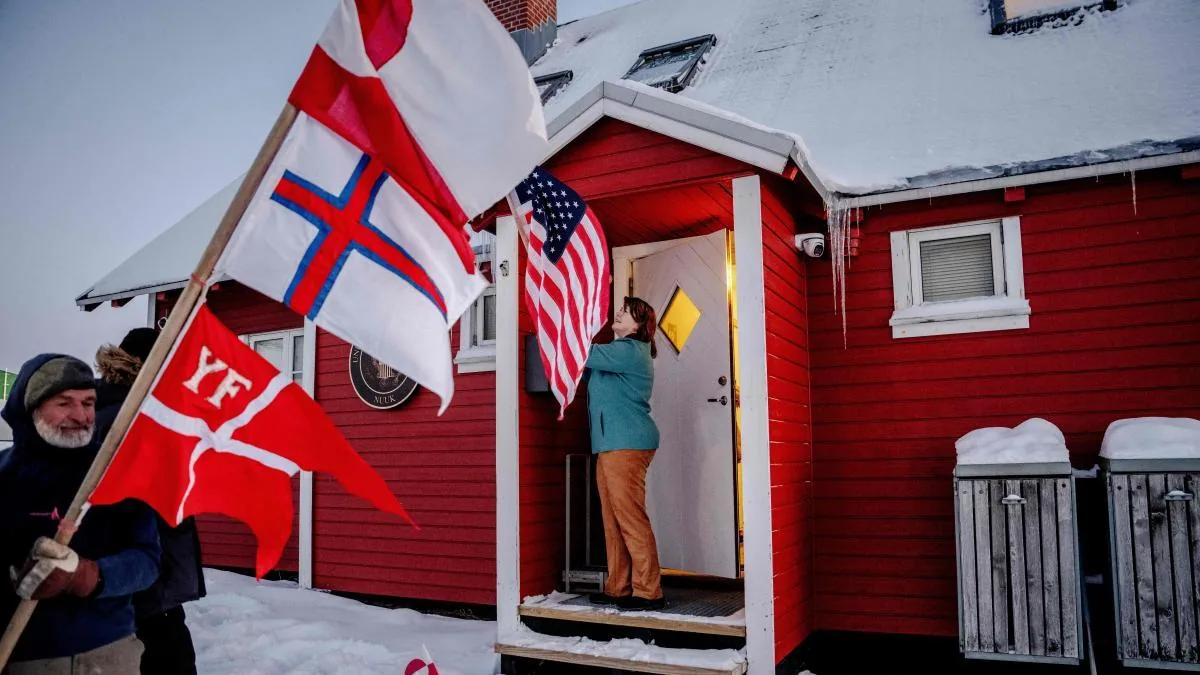
Back to the Arctic. The President of the European Commission, Ursula von der Leyen, traveled this week to Greenland to emphasize the EU’s commitment to the future of this Danish Arctic island, over which the President of the United States, Donald Trump, has repeatedly expressed territorial appetites. Von der Leyen, accompanied by the Danish Prime Minister, Mette Frederiksen, and the Greenlandic Premier, Jens-Frederik Nielsen, announced the deployment of a new strategy towards the island that includes 200 million euros more in investments and also a strengthening of political ties with the territory. Unaware of these comings and goings, Trump published on his personal social network, Truth, a map in which the US flag extends southward to Mexico and the Caribbean and northward to Canada, Greenland, and Iceland. The Icelanders, who recently rejected in a referendum to resume EU accession negotiations, have quickly seen how the US president has taken note of their decision…
Also read
Housing, a European problem. The EU has no explicit powers in this matter, but it is willing to use its powers to help governments combat the problem of housing shortage and rising costs, which affects cities throughout Europe. The European Commission, through the Executive Vice-President for a Clean, Just and Competitive Transition, Teresa Ribera, and the Commissioner for Energy and Housing, Dan Jorgensen, presented this week a legislative initiative to protect public administrations that want to limit temporary tourist rentals and second homes. It also makes a series of recommendations, such as fiscally incentivizing the long-term residential use of empty apartments – for example, taxing unused homes -, facilitating the change of use from offices to residential, or promoting the rental of rooms for young people and students.
Read more Lack of inspections weakens the state law against food waste