The German government formally pointed to Russia on Tuesday as responsible for the attempted drone attack at Leipzig airport on August 4. Foreign Minister Johann Wadephul and Interior Minister Alexander Dobrindt appeared in Berlin to explain the results of the investigations and the agreed measures.
Read more The Mossos arrest two minors accused of the death of a resident of Castellnou del Bages
“The federal government concludes that Russia is responsible for the hybrid attack carried out in Leipzig on August 4,” said Minister Dobrindt. The attack, although unsuccessful, was organized “professionally” and with “high technical knowledge,” said Dobrindt, who placed it within the campaign of hybrid attacks that Vladimir Putin is launching against European countries.
The response measures to Russia announced this Tuesday by Wadephul are: the closure of the last remaining Russian consulate – located in Bonn; the closure of the Russian House, a cultural center in the heart of Berlin now suspected of Russian espionage in the heart of the German capital; a new list of Russian nationals to be expelled from the country; tightening of border controls for Russian citizens; and increased pressure on the so-called Russian ‘ghost fleet’ in the Baltic Sea.

Until now, the German government had spoken of a “foreign power” responsible, avoiding mentioning the word Russia, although German security circles always assumed that Russian secret services had participated in the planning.
On the night of August 4, a drone with an explosive charge was found at Leipzig-Halle airport whose target, according to the investigation, was a Ukrainian Antonov cargo plane used for transporting military material. The attack failed due to a defect in the detonator. A second drone – of which no remains have been found – may have collided shortly after with a DHL transport plane that did not land in Leipzig due to the airport closure. The inspection of the aircraft, which was diverted to Hannover, revealed damage to the aircraft’s stabilizer that could not have been caused by a bird strike.
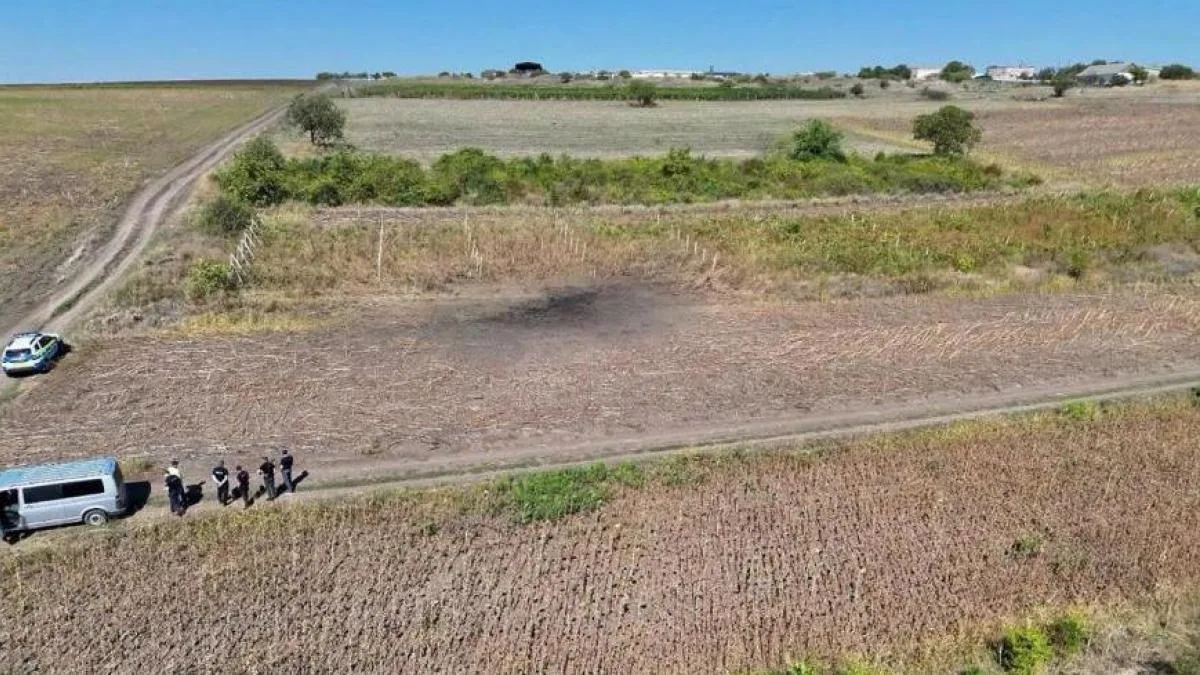
Ten days later, on August 14, investigators found a third drone in a field in Kabelsketal, in the state of Saxony-Anhalt, which borders the western part of Leipzig airport, in Saxony. They also found 50 grams of a substance suspected to be hexogen, a very powerful military explosive. This finding supported the thesis that the operation at Leipzig airport, a key transit point for delivering military aid to Ukraine in its war against the Russian invader, was broader than initially believed.
The failed attack represents a qualitative leap within the hybrid war with which Vladimir Putin harasses Europe especially since the start of the large-scale Russian invasion of Ukraine in February 2022. The fact that Germany directly accuses Russia this time indicates the perception of the magnitude of the leap.
Chancellor Friedrich Merz already stated last week that “Germany has increasingly become a target of hybrid attacks,” and promised to act accordingly once the details of the investigation were revealed. The perpetrators of hybrid attacks “will pay for their acts,” Merz said then.
The catalog of Russian hybrid warfare in recent years is varied: from cyberattacks and interference through ‘fake news’ poisoning in electoral campaigns of European countries, to sabotage of infrastructure in the Baltic Sea, difficult to attribute as they are usually submarine cable breaks caused by anchors of ships from the Russian ghost fleet or Chinese vessels; including the appearance of drones in strategic locations, or the use of incentivized immigration at the Belarusian border to destabilize the European Union.
Some actions have been directed against Western European countries, such as Germany, France, or the United Kingdom, while sabotage episodes, which have increased in recent months, increasingly affect NATO’s eastern flank countries, especially Poland and the Baltic countries, as well as Finland and Nordic countries.
Read more The Government denies any reproach to Felipe VI for not having visited Ceuta yet