Germany’s Defense Minister, Boris Pistorius, has stated that the partial withdrawal of U.S. troops from the country, announced by the Pentagon, was foreseeable, but emphasizes the need for Europe to take a more active role in its own defense.
“It is clear: within NATO we must become more European in order to continue being transatlantic,” Pistorius said in a statement, insisting that European countries must “take greater responsibility for their security.”
The Pentagon announced the withdrawal of about 5,000 soldiers from Germany within a period of six to twelve months, as part of the review of the U.S. military deployment in Europe promoted by the Donald Trump Administration.
Pistorius downplayed the drama of the decision by pointing out that it is a limited number compared to the nearly 40,000 U.S. military personnel still stationed in Germany. Still, he acknowledged that the measure confirms a shift in Washington’s strategic approach.
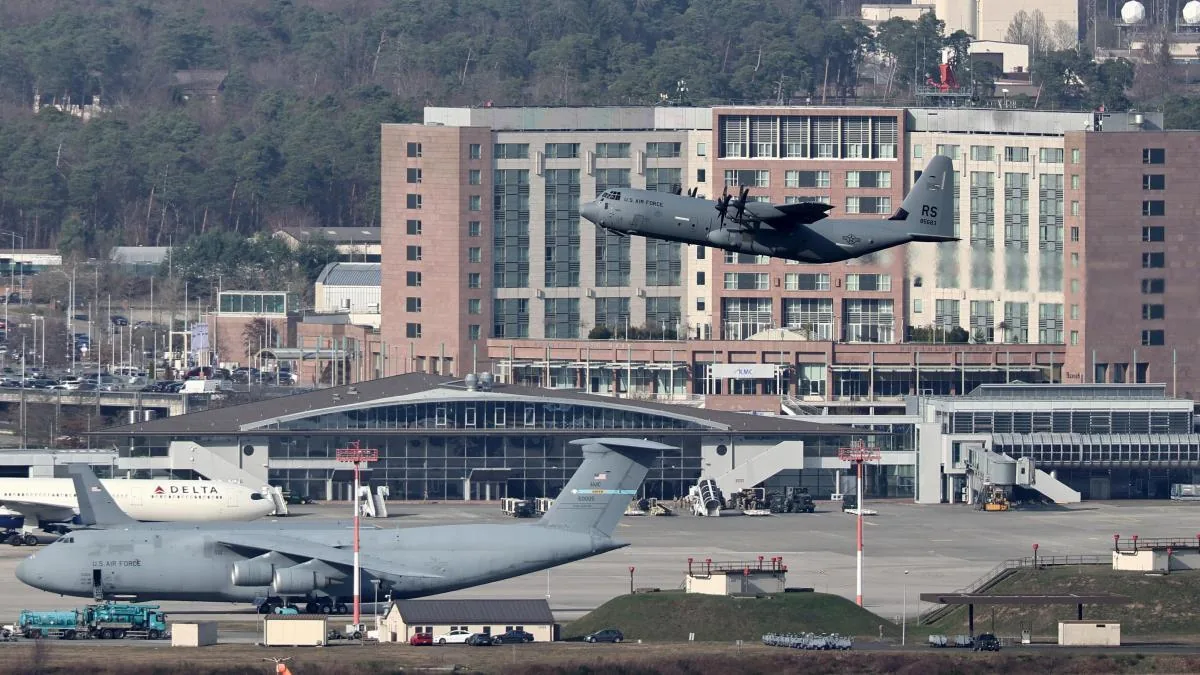
The German minister emphasized that the presence of U.S. troops remains key both for Europe and the United States, especially at bases such as Ramstein, Grafenwöhr, or Stuttgart, from where operations in Ukraine, Africa, and the Middle East are coordinated.
Pistorius downplays the decision and reminds that there are nearly 40,000 U.S. military personnel in Germany
In Stuttgart are also the United States European Command (EUCOM) and the Africa Command (AFRICOM), which reinforces Germany’s strategic role in the Western security architecture.
In this context, Pistorius defended that Germany is strengthening its military capabilities by increasing the size of the Bundeswehr, new investments in equipment, and a boost to innovation and infrastructure.
The minister assured that Berlin will continue to coordinate closely with its European allies, especially with the United Kingdom, France, Poland, and Italy, within the framework of greater involvement of the continent in its own defense.
NATO reacts
For its part, NATO has announced that it is working with the United States to learn the details of the U.S. decision to reduce its military presence in Germany, according to the Alliance spokesperson, Allison Hart, on Saturday.
“We are working with the U.S. to understand the details of their decision on force deployment in Germany. This adjustment underscores the need for Europe to continue investing more in defense and to take a greater share of responsibility for our shared security, where we are already seeing progress since the allies agreed to invest 5% of GDP at last year’s NATO summit in The Hague,” Hart wrote on the social network X.
“We continue to trust in our ability to ensure deterrence and defense while this shift towards a stronger Europe within a stronger NATO continues,” she added.