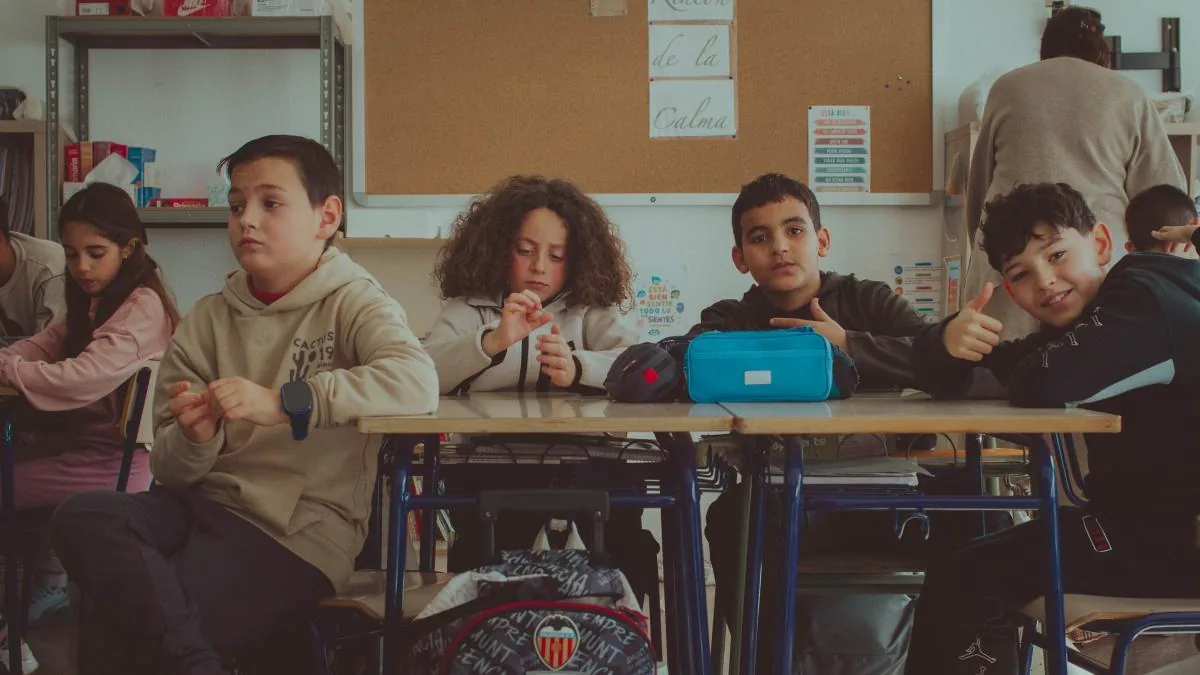
The DANA in Valencia on October 29, 2024, left a deep psychological impact on many minors. This impact has forced schools to implement therapeutic actions to manage trauma in the classrooms. Care that is being carried out alongside the reconstruction of the facilities damaged by the flood.
Read more Telefónica reduces its losses by 68%, to 411 million, after divesting in Latin America
In this scenario, the support from Fundación Naturgy in nearly 130 affected schools combines education and practice: materials and activities for the classroom, teacher training, and efficiency guidelines that improve energy use in the daily life of the center. These improvements optimize consumption and represent savings that schools can reinvest, for example, in emotional support for students.
Letters that accompany
“Cheer up Valencia!”, “You can do it!”. Marta Cerrada, a preschool and primary school teacher, is alone in the dim classroom. On her desk are envelopes from Madrid, Barcelona, Murcia… They are letters decorated with hearts written by children from all over Spain. These messages are part of the wave of solidarity that flooded CEIP Ana Lluch in Cheste after the DANA that, according to UNICEF, affected more than 160,000 minors.
“Hello, my name is Carmen and I would like to tell you that you are very brave. A big hug,” Marta reads in a whisper the message from this 6-year-old girl, while outside, the shouting of the students signals to Julio, the lifelong janitor, that it is time to press the button that announces the start of classes. But in this school, the bell is not a shrill vibration; it sounds with a riff of keyboard and guitar. It is Walk of Life by Dire Straits. “That way they also learn good music at school,” adds Julio, proud of his brilliant idea.
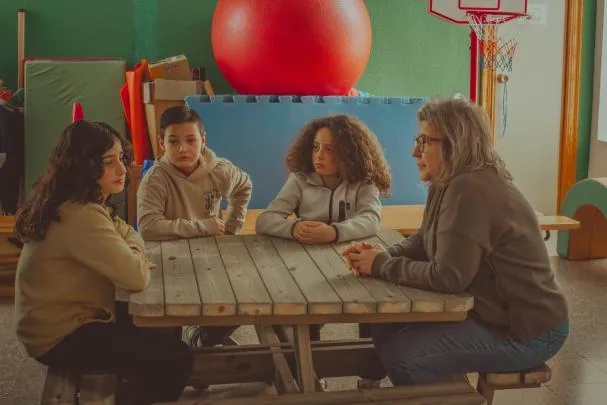
Mark Knofler’s guitar works as a resilient metaphor: Just like the musician protagonist of the song, these little ones learn with every step they take that the path of life (The Walk of Life) forces them to keep walking. “They are so little, and they have already had to live through very hard situations,” says Marta. “They have matured ahead of time. But they are still children and some are still having a hard time.” That is why today’s class is dedicated to remembrance. They reread the letters they received and express feelings. “It is essential to listen to them,” explains Marta. “It gives us a lot of information to know if they are overcoming the traumas left by the DANA.”
The day the water came in
On the day of the DANA, Marta was head of studies and was the first to arrive. Her action was quick. She closed the school and sent the students back home, alerted by weather warnings and her own intuition.
When the Poyo ravine overflowed, the water struck like a wrecking ball against the school wall, which gave way as if it were a set, collapsing onto the playground and wildly making its way inside. The flood completely submerged the facilities of CEIP Ana Lluch in Cheste.
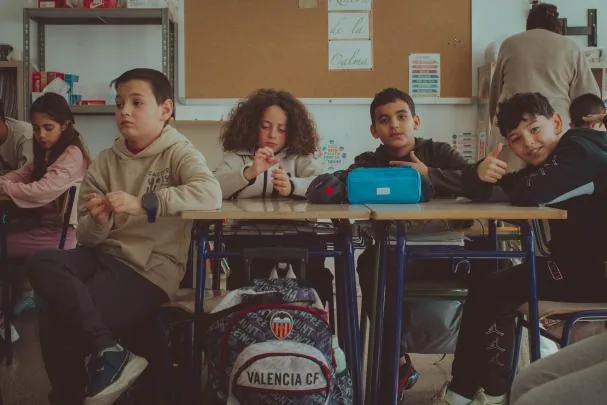
Today that wall is back in its place. It is white on the side facing the street and on its inner face there are rainbows drawn. Marta observes that wall from the classroom where her students play with the letters they received more than a year ago. “It is very important for the children’s mental health to recover the school spaces. Resuming normality and routine is what has allowed us to dedicate ourselves to them and to teaching again.”
Read more The Bank of Spain believes that limiting the granting of mortgages could further reduce homeowners
Saving energy to care
In this reconstruction, the work of Fundación Naturgy, within the framework of the Sumando Energías por Valencia plan, has been key. At CEIP Ana Lluch and in about 130 educational centers in the province. The underlying idea is simple but perfect. Eva Buch, director of Education and Outreach at Fundación Naturgy, sums it up: “We saw clearly that we could not leave aside the axis of education. We wanted schools to come out of this situation with greater resilience and be better than they were before the catastrophe.”
It is not an aesthetic measure. It is a supportive, educational, and sustainable support. “The Foundation gives us resources that we do not have,” Marta acknowledges. The logic is irrefutable: schools have been helped with the sustainable reconstruction of their facilities through the installation of solar panels and proper insulation. In this way, the savings on the bill are freed up to finance actions such as today’s psychological support class.
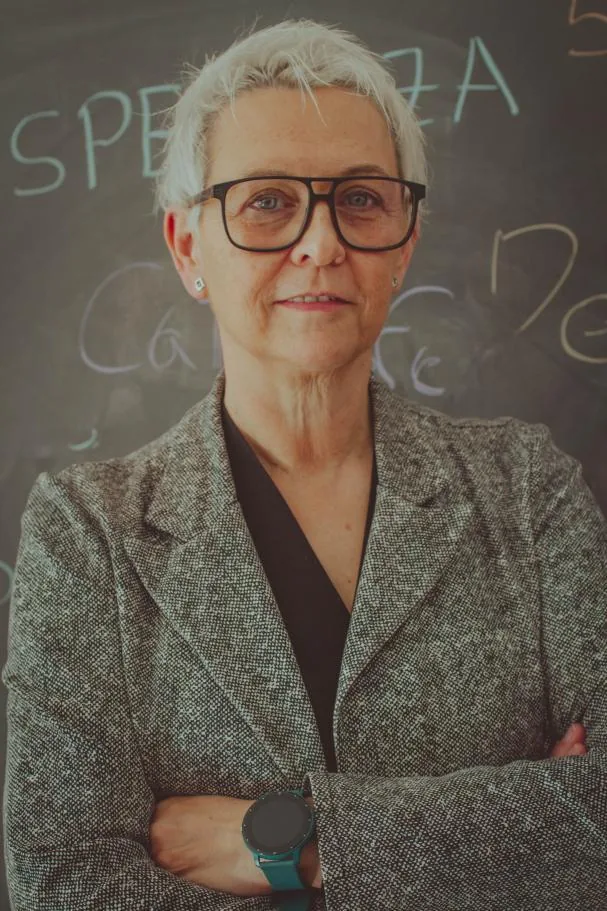
One word: hope
“Now I want you to think of a word that reminds you of what you experienced during the days of the DANA,” Marta says to her students. It is Iván’s turn, an 11-year-old boy who seems small and big at the same time, perhaps because he already knows fear and has learned to live with it. Iván answers: “Fear.” “And how do you feel now?” Marta asks. “Half and half,” Iván replies. “Because now I am afraid when there is a storm.”
The words fall one by one, without one child stepping on another’s voice. And they have a particular music, as if each spoken word were a farewell. “Collapse,” says Celia. Omar; “mud,” and then “noise,” “pain,” “destruction,” “insomnia…” Until it is Marta’s turn, who writes “hope” on the board. “Because hope is what helps us move forward.” And she says it with a break in her voice, perhaps because despite being “hope” the longest word of all those said today in this primary school class, it is also the only one that remains in the classroom.
Sumando Energías por Valencia
The sun as a motor of resilience
The intervention of Fundación Naturgy at CEIP Ana Lluch in Cheste is part of the strategic program Sumando Energías por Valencia, an initiative carried out in around 130 educational centers like CEIP Ana Lluch in Cheste that is based on educational support that turns energy into learning and future: training and resources for teachers, classroom activities, and dynamics that involve the entire school community.
In 40 of these centers, there is also a special action that makes learning tangible: a self-consumption photovoltaic installation, classroom materials and challenges, a collaborative song, and an exhibition that collects the entire process. It is a living classroom: students learn with real data, propose improvements, and see how their decisions count. And the energy savings generated open a margin for each school to reinvest in what it needs most.