From a telephoto distance, the only visible movement in the houses on the hill was that of two military vehicles and an excavator. “I do not recommend you get close. They have expelled all the families from the surroundings and there are snipers in the windows,” warned a neighbor to the journalists newly arrived in Tell, a town of 7,000 inhabitants south of Nablus and the epicenter of the latest outbreak of violence in the West Bank.
Read more Heat waves paralyze daily life: mobility is reduced by 20% across the country
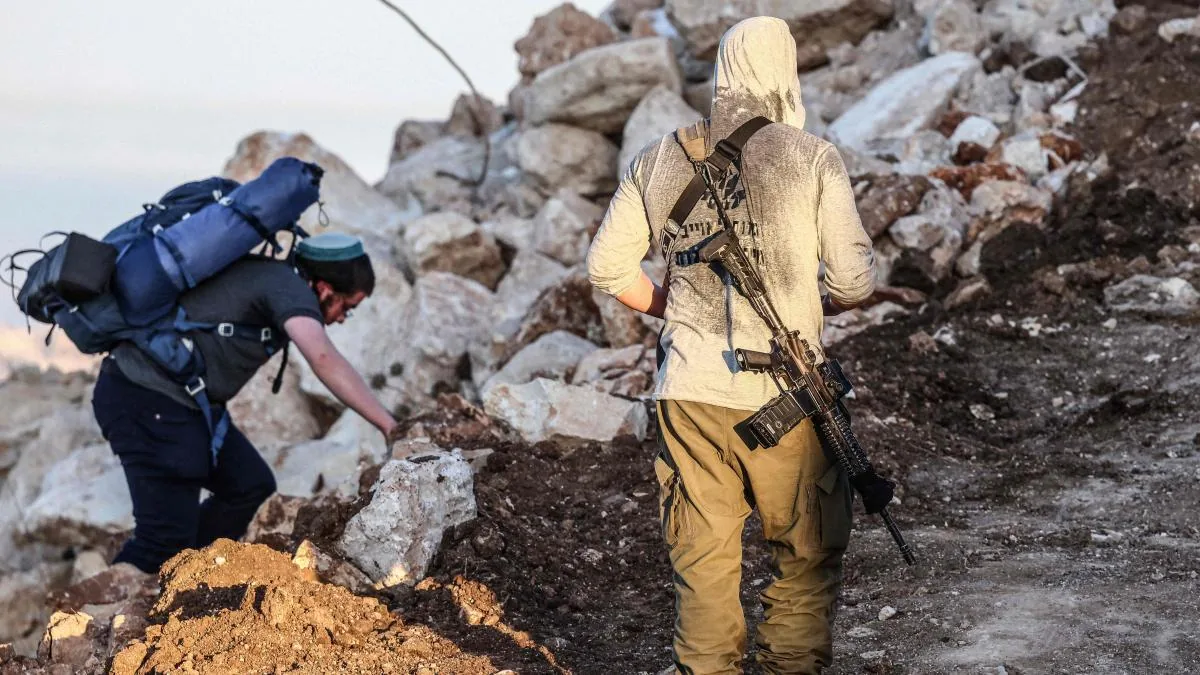
Every day similar incidents occur in the Palestinian territory: armed settlers leave their settlements or outposts and head towards nearby towns. In the best cases, they harass the locals; on other occasions, they burn cars and houses, or raze olive groves with bulldozers, almost always with the protection of the Army, even in areas where the Oslo agreements prohibit them from entering.
The incident in Tell, on July 24, ended more violently. Videos show a dozen settlers and soldiers in a scuffle with Palestinian neighbors. In the struggle, Farouq Ramadan snatches the rifle from one of the attackers and, before being shot, fires at a settler and a soldier. Three of his cousins — Ibrahim, Jawad, and Imran Ramadan — also die. In total, four Palestinians and two Israelis: the settler Benayahu Mellet, 32, and Major Yuval Ezra, 27.
“It was the settlers who stormed the town with the intention to kill, vandalize, and burn properties,” explains the mayor of Tell
“About twenty settlers entered around 8:30 in the morning. The neighbors came out to defend their homes. Clashes occurred with the settlers, and the soldiers, alongside them, began to open fire,” recounts to La Vanguardia the mayor of Tell, Walid Zeydan, who does not doubt who started it: “It was the settlers who stormed the town with the intention to kill, vandalize, and burn properties.”
Israel responded with a massive military deployment, troops surrounding Nablus and agents entering the hospital to arrest the wounded. Netanyahu and Israel Katz demanded action “with all their force against terrorism,” more troops, demolishing the houses of the accused, and revoking their work permits. Netanyahu also called for building new settlement outposts and legalizing existing ones, illegal even under Israeli law.
The tone escalated with other ministers: Smotrich demanded that Tell “look like the refugee camps of Nablus and Tulkarem”; Ben Gvir demanded the same treatment as Beit Hanoun, in Gaza. Opposition leader Yair Golan denounced “a clear intention to set the area on fire”; the Palestinian Foreign Ministry spoke of “a massacre committed by settlers in collusion with the occupation.” Checkpoints were closed for days and several towns were left without water.
Tension has not stopped since then. The army stormed Tell and confiscated four homes to convert them into barracks, while settlers called for a retaliatory march. That Friday, settlers escorted by soldiers re-entered Tell and the Junaid neighborhood in Nablus: eleven Palestinians, four of them minors, were injured, one by a bullet in the stomach. There were ten arrests in different parts of the West Bank. The Army admitted that “Israeli civilians” had entered a prohibited area, although it insists that their presence “constitutes a violation of the law” — a warning that barely stops the incursions.
Read more Cold war PSOE-PP in the face of the climate crisis
According to ACLED data, 2026 could be the year with the most incidents in the last decade
The data confirms the magnitude: according to data collected by the UN, 18 Palestinians died in 2026 in settler attacks even before Tell; eight Palestinians and two soldiers more died only in the week after. Settler attacks have increased every year since 2023, reaching 1,835 last year, with an average of 190 monthly that could put 2026 above 2,000. The UN denounces that settlers and government incentives go hand in hand in attacks on families, burned mosques, and confiscated properties. “We are alarmed by the announcement of more settlements and the open calls for revenge and collective punishment, with threats to turn the West Bank into another Gaza,” denounced UN spokesperson Ravina Shamdasani.
“There is an increase in armed settlers making incursions,” confirms Nasser Khdour, ACLED researcher, who warns that 2026 could be the year with the most incidents since the organization has been monitoring the West Bank, since 2016.
In the fields, the excavators have not stopped since the shooting. “They have destroyed 500 dunams (50 hectares), and continue,” denounces farmer Fouad Ramadan, relative of the shooter, pointing to the hill where fourteen machines are leveling centuries-old olive groves. Before they arrived, the Army forbade looking: “Every time they saw someone, they fired into the air.”
Far from the “new intifada” that some Israeli media hint at by citing more than seventy Palestinian protection committees, the reality is more modest. “We are an unarmed people; we do not have weapons to defend our homes,” explains Zeydan. What exists are young people who keep night watch and warn via WhatsApp when settlers approach, so families can flee in time. Ramadan sums it up: “It only takes one whistle and you will find a thousand young people running to wherever there is a problem.”
On the outskirts of Tell, a house burned in retaliation for the settler’s death closes the portrait of these days. It was a new home where the family had lived only two months. From the windows shattered by fire, one of the new outposts could be seen, with settlers feeding their flock next to a newly installed watchtower. On the charred door was an inscription: “In this house lives a patient man.”
U.S. warns its citizens in the Middle East of a possible return of the offensive in Iran
The United States embassies in capitals throughout the Middle East warned American citizens this Saturday of a possible “unexpected escalation” in the regional conflict and urged them to be prepared to leave the area. The alert, published on the websites of the missions in Bahrain, Iraq, Israel, Jordan, Kuwait, Lebanon, Oman, Qatar, Saudi Arabia, and the United Arab Emirates, comes a day after President Donald Trump threatened to hit Iran “very hard.” “Americans in the region should consider leaving, or be prepared to do so in case of escalation,” the security alert states, urging citizens to review their flights and follow the recommendations of local authorities.
Read more The song of the summer: it grows only due to immigration and productivity stagnates