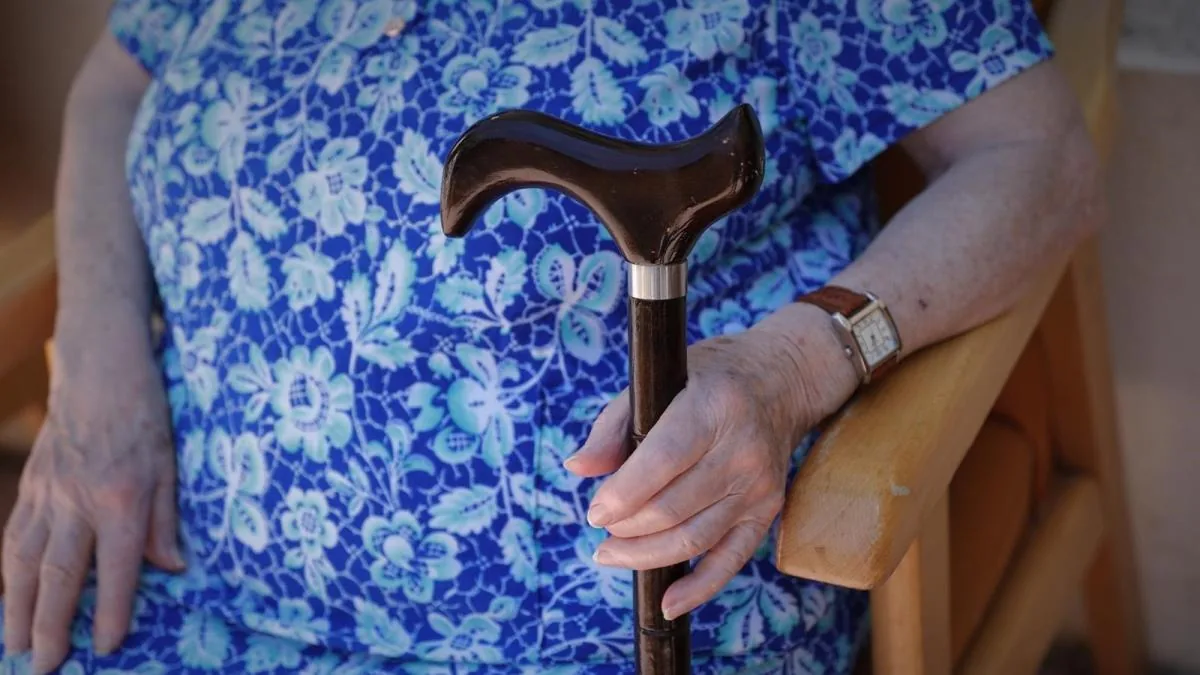
The story of Curra, who is 94 years old today, is that of many other women in the 1950s. Young girls who became pregnant by a man who disappeared and were forced to disguise their situation for fear of what people would say. This happened to Curra with Benito 73 years ago, when she became pregnant. Curra’s parents hid her throughout the pregnancy and concealed the real kinship, making Benito, in everyone’s eyes, the son of his grandparents and Curra’s brother. Now, 73 years later, they have been able to register in the Civil Registry of Tarifa (Cádiz) as what they really are: mother and son.
Read more Imaz, “very concerned” about diesel and kerosene supply problems in the coming months in Europe
“We are very happy. She wanted to have the papers that I was her little boy. It will be beneficial for both of us,” Benito says in a telephone interview with EFE from Tarifa, where both reside. Benito was born on April 3, 1953, and was registered in the Civil Registry as the son of his maternal grandparents. Curra was then “a young, single woman with no resources of her own” who had become pregnant after a sporadic romantic relationship with a man she never heard from again, according to the lawsuit filed on her behalf in the Civil Section of the Algeciras (Cádiz) courts of first instance by Jesús Odériz’s law firm.
She accepted the imposed silence, painfully assuming she could not publicly acknowledge her son
Excerpt from the ruling
“Fearing what people would say, the strict social customs of the time, and the possible social marginalization for having become pregnant out of wedlock, her parents decided to hide their daughter’s pregnancy, keeping her confined to their home throughout the gestation and avoiding any contact with the outside world,” the lawsuit states.
After the birth, Benito officially became the son of his grandparents and the brother of his true mother, “perpetuating a legal and family fiction from that moment on.”
Curra “accepted the imposed silence, painfully assuming she could not publicly acknowledge her son,” and for years limited herself to being present in Benito’s life “in the role assigned to her.” But Benito soon began to suspect that Curra was not his sister but his mother. “Things were like that back then. I always suspected she was my mother because there was a pull, she had a way of behaving with me, she always tried to see me, she gave me gifts when she could, she was my special sister,” Benito now recalls, regretting that back then “children couldn’t say what we felt.”
Read more Red Eléctrica once again asks industry to halt
My mother was suffering, and we didn’t want her to die with that sorrow
Benito
At 14, he began to suspect more strongly that Curra was more than just his sister. And when Curra went to live in Ceuta, got married, and had more children, she took Benito with her.
Naturally, the situation became clearer in their environment. But officially, they remained siblings. “My mother was suffering with that,” admits this man from Cadiz. And last summer, they decided to request recognition so that Curra would not die with that “sorrow.” They sought a lawyer, underwent a DNA test that confirmed the relationship, and have now succeeded in having a court recognize Benito as Curra’s biological son and urged the rectification in the Civil Registry. The verification “has brought profound emotional repair for both” and “the closing of a wound” caused by “the social conventions of the time and the fear of family dishonor,” the lawsuit states.
Single motherhood, a normalized option today
Benito was hesitant that the judge might think he was making this claim for the sake of an inheritance: “My mother is a very humble woman, her children help her,” he explains, now relieved that the judge has supported his petition and happy that, for example, for his two children, Curra is no longer an aunt, but their grandmother.
“We don’t realize how much society has changed. I now know young women who have a child in my mother’s situation and wear it with pride; they don’t have to hide. It wasn’t like that before; women had no rights.”
Read more China’s Geely takes a third of Ford’s Valencia plant that will manufacture five cars