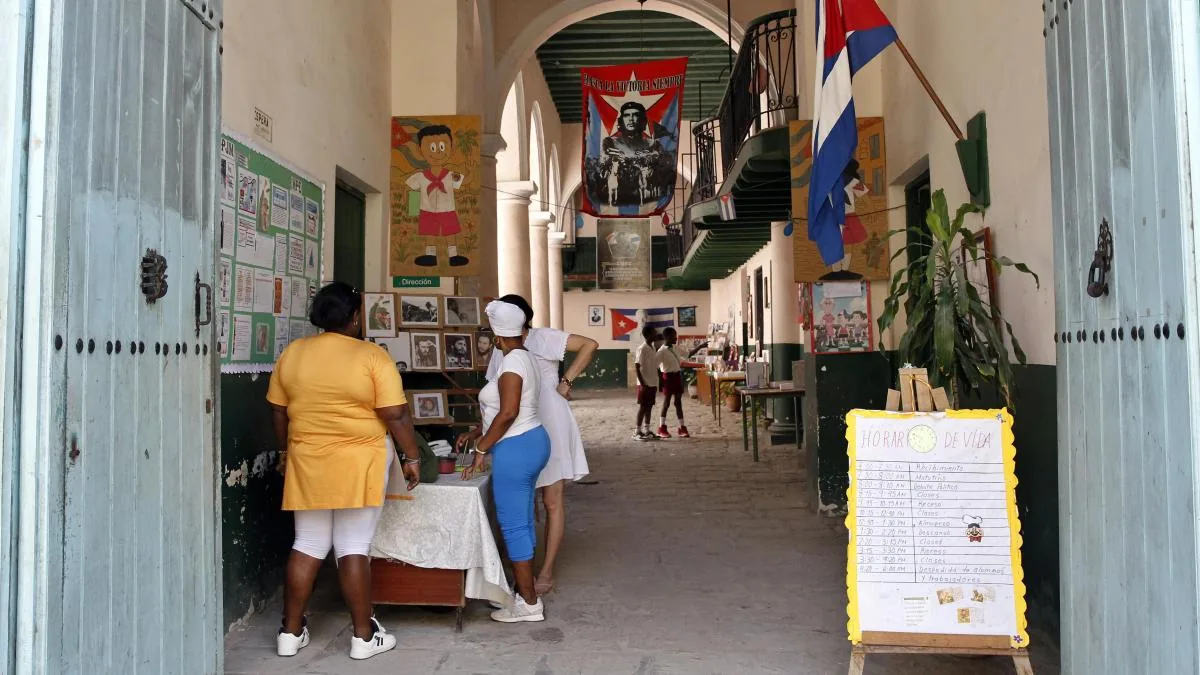
Cuba wants to end what it calls an “energy siege” and the United States wants the adoption of far-reaching reforms. Havana maintains that there is no ultimatum, but US officials assure that Washington gave a two-week deadline to release relevant political prisoners as a sign of goodwill. The two countries, separated by less than a hundred kilometers of sea and ideological enemies, speak different languages and seem far from any agreement, but they are dialoguing.
Read more Mass consumption warns of new price increases in the shopping basket
Cuba acknowledged this Tuesday that a representation of the Trump administration held a meeting on its territory on April 10. The meeting was “respectful and formal,” in the words of Alejandro García del Toro, deputy director-general of Cuba’s Ministry of Foreign Affairs, in statements to the newspaper Granma. News of the meeting had been reported last Friday by the US digital newspaper Axios.
Officials from the State Department with the rank of undersecretaries participated in the meeting, while Cuba’s delegation included deputy ministers. Raúl Guillermo Rodríguez Castro, grandson of Raúl Castro, former Cuban president between 2008 and 2018 who succeeded his brother Fidel, leader of the Cuban revolution who took power on the Antillean island 67 years ago, also participated. Rodríguez Castro holds no official position, although he is in charge of supervising the security operation for his 94-year-old grandfather. According to Mariela Castro, Raúl’s daughter, her father participates in the analyses for “decision-making” in conversations with the United States, as reported by Agence France Presse.
The points discussed differ depending on which side explains them. US sources state that they offered Cuba internet access through the Starlink system, a company of former Trump collaborator Elon Musk, if Havana committed to opening the state-controlled economy and undertaking reforms to prevent the crisis from becoming irreparable. Such an agreement would break the strict control that the Cuban government maintains over communications and which includes the prohibition of using satellite internet systems.
According to Havana, the meeting was “respectful and formal” but US media speak of ultimatums and a list of US demands.
The White House also seeks compensation for Cuban exiles with US nationality whose assets were confiscated and, above all, the release of high-profile political prisoners such as dissident artists Luis Manuel Otero Alcántara and Maykel Osorbo. According to Washington, this would be a gesture of goodwill that would have to be carried out within two weeks and would precede substantial negotiations.
For its part, Cuba insists, according to García del Toro, that emphasis was placed on “the elimination of the energy siege” which represents “an unjustified punishment for the entire Cuban population” and that at no time were “deadlines” or “coercive proposals” established.
Conversations between Cuba and the United States began in January, according to Donald Trump, but were not recognized until March 26 by Miguel Díaz-Canel, the first president of the regime born after the revolution.
Díaz-Canel has engaged in intense informational activity in recent months and has granted several interviews to US, Mexican, and Russian media, in which he has insisted that dialogue is “difficult but possible” although it must be approached from a standpoint of equality, national sovereignty, and respect.
The head of state, who on Sunday launched the ‘My signature for the homeland’ campaign on the occasion of the 65th anniversary of the failed invasion attempt from the Bay of Pigs, rules out changes in leadership and the type of regime, although he has opened the door to an administrative restructuring to gain efficiency.
Read also
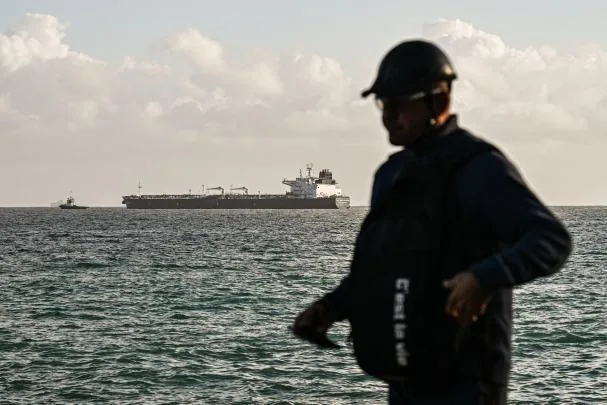
The Trump administration has progressively increased pressure against the Cuban regime, but the island’s situation has become more suffocating after the intervention of the US army to kidnap Nicolás Maduro in Venezuela. Following the change of leader in Venezuela, Trump decreed a naval blockade of Cuba, which has led to more severe, frequent, and prolonged power outages, and shortages of gasoline, diesel, and jet fuel. The President of the United States has repeated on more than one occasion that he prefers a diplomatic agreement but could resort to a military operation to provoke regime change.
The situation was somewhat relieved at the end of March when a Russian oil tanker obtained permission to dock in Cuba. The communist government has taken measures such as teleworking, a four-hour workday, reduced public transport services, restricted fuel sales, and the partial closure of tourist establishments to cope with the situation.
Similarly, Havana has made small gestures of economic openness, such as the possibility for Cubans residing abroad to invest in companies on the island.
Read more Vance suspends his meeting with Iran hours before the ceasefire expires