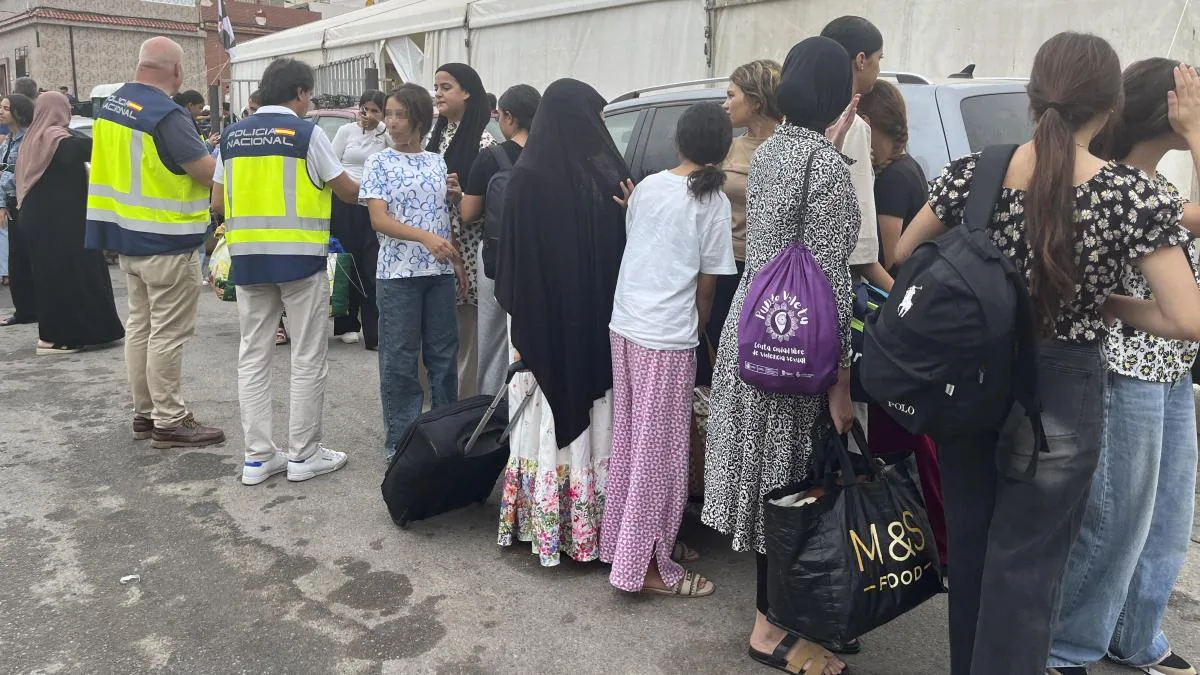
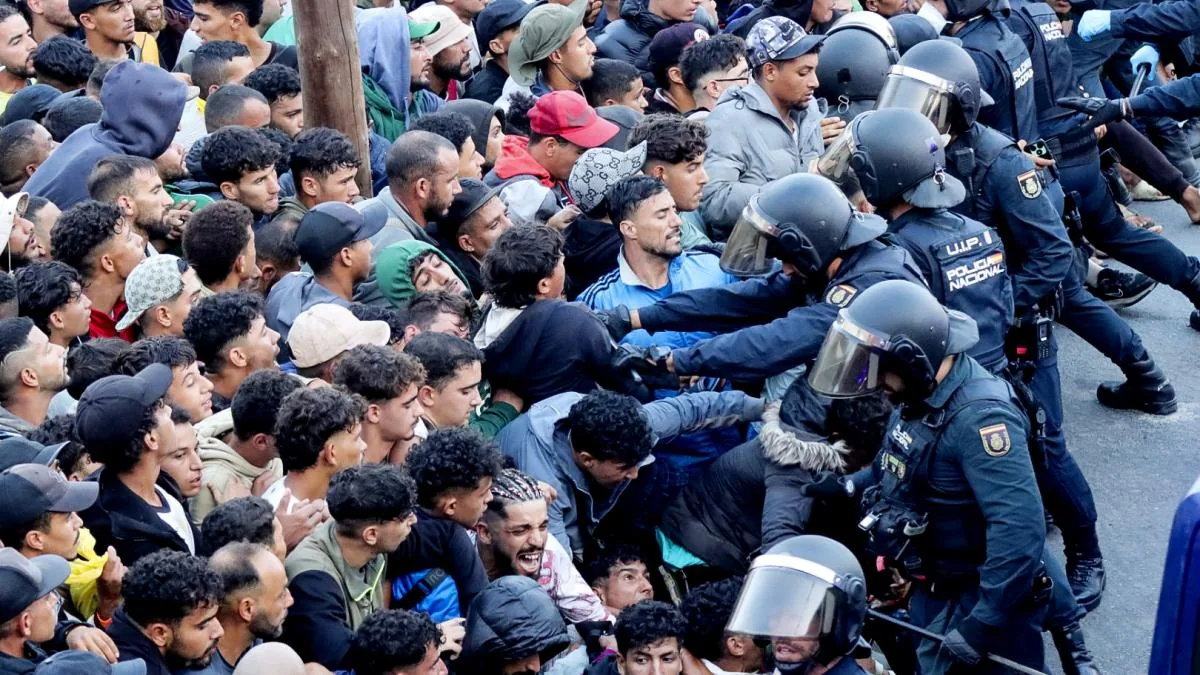
The European Commission makes it clear that EU law supports the return of all migrants who crossed the fence in Ceuta at the end of July, including unaccompanied minors. This was emphasized by its Interior spokesperson, Markus Lammert, who recalled that EU law does provide for their return and assured that the priority of the European Commission is for the Moroccan authorities to “maintain control of the situation and ensure the rapid return of all persons who remain irregularly” in the autonomous city.
Read more OpenAI launches ‘ChatGPT for Teens’, a more protected and learning-oriented version
“We continue to insist that the expectation is that all those who remain illegally in Ceuta will be returned,” Lammert stressed yesterday at a press conference at the European Commission. By “all,” he later specified, he also means unaccompanied minors. “There is a specific article in the directive about this,” Lammert insisted.
The Community Executive awaits the official request from the Government to activate financial aid
The provision in question is a directive approved in 2008, which is quite protective and whose application is not automatic; it specifies that for these returns to be effective, a series of conditions must be met. To begin with, “before issuing a return decision regarding an unaccompanied minor, assistance from the relevant services will be granted in the best interests of the child.” It also specifies that prior to a Member State expelling an unaccompanied minor from its territory, “it will ensure that the minor will be handed over to a family member, a designated guardian, or that adequate reception services exist in the country.” “The directive seeks to limit the detention of unaccompanied minors and families, and establishes appropriate detention conditions,” the text defends.
This directive will soon be replaced by the tough return regulation recently approved by the Council and the European Parliament, which aims for more effectiveness between return orders and immigrants without the right to asylum who end up being expelled. It is the tough regulation that, among other things, allows the creation of controversial migrant centers in third countries similar to those Italy has built in Albania. However, it is not yet in force because, despite receiving the endorsement of the Eurochamber – thanks to the favorable vote of the center-right and far-right – some bureaucratic procedures and publication in the EU Official Journal are still pending.
Read more Granada trembles again: Why are there so many earthquakes?
The new text is quite similar regarding unaccompanied minors. It states that the “best interests of the child” are sought and that this must be guaranteed through the representation of a person prepared to defend this interest. It also specifies that the minor must be returned to a family member, a designated guardian, or an appropriate reception center in the country of return. Unaccompanied minors are excluded from future return centers in third countries. Under the new regulation, an immediate age assessment will begin and also, despite criticism, detentions “as a last resort” will be carried out for unaccompanied minors and families with children.
The Community Executive also indicates that it has not yet formally received the Spanish Government’s request for emergency financial aid for this migration crisis, despite Minister Elma Sainz saying yesterday in an interview on Cadena Ser that these funds had been requested. According to Lammert, “there are informal contacts ongoing about how it could be approached, but Spain must submit an official request.”
Read more Paris prosecutor’s office investigates Russian ‘fake news’ about two presidential candidates