With the permission of Trump, Jamenei and the Strait of Hormuz, negotiations for a possible merger between the American giant Estée Lauder and the Catalan multinational Puig are moving forward. Beyond geopolitical tensions, the operation “has a strategic, geographical and vertical sense,” highlighted this week by the manager Bestinver, who considers the merger “very interesting” for the Spanish market and sees the Middle East conflict as “an opportunity to buy and invest in companies whose intrinsic value rises during these crises.”
Read more The temptation is called Sílvia Orriols
The city’s future role within the new group is one of the key points of the negotiations
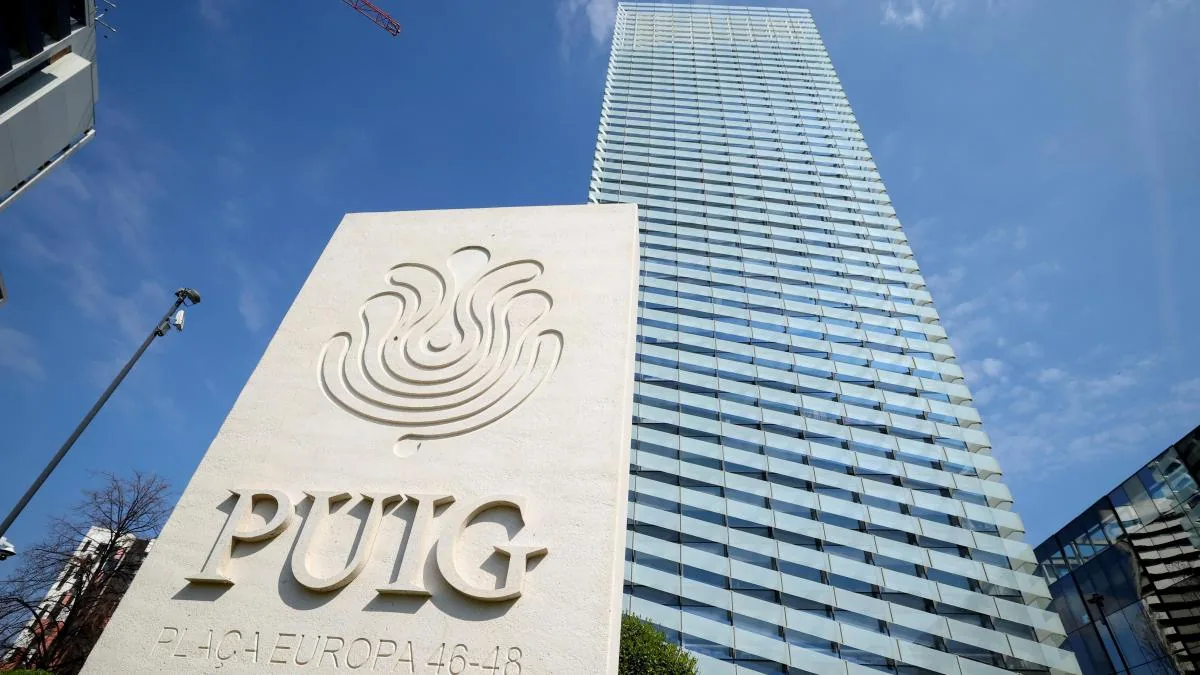
The conversations between the two groups continue to advance, close sources confirm, and are expected to culminate in the coming weeks. Barcelona’s future role in the outcome of this potential merger is one of the key points of the negotiations. Faced with fears that Barcelona might lose weight, given Estée Lauder’s much larger size (billing 12.3 billion euros compared to Puig’s 5.042 billion), these market sources close to the conversations assure that the city, Puig’s historic headquarters since its founding in 1914, would maintain a central role both operationally and culturally. The integration, they add, would strengthen its positioning as an international hub in premium beauty, and would allow for the expansion of existing capabilities to consolidate its status as one of the global reference poles within the sector. The CNMV, for its part, has clarified that current legislation would allow the new group to continue trading on the Spanish Stock Exchange as well as on Wall Street without problems.
Based on the turnover figures of the two companies and their stock market valuation, on a similar differential scale, the market estimates that the Puig family could acquire a maximum of between 20% and 25% of the resulting merged company, while the Lauder family would retain a controlling stake. Although there is consensus on the general terms of the operation, the two owning families and their advisors are reportedly finalizing the details of a complex share exchange agreement.
International Hub
Puig’s historic headquarters since its founding in 1914, Barcelona would maintain a central role both operationally and culturally if the merger goes ahead
The key lies in the control of the voting rights of the two properties. The Puig family, through its holding company Exea, owns 71.7% of the company’s capital but controls 92.5% of the voting rights. In addition to the Puigs, prominent shareholders include Vanguard (4%), Criteria Caixa (3%), and Norges Bank (3%). At Estée Lauder, the family owns 36.5% of the shares and controls 84% of the voting rights. Four family members sit on the board: William P. Lauder (chairman), Gary Lauder, Jane Lauder (all grandchildren of the founder), and Eric L. Zinterhofer (husband of Aerin Lauder, also a granddaughter of the founder). Other prominent shareholders are the funds Vanguard (7%) and BlackRock (5%).
Read more Hungarian Rhapsody in Barcelona
Like Bestinver, analysis firms such as Jefferies, JP Morgan, and Bank of America have positively assessed the rationale behind the operation. If it comes to fruition, the merger of Estée Lauder and Puig would have structural implications for the market, as it would create the global leading group in the premium beauty segment, with combined sales of 18 billion euros, surpassing the 15.6 billion of the luxury division of the French L’Oréal. Considering L’Oréal as a whole, and not just its luxury products, with global sales of 40.7 billion euros, the sum of Estée and Puig would result in the world’s second-largest group, ahead of Procter & Gamble and Unilever.
The combination would allow for balancing the brand portfolios of both groups, more powerful in the cosmetics and makeup segment for the American group, although Puig has strengthened in this area in recent years with the acquisition of the British Charlotte Tilbury and a more exclusive brand like Dr. Barbara Sturm. Despite this diversification effort, the basis of Puig’s turnover remains fragrances, which contribute 72% of its revenue, a segment in which it boasts prominent brands such as Carolina Herrera, Paco Rabanne, and Jean Paul Gaultier.
Global Leader
Analysts see strategic, geographical, and vertical sense in the combination of the two groups to create a beauty giant
Analysts have highlighted the complementarity of the two groups, also very clear geographically, and believe that an eventual combination of Puig with Estée Lauder would enhance their leadership, at a time when the global beauty industry has experienced a growing process of concentration. Size, global distribution, and investment capacity in marketing and innovation have become critical factors.
Read more Macron announces the death of a French UN soldier in Lebanon and points to Hezbollah