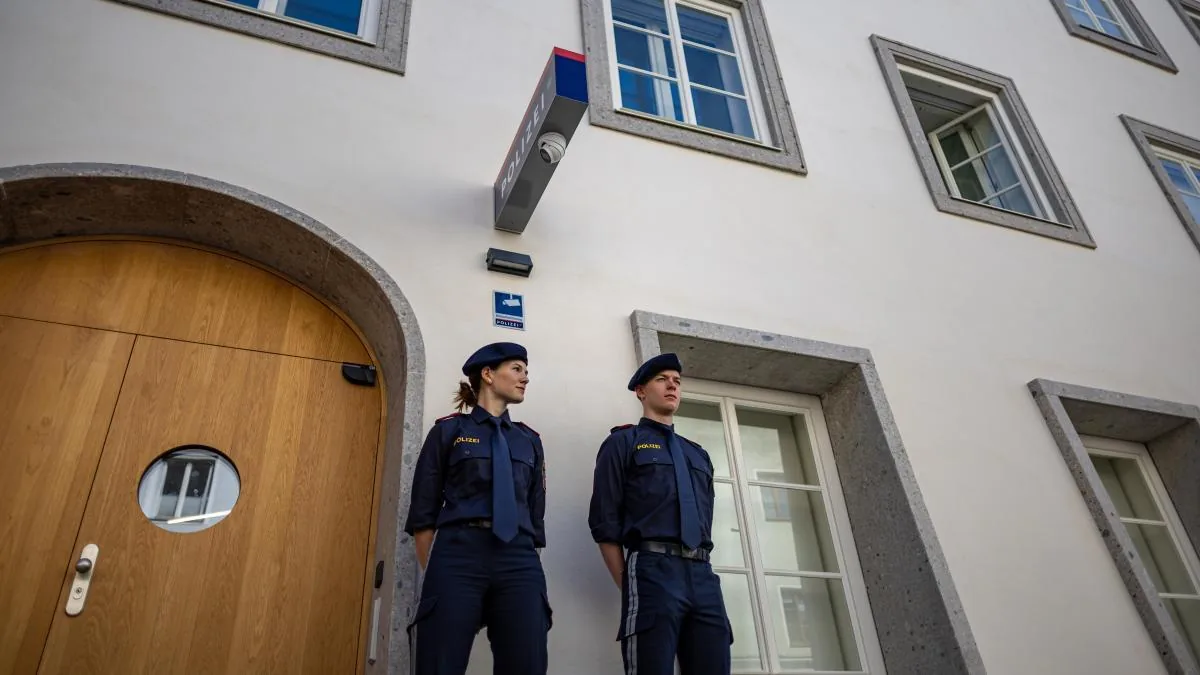
For the ordinary pedestrian, the large house located at number 15 Salzburger Vorstadt 15 in Braunau am Inn does not attract attention. It is a common-looking building, although originally from the 17th century. The only clue to its history is given by the Mauthausen commemorative stone erected in front of the facade, with the inscription: “For peace, freedom and democracy. Never again fascism. The millions of dead remind us of this.”
Read more U.S. reaches a nuclear agreement with Saudi Arabia that would allow the kingdom to enrich uranium
There, on the upper floor, Adolf Hitler was born on April 20, 1889, in a small town on the border between Austria and Germany. One hundred and thirty-seven years later, the same property opens this Wednesday as a police station, after a long legal battle waged by the Austrian government to prevent it from becoming a neo-Nazi sanctuary.
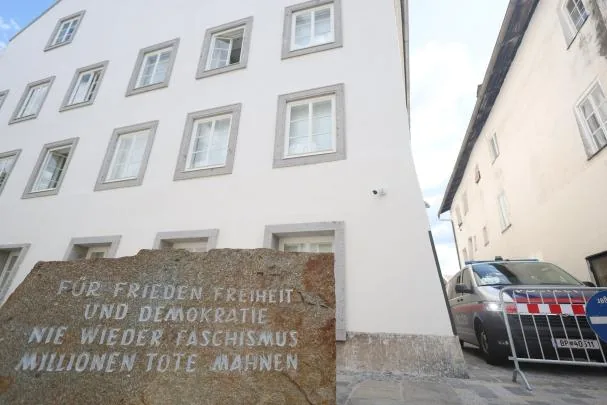
Although Hitler only lived there for the first three weeks of his life, the legacy he left on the property has kept the Austrian government on edge for 80 years. The property has belonged for more than a century to the family of Gerlinde Pommer, a local resident, except for the brief period when it was confiscated and converted into a museum dedicated to the dictator after Austria’s annexation to Nazi Germany in 1938. Almost 34 years later, the Austrian government signed a lease agreement with the Pommer family to convert the building into a day center for a charity for people with disabilities. In exchange for a generous monthly rent, the property was thus kept free from far-right tourism.
All that came to an abrupt end in 2011, when Pommer blocked reforms aimed at making the space more accessible for people with disabilities. Furthermore, she repeatedly refused to sell the property to the government. After five years of back and forth, the Austrian government finally expropriated the building — for which Pommer received 800,000 euros — and in 2019 decided to convert it into a police station.
This decision was not easy. On one hand, there was the option of demolishing the building, proposed at the time by Austrian Interior Minister Wolfgang Sobotka, with the risk that the government would be accused of erasing history and denying Austria’s Nazi past. On the other hand, commemorating it with plaques, with the risk that the far-right would turn it into an object of glorification. In the end, the Austrian government opted for a third way: to neutralize the building with something mundane, stripped of the mysticism surrounding Hitler. On this occasion, Austria opted for a police station.
Read more The five 1-O syndics finally benefit from the Amnesty Law
The gamble has had its detractors. In fact, critics argue that the conversion will not deter neo-Nazi visitors. Robert Eiter, from the Mauthausen Committee, Austria’s main Holocaust survivor organization, has argued that there will be no reduction in the number of Hitler worshippers who make “the pilgrimage to Braunau.” According to him, the Austrian people’s interest in the issue collectively expresses a desire to “forget the country’s past as soon as possible.”
The decision to convert Nazi sites of interest into mundane spaces that strip them of symbolism has precedents in Austria
It is not the first time that authorities have re-signified places linked to Nazism. In the early 2000s, Germany converted part of the Führerbunker, the bunker complex in central Berlin where Hitler and his wife Eva Braun committed suicide, into a simple parking lot. Other parts of the underground complex were filled in, sealed, or simply ignored. In 2006, a small information panel was installed, densely detailing the death and destruction caused by World War II, illustrated with historical schematic maps. This discreet and inconspicuous plaque is located just one block from the imposing Monumento a los judíos de Europa asesinados.
Despite there being no signage indicating that it is Hitler’s birthplace, occasional visits by neo-Nazi fanatics still occur in Braunau am Inn. In 2021, on the anniversary of the dictator’s birth, a fanatical Hitler extremist made a pilgrimage to the site to lay a wreath and pay homage in front of his birthplace.
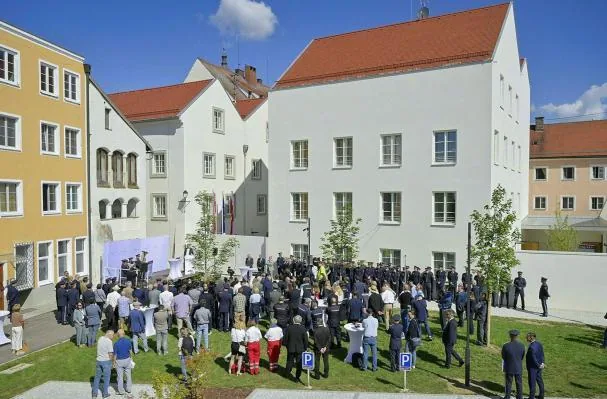
The fanaticism of the Nazi regime led to the extermination of around six million Jews and other social minority groups. World War II, which Germany unleashed in 1939, caused the death of some 60 million people. “The Republic of Austria, the state, and the county must face this terrible legacy,” declared Austria’s Interior Minister, Gerhard Karner, during the inauguration ceremony of the new police facilities, whose works have cost some 20 million euros.
Read more Rosalía apologizes to Argentine fans for the controversy after sharing a video of Mia Khalifa