Thinking about medium and long-term investment forces you to ask an uncomfortable question: what part of my wealth depends, day by day, on what the markets dictate? Simply put, in Spain a significant part of family financial savings is channeled into products linked to market evolution —stocks, investment funds, or fixed income—. The result is well known: the portfolio can go through periods of volatility when economic conditions change (inflation or interest rates) or geopolitical tensions arise that affect economies.
According to the alternative investment ranking by Funds People, this type of investment reached 33.594 billion euros in private banking in Spain
In other countries, such as the United States, United Kingdom, Netherlands, or Australia, the landscape is different: a significant part of family wealth is channeled through private pension funds and long-term savings vehicles where alternative investment usually has a significant presence.
This conceptual difference helps explain why this type of investment has consolidated earlier in the Anglo-Saxon world and why, little by little, it is also gaining ground in wealth strategies in Spain. According to the alternative investment ranking prepared by the specialized media Funds People, this type of investment reached 33.594 billion euros in private banking in Spain (clients in the wealth/high net worth segment). The key idea: understand what is behind these vehicles —and what implications they have in valuation and horizon— before deciding if they make sense in a portfolio.
What is alternative investment?
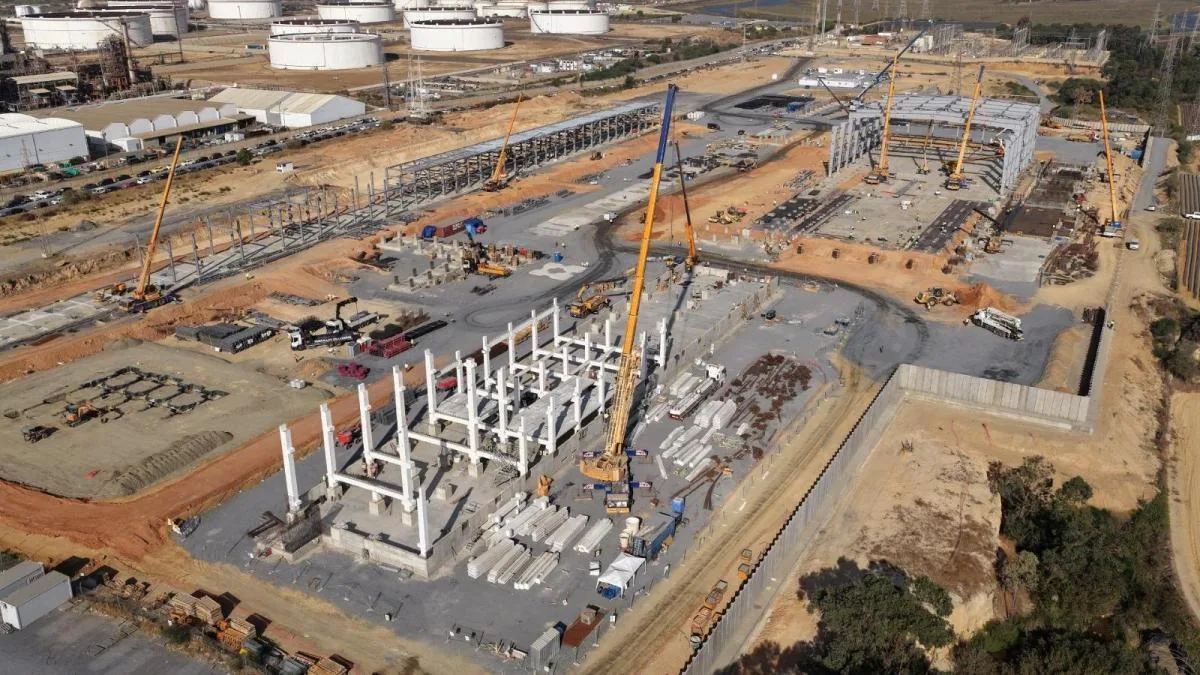
Essentially, much of alternative investment invests in unlisted assets and business projects —for example, energy, infrastructure, hotels, student residences, or technology— whose value does not depend on a daily market reference, but on their operational performance and their ability to generate income over time.
If taken very concretely: instead of buying a stake in a company on the stock market (a share) or lending money to a state or a company (a bond), these vehicles can invest in unlisted assets and projects. For example: a solar park, a hotel, a highway, a loan portfolio, or a private tech company. The investor does not acquire the asset directly; they access it through a vehicle that groups and manages it, and whose value is usually reflected through a valuation mechanism with less frequency. Therefore, in general, it requires a horizon, accepting illiquidity and keeping in mind the risk and possible capital losses.
Bankinter Investment is one of the main alternative investment platforms in the Spanish market
The idea is not to replace other assets an investor may have, but to complement them: allocating part of the wealth to this type of investment can help, depending on the asset, to build a more balanced overall plan, according to the profile and the overall composition of the portfolio over long horizons, always valuing the risk-return trade-off and the fit with the investor’s profile.
Read more Sonny Rollins: the giant of jazz who retired to play on a bridge
In practice, alternative investment is not the same as buying stocks, debt securities like treasury bills, or contracting a traditional fund. It is usually a more sophisticated type of investment with a long horizon, in many cases over seven years. Capital is recovered, if applicable, as the assets evolve and the vehicle executes management decisions and divestments.
Like any investment, alternative investment carries risk, including the possibility of capital losses (partial or total). Being long-term investments, illiquidity or limited liquidity can be a relevant factor. Additionally, taxation and operations (including possible redemptions or transfers, when applicable) will depend on the personal situation and current regulations, according to applicable law.
Differences compared to the Stock Market
(in two minutes)
• The stock market has continuous pricing; in unlisted assets, valuation is usually done less frequently and with specific methodologies (valuation mechanism).
• Daily volatility can dominate the short term;
in alternative investments, the horizon and the
evolution of the underlying project usually weigh more, although this does not
imply absence of risk or fluctuations in the economic value of the asset.
• Availability does not work like a continuous market: there may be limited windows or staggered divestments.
• As with any investment, there is risk and possibility
of capital losses; therefore, portfolio weight, investor profile, and overall planning matter
Bankinter Investment
Bankinter’s subsidiary specializing in this type of assets is one of the main alternative investment platforms in the Spanish market. With more than 10 years of experience, it has developed a model based on direct investment in the real economy, co-investment with clients, and support from strategic partners, which allows access to traditionally unavailable opportunities. Its proposal offers diversification, professional management, and a long-term vision.
Read more Bellvitge reduces the diagnosis time of pulmonary fibrosis from two years to six months