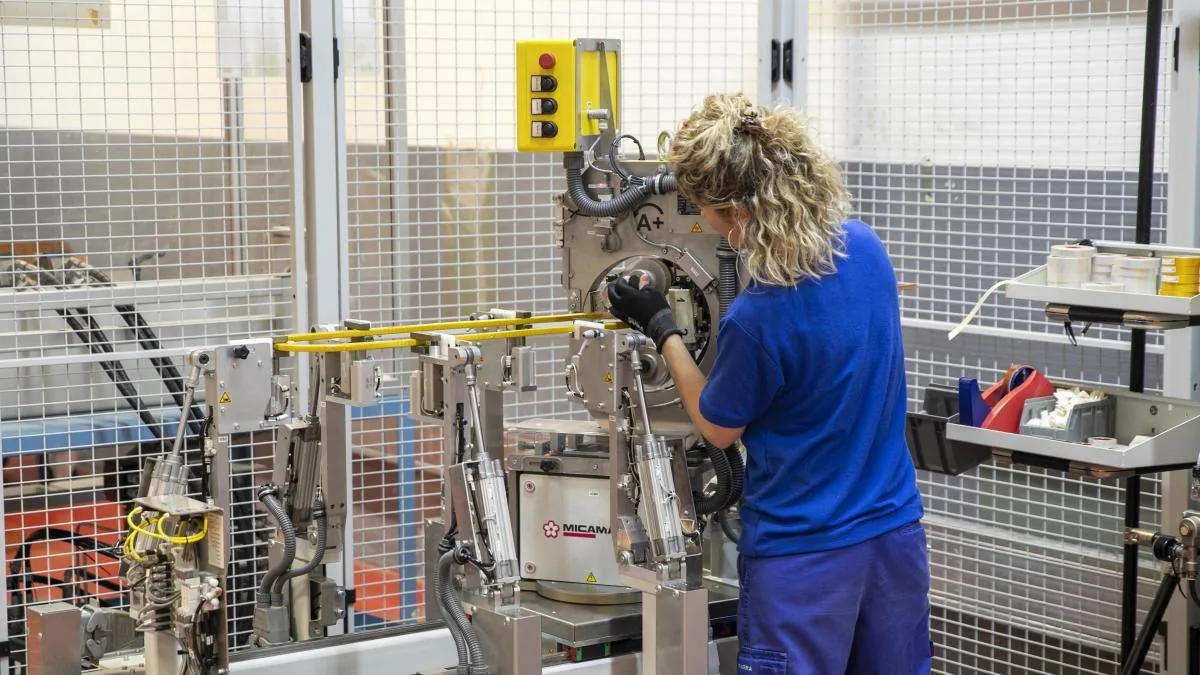
Despite the double-digit price increase in the last five years, a good part of the salary increases to preserve purchasing power has ended up in the State’s coffers as a consequence of the non-deflation of personal income tax (IRPF). According to a study published today by the employers’ association Pimec, approximately half of the labor cost to correct inflation is allocated to Personal Income Tax (IRPF) and social security contributions.
Read more France adapts a military transport Airbus for firefighting
Therefore, “the company assumes a cost much higher than the benefit finally received by the worker,” commented the president of the employers’ association, Antoni Cañete, who also regretted that the non-deflation of this tax’s rate ends up reducing the effectiveness of salary increases, pressuring business margins, and harming competitiveness, especially for small and medium-sized enterprises.
The report, which analyzed nine real payrolls from the hospitality, metal, and cleaning sectors from 2020 to 2026, details that for every 100 additional euros that the company dedicates to raising its employees’ salaries, they only end up receiving between 48 and 56 euros. The rest goes to the payment of IRPF and social security contributions. It is also noted that the effective tax rate has risen between 1.3% and 3.2%, without any changes in the employee’s personal situation.
An increase in tax pressure that causes a decrease in purchasing power of up to 4% (for incomes ranging from 18,000 to 45,000 gross euros), despite increasing the gross salary to the same extent as inflation, a cumulative 22.1% over five years. To avoid this, companies should increase salaries by between four and eleven percentage points above the price increase, with an additional cost per worker ranging from 1,142 to 3,315 euros per year.
Thus, for an employee to receive 100 net euros more, the company must assume an increase in cost of between 180 and 210 euros, according to Pimec. “It is not fair to raise salaries and for this to serve to raise taxes and for the worker not to improve their purchasing power,” lamented Cañete, for whom there has been a “hidden” tax increase in recent years.
Read more The simultaneity of forest fires in Madrid makes extinction work difficult

Likewise, the study reveals that the non-updating of personal income tax (IRPF) based on inflation – a phenomenon dubbed fiscal drag or cold progression – is behind approximately half of the increase in the IRPF-to-GDP ratio in Spain between 2019 and 2023, a year in which 11 billion less would have been collected if the tax had been indexed to the Consumer Price Index (CPI).
The employers’ association also asks to update IRPF tax benefits
Sílvia Gabarró, president of Pimec’s Economic and Taxation Commission, highlighted that Spain is among the European countries that least compensate for the cold progression of the tax, specifically, it ranks second among the 21 countries analyzed. Only 29% of the IRPF’s cold progression has been compensated, and “especially for low-income workers,” who in turn are the ones who suffer the most from the relative impact of the tax’s non-deflation.
Another relevant aspect is that 58% of the IRPF’s cold progression comes from the freezing of tax benefits since 2015, such as personal and family minimums, as well as reductions and deductions. For this reason, the employers’ association argues that the solution is not only to deflate the IRPF brackets to preserve workers’ purchasing power, as this “would leave more than half of the problem uncorrected,” which is why it calls for a review of the entire set of tax parameters.
The employers’ association has stressed that it “is not asking for a tax cut,” but rather that taxes not be automatically increased when the CPI rises. Therefore, it calls for a “regular, transparent, and predictable” mechanism for reviewing income tax, as well as prioritizing the updating of personal and family minimums and the reduction of taxation on earned income, without forgetting the self-employed.
Read more Brussels imposes a historic fine on Google while Trump finalizes his new tariffs