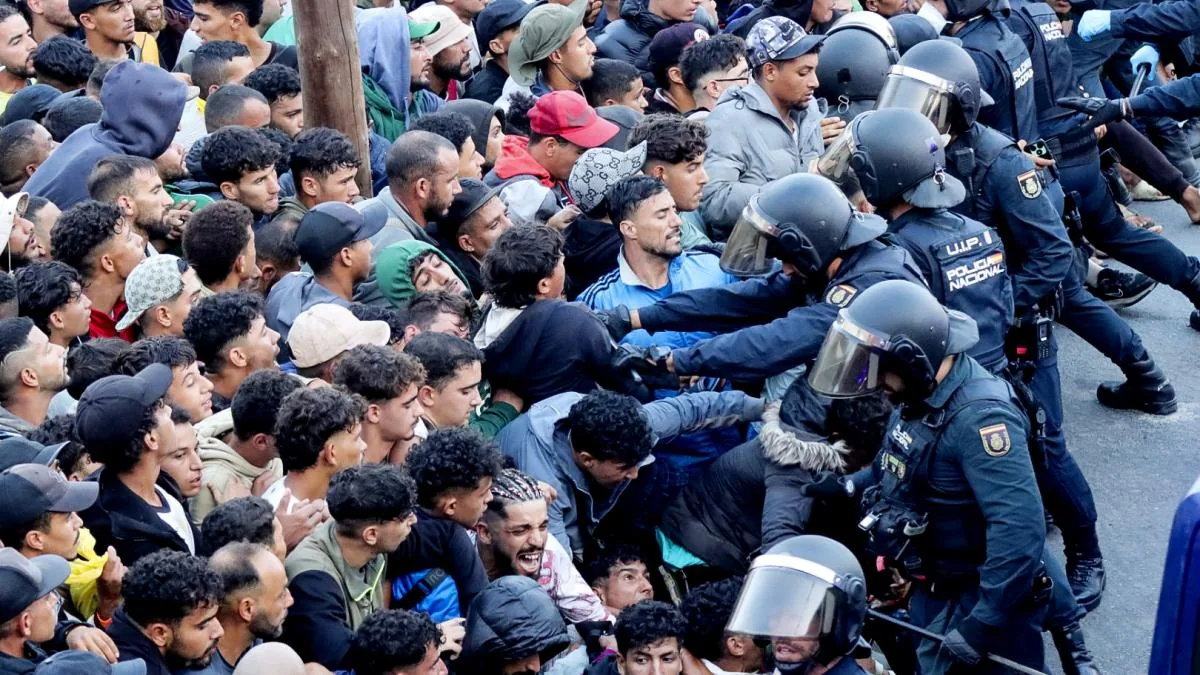
The avalanche of immigrants who entered Ceuta last week not only captured attention due to the humanitarian emergency but also because of its geopolitical consequences and diplomatic implications. International media featured front pages and news reports with images from El Tarajal, but have maintained coverage focusing on the reasons behind what happened and have analyzed who wins and who loses in this whole story.
Read more The Government avoids blaming Rabat and directs criticism at the opposition and other EU countries
In the eyes of a large part of the published opinion, the episode has isolated Pedro Sánchez from his European partners and they see the border as vulnerable and “excessively dependent” on the state of relations between Madrid and Rabat. But also, although to a lesser extent, some see Morocco’s image as eroded.
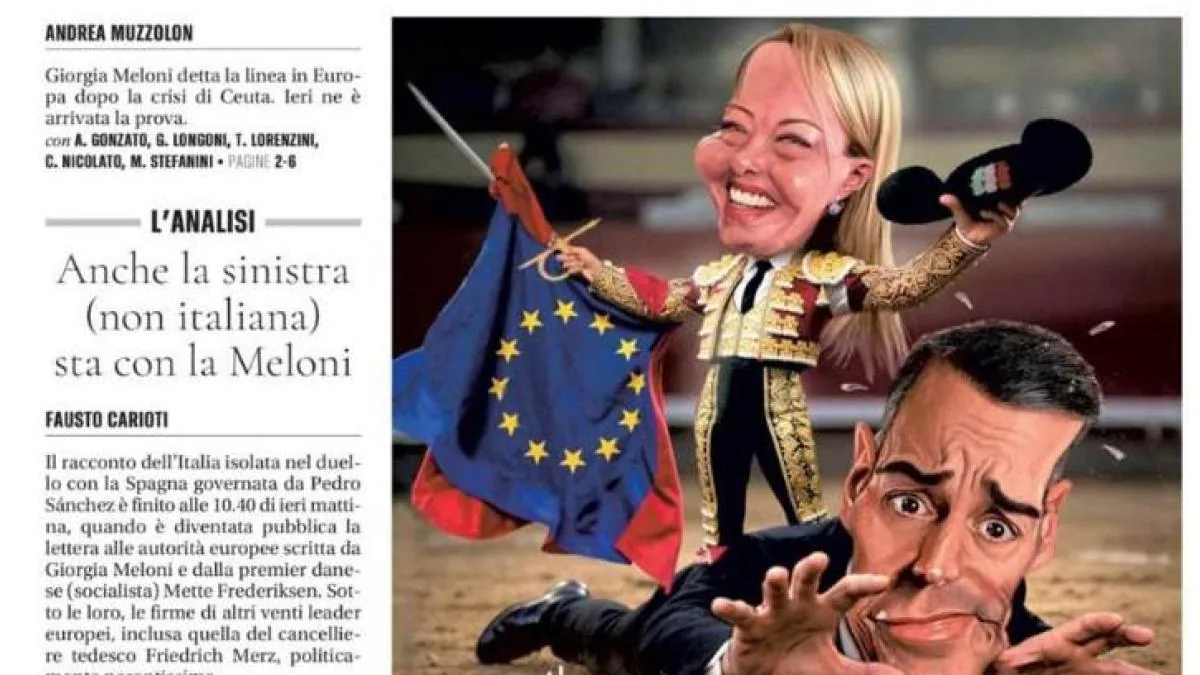
In Italy, media such as Libero and Il Giornale lash out against the Prime Minister. If before Emmanuel Macron was the target of criticism, now it is Pedro Sánchez, who is criticized for going on vacation amid the Ceuta “collapse.” So much so that the first of these features on its front page a caricature of Giorgia Meloni dressed as a bullfighter with a defeated Sánchez. In contrast, newspapers like La Repubblica or L’Osservatore Romano are skeptical about their prime minister’s position in suspending the Schengen agreement. The first of these newspapers also argues that behind all this are the interests of King Mohammed VI to “recover the unrecovered cities.”
Also read
At the European level, one of the most forceful is Politico, an influential media outlet in Brussels. In its newsletter this Monday, they point to Sánchez as the “loneliest leader in the European Union.” In their view, the migration crisis reveals “how far” the socialist has fallen: “The Prime Minister has learned a harsh truth these days, once one of the most charismatic and influential leaders of the EU, he is now practically a pariah in the bloc,” they conclude. However, this outlet was also struck by the “absence” of Moroccan gendarmerie.
The ones offering a more neutral perspective are the main newspapers of the United Kingdom. Both The Guardian and The Times highlight as a cause the Supreme Court ruling on limiting hot returns, without ruling out the possibility that “the Alaouite authorities opened the border to show their discontent over Sánchez’s recent visit to Algeria.” The BBC agrees with these assessments.
The newspaper ‘Politico’ states that the president has gone from being an “influential leader” to the “loneliest” in the EU
In similar terms, the German press speaks out. Der Spiegel and Bild also refer to the Supreme Court verdict but focus on the “diplomatic crisis” underlying the events since Ceuta is the first gateway to Europe. From their perspective, it is not a domestic issue but takes on a European scale.
Read more Russian journalist Xenia Fedorova is already out of France
Within German territory, the Frankfurter Allgemeine Zeitung focuses more on the “vulnerability” this situation reveals about Morocco: “It evidences deep unemployment and lack of prospects among Moroccan youth.” This newspaper believes that what happened negatively affects the good image the African country wants to project ahead of the 2030 World Cup.
Also read
This is a complementary view to that offered by the French media. Le Figaro and Le Parisien talk about “invasion” and emphasize the “pressure” Morocco exerts on the border with Spain when relations become “turbulent” again.
Meanwhile, Le Monde insists on the idea of Pedro Sánchez’s “isolation,” but points to Meloni as the main architect of this, something they believe responds to an electoral key.
From the United States, a perspective limited to the reaction from the White House to this migration crisis is offered. The agency Bloomberg sees the head of the central government isolated and “under pressure” – not only because of the Ceuta episode and confrontation with other EU countries, but also due to the refusal to reach 5% defense spending or the “approach” to China. Newspapers like the Financial Times question Spain’s ability to control the border.
And in Latin America, there is considerable agreement on the “pressure” on the Spanish government. One that suggests this is La Nación, an Argentine newspaper.
Read more The United States Congress has not approved the transfer of Ceuta and Melilla to Morocco